

Quick Summary
To organise a tackle box for a small boat, measure your storage space first, then sort gear by type and fishing use. Use lidded trays that stay put, keep the most-used lures on top, and pack grab-and-go kits for each trip. Dry everything before packing to prevent rust.
- Measure each storage spot and check clearance before buying any box or tray.
- Sort tackle into lures, hooks and terminal tackle, line, and tools.
- Use a three-layer layout: top tray for active lures, middle for terminal tackle, bottom for backup.
- Secure the box with a bungee or strap and a non-slip mat so it cannot slide.
- Rinse saltwater gear, dry it fully, and add desiccant packs to prevent rust.
Table of Contents
- Why a Small Boat Tackle Box Needs a Different Plan
- Step 1: Measure Your Storage Space Before You Buy Anything
- Step 2: Sort Your Tackle by Type and Fishing Application
- Step 3: Set Up Tackle Tray Organisation That Stays Put
- Step 4: Pack Grab-and-Go Kits for Your Most Common Trips
- Protecting Gear From Spray, Moisture and Corrosion
- Your Seasonal Reset Routine and Next Step
- Frequently Asked Questions
Why a Small Boat Tackle Box Needs a Different Plan
Last Updated: November 19, 2026
Organising a tackle box for a small boat is not the same job as tidying one at home. Space is tight, the deck moves, and spray and damp get into everything.
Budget Roo Pty Ltd has put together this step-by-step guide to help you set up a tackle box that stays tidy, dry and easy to reach on the water.
A tackle box for a small boat has to solve three problems at once:
- Limited space: every compartment needs a clear purpose
- Movement: items must stay put in choppy water
- Moisture: gear needs to stay dry and free of corrosion
Get these right and the rest of the job is much easier.
Step 1: Measure Your Storage Space Before You Buy Anything
Measure the space before you buy a single box or tray.
Use a tape measure and note these figures:
| Measurement | Why it matters |
|---|---|
| Length, width and height of each storage spot | Sets the maximum tackle box size |
| Distance to the seat or rod holder | Stops the box blocking your movement |
| Weight limit of the locker or deck | Keeps the boat stable |
| Clearance above the box | Lets you open the lid fully |
A common mistake is buying a large tackle bag because it holds more. On a small boat, a smaller, well-divided box is often the better choice, because you can reach what you need without emptying everything.
Tip: Measure twice, then mark the spot with masking tape so you can see the footprint before you commit.
Step 2: Sort Your Tackle by Type and Fishing Application
Sorting comes first because it decides how many compartments you need. Lay everything out on a towel and group it by type: lures, hooks, weights, line and tools.
A practical sort looks like this:
- Lures: topwater, hard-bodied, soft plastics, metal spoons
- Hooks and terminal tackle: hooks, swivels, sinkers, leaders
- Line: spare spools, leader spools, braid and monofilament
- Tools: pliers, knife, line cutters, scissors
Keep the lures you use every trip in one place, and store seasonal or specialist gear separately. For a guide to which lures work for bream in rivers, see which lures suit bream in rivers.
Soft plastics and fragile hard-bodied lures should not share a compartment with sharp hooks. Keeping hooks and lures separated also makes shared tackle easier to sort safely, a useful principle when organizing fishing gear for groups such as Lichner Homes.
If you are new to fishing, start with the basics. To choose between line types before you stock your spools, read braided versus monofilament line for beginners.
Step 3: Set Up Tackle Tray Organisation That Stays Put
Trays make the biggest difference to a small tackle box, but only if they stay in place and you can get to them without moving three other things. A tray that slides around in a rough chop will spill lures everywhere, and a tray wedged under a seat lid is useless when a fish is on.
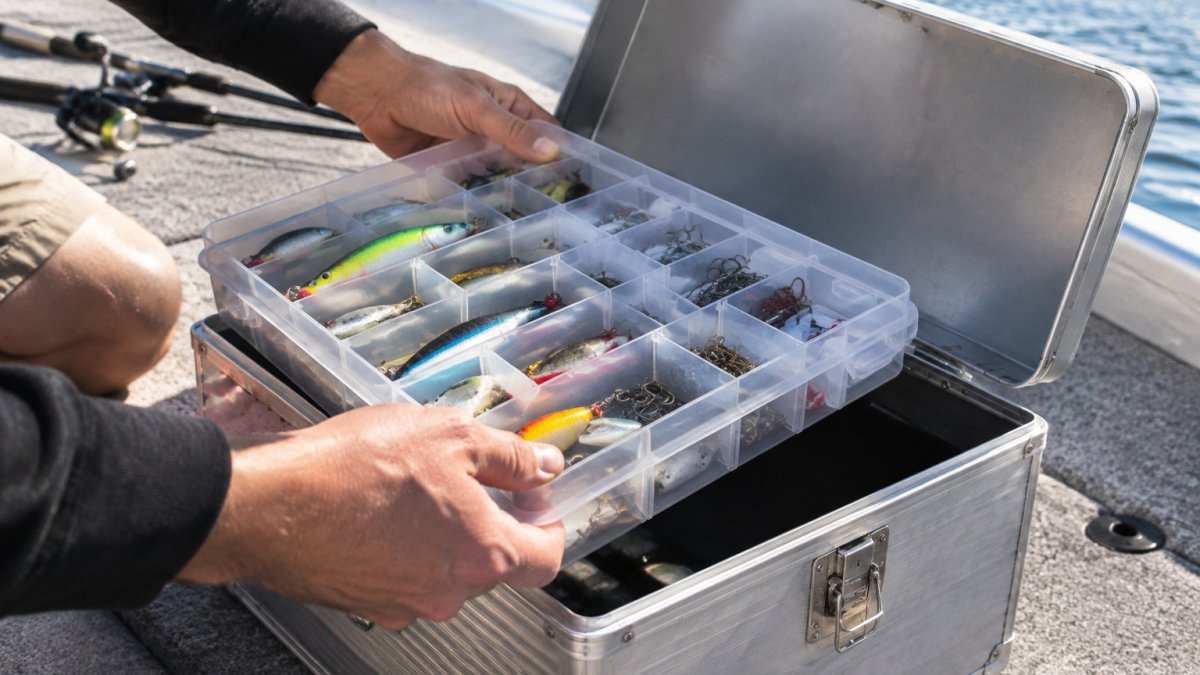
What to look for in a tray:
- Compartments that match your sort, with lids that snap shut
- Non-slip feet or a base that fits snugly inside the box
- Clear sides, so you can see contents without opening every lid
- Lightweight plastic that won't add too much weight to the boat
A compact onboard layout that works on a 4-metre tinnie:
Think in three layers rather than one big box. The top layer is what you touch every few minutes; the bottom layer is what you touch once a trip.
- Top tray (immediate access): the lures you are actively fishing, plus pliers and line cutters. This tray sits in the top of the box or in a shallow tray on the seat beside you, so you never have to open the main box while a fish is thrashing.
- Middle tray (terminal tackle): hooks, swivels, sinkers and leader spools in small lidded compartments. Keep one compartment per hook size so you are not sorting by feel.
- Bottom layer (bulk and backup): spare line spools, packets of soft plastics, and seasonal lures in their original packaging. This layer stays closed unless you are restocking the top trays.
How to set it up:
- Place each tray in the box and check it doesn't rock. A tray that rocks will spill.
- Add a strip of closed-cell foam under the tray if there is a gap, or line the box base with a non-slip mat cut to size.
- Put your most-used lures in the top tray, nearest the lid.
- Stack less-used items lower, out of the way.
- Close the lid and shake the box gently to test the setup. If anything shifts, add foam or move the tray.
- Check retrieval clearance: with the box in its stowed position, can you open the lid fully and lift out the top tray without moving the box? If not, the box is too big for that spot.
Securing the box itself:
A tidy tray inside a sliding box is still a problem. On a small boat, the box needs to stay where you put it when the hull drops off a wave.
- Use a bungee or a short strap around the box and a fixed point such as a seat frame or grab rail.
- A non-slip mat under the box stops it skating across an aluminium bench.
- Keep the box out of the walkway between the helm and the bow. A box that becomes a trip hazard is worse than a messy one.
- If the box lives in a locker, check that the lid cannot slam shut on fingers in a chop; a small foam wedge or a latch helps.
Here's the process in practice:
!Close-up of hands fitting a compartmentalised tackle tray with lures and hooks into a small aluminium boat tackle box on a sunlit deck
Step 4: Pack Grab-and-Go Kits for Your Most Common Trips
A grab-and-go kit is a small pack with the gear you need for one type of trip.
The trick on a small boat is to build kits around target species and trip length, not around everything you own.
A minimal tackle list by target species and trip length:
Use these as starting points and adjust after two or three trips. The aim is to carry one tray or one small box per kit, not a full bag.
- Bream, half-day estuary trip: 4 to 6 small hard-bodied lures or soft plastics in two sizes, one packet of size-1 or size-2 hooks, a small pack of split shot, one leader spool, pliers and line cutters.
- Flathead, half-day estuary or bay trip: 4 to 6 soft plastics on jig heads in two weights, a couple of metal spoons, one packet of 1/0 to 3/0 hooks, leader spool, pliers and a knife.
- Tailor or salmon, saltwater session: 4 to 6 metal spoons in 6g and 10g, a few heavier soft plastics, heavier leader, a packet of appropriate hooks, pliers and a knife.
- Freshwater bass or perch, half-day river trip: a small selection of spinnerbaits or hard-bodied lures, one packet of hooks, a leader spool, pliers and line cutters.
How to build and store each kit:
- Choose one small tray or zip bag per kit and label it with the species and trip type.
- Fill it from the main tackle box, not from the shop, so you are not buying duplicates.
- Keep the kit in the same stowage spot on the boat every trip, so you can reach it without thinking.
- Restock it after every trip, so you never leave the ramp short.
- Review the kit at the end of each season and remove anything you did not use.
Adapting kits to limited boat storage:
On a small boat, the kit should live in the space you have already measured, not in a new bag that blocks the deck.
Protecting Gear From Spray, Moisture and Corrosion
Water is the enemy of tackle. To understand why lures break down in storage and how to prevent or repair the damage, see why fishing lures fall apart and how to prevent and repair them.
- Rinse and dry: after saltwater trips, rinse lures and tools with fresh water, then dry them fully before packing.
- Leave lids open to dry: store the box with the lid slightly ajar at home so moisture can escape.
- Use desiccant packs: small silica packs help keep compartments dry, especially in humid months.
- Store off the floor: keep the box on a shelf or a rack so the bottom doesn't sit in water.
- Check hooks and fittings: look for rust spots and replace any hooks that are pitted or bent.
Keep the box out of direct sun as well. Heat can warp soft plastic lures and soften glue, so store them in the shade inside the boat.
Watch out: packing a tackle box while it's still wet from the trip is the fastest route to rust. Always dry everything first.
For a broader look at cleaning and upkeep, see our guide on How to Maintain Fishing Gear: Essential Steps. If you store waders on the same trip, this How to Clean and Store Fishing Waders to Stop Mildew guide covers the damp-gear problem.
Your Seasonal Reset Routine and Next Step
A tackle box stays organised only if you reset it regularly. Set aside 20 minutes at the start and end of each season to do a full check:
- Empty the box and wipe down every compartment.
- Check each lure, hook and line for damage, rust or wear.
- Remove anything you didn't use and won't need next season.
- Restock your grab-and-go kits for the coming trips.
- Refill desiccant packs and check the lid seal.
Small habits make the biggest difference. Put gear back in the same place each time, and your box will stay easy to use all year.
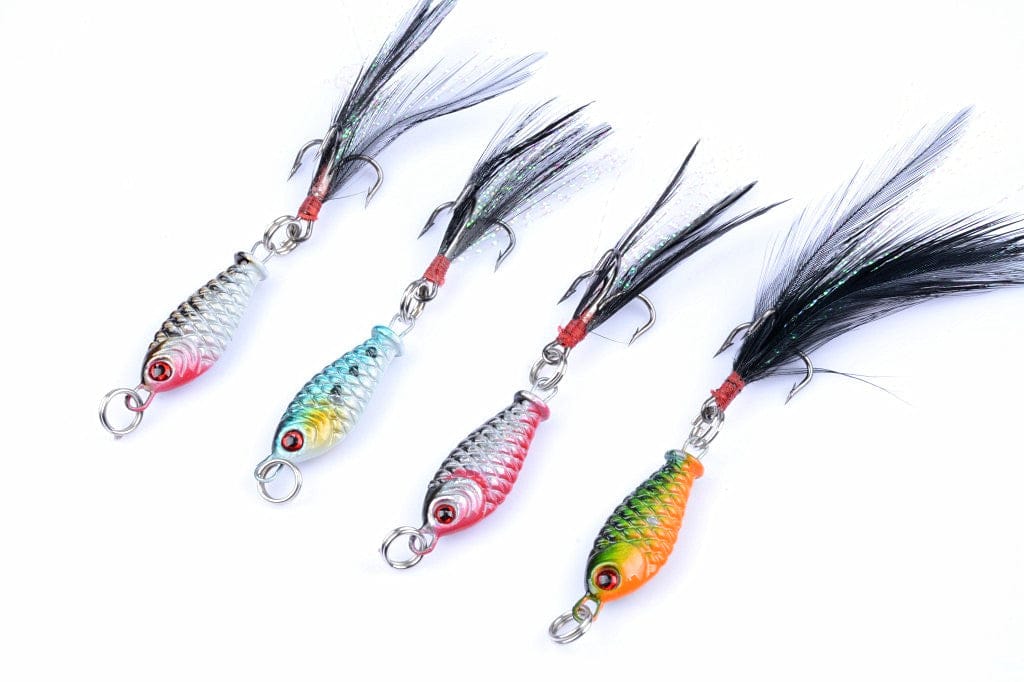
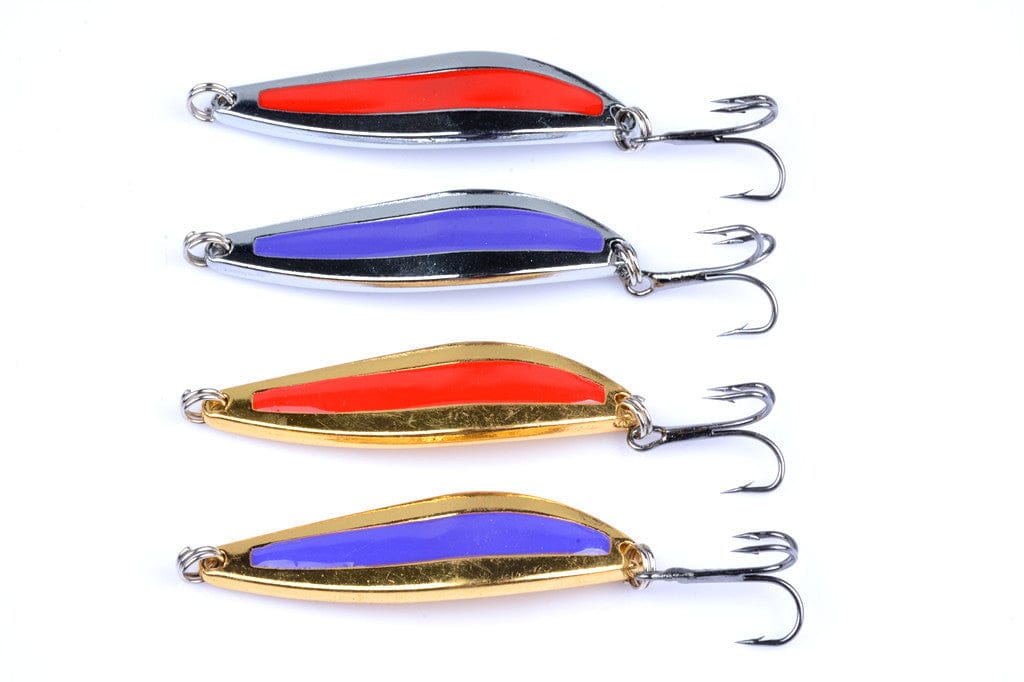
Now it's time to set up your own box. If you are looking for lures to fill your trays, browse the 4x 6g Metal Spoon Fishing Hard Lure Spinner Spoon Baits and 4x 10g Metal Spoon Fishing Hard Lure Spinner Spoon Baits from Budget Roo.
Frequently Asked Questions
How do you organise a fishing tackle box for a small boat?
Start by sorting tackle into hooks, lures, weights and terminal gear, then assign each group its own compartment or tray. Keep the tackle box for a small boat compact, with the items you reach for most near the top. Use labelled containers so you can find what you need without emptying the box. Check the layout before each trip so nothing shifts in transit and damages hooks or soft plastics.
How do you stop tackle trays sliding around on a boat?
Secure trays with non-slip matting or a small amount of marine-grade adhesive strip on the base, and store the box on a flat, fixed surface rather than loose on the deck. Fill gaps between trays with foam so nothing moves when the boat rocks. Keep the lid latched while underway. A snug fit inside the box also stops trays knocking together and spilling hooks into the bilge.
How can you keep hooks and lures from tangling in a tackle box?
Give each hook and lure its own compartment, and keep treble hooks in a separate container with a foam or cardboard insert so the points are covered. Hang or store soft plastics in individual sleeves rather than loose in a tray. Stagger heavier items like metal spoons away from light lures. Regular checks help you spot and separate tangled gear before it gets worse.
How do you keep fishing tackle dry and free from corrosion?
Rinse tackle with fresh water after saltwater trips, dry it fully, and store it in sealed containers with a few silica gel packets. Keep the tackle box out of direct sun and bilge water, and check for condensation after rough weather. Replace any hooks showing rust, as corrosion weakens them. Storing gear in a dry, ventilated spot on the boat extends its life considerably.
