

Table of Contents
- Why Fishing Lures Fall Apart: The Main Culprits
- How to Store Soft Plastic Lures Without Damage
- Why Soft Plastics Tear: Environmental and Mechanical Factors
- Best Glue for Fishing Lure Repair and Restoration
- Saltwater vs Freshwater Corrosion: What's the Difference
- Maintenance Tips to Keep Your Lures Fishing-Ready
- Choosing Durable Lures That Last
- Conclusion
Last Updated: August 27, 2026
Why Fishing Lures Fall Apart: The Main Culprits
Fishing lures fail due to three fundamental causes: material degradation, metal corrosion, and mechanical stress from casting and retrieval. Understanding these failure points helps you maintain tackle effectively and extend gear lifespan.
Material fatigue and micro-cracking in plastic bodies
Plastic bodies develop micro-cracks long before visible damage appears. These tiny fractures form under repeated stress from casting, retrieving, and impact with rocks. Temperature fluctuations accelerate the process, a lure heated by sunlight then cooled by submersion causes uneven expansion and contraction, creating internal stress and polymer degradation.
Brittleness develops before visible cracks appear. A lure that feels fine may snap catastrophically during a hard cast because the material has already lost elasticity and can no longer absorb casting force.
Corrosion and rust on hooks and terminal tackle
Metal components corrode through oxidation. Saltwater accelerates this dramatically because salt ions increase electrical conductivity, speeding the electrochemical reaction. Rust weakens metal from inside out, a slightly discoloured hook has already lost tensile strength and may bend or snap when setting hard on a fish.
Split rings and swivels corrode similarly. Steel balls inside lures also rust, losing the smooth surface needed to move freely, which reduces casting distance and changes the lure's action.
Knot failure and line breakage during casting
Line failure typically occurs at the knot connecting lure to leader. The knot compresses line fibres, creating a weak point where stress concentrates. During a hard cast, this stress exceeds the line's breaking strength. Frayed line at the knot indicates micro-abrasion has begun, the fibres are separating and losing grip.
Leader line also experiences abrasion during casting when the lure's body or hook scrapes it. Over multiple casts, these cuts accumulate and weaken the leader until it snaps.
How to Store Soft Plastic Lures Without Damage
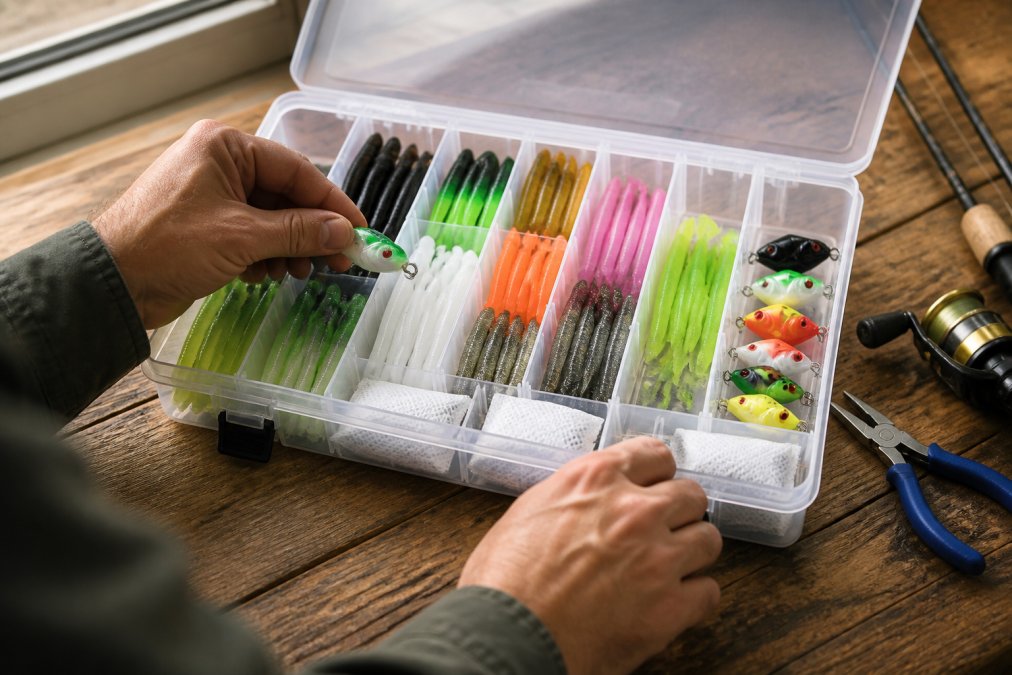
Soft plastic baits tear and degrade in storage if conditions aren't controlled. The primary challenges are preventing chemical interaction between plastic and container, managing moisture, and protecting against light exposure.
Chemical compatibility of storage containers
Soft plastics can be damaged by certain chemicals and plasticizers. The wrong storage container leaches solvents that soften the plastic or cause it to stick together permanently. Dedicated tackle boxes designed for soft plastics use inert materials like polypropylene that won't degrade the lures.
Avoid containers that previously held solvents, oils, or chemicals, even residue can damage lures. Glass containers work well because they're chemically inert, though they're heavier and more fragile for field use.
Moisture control and ventilation
Moisture accelerates polymer degradation and promotes rust on metal components. Include silica gel packets or desiccant packs in your storage container and replace them regularly when saturated. Visual indicators on packets show when replacement is needed.
In humid climates, crack the box open occasionally for air exchange or use ventilation holes with moisture barriers.
Why Soft Plastics Tear: Environmental and Mechanical Factors
Soft plastic baits tear during use and storage due to environmental stress and poor casting technique. Understanding these mechanics helps you choose more durable lures and handle them correctly.
UV degradation and polymer breakdown
Ultraviolet light breaks down polymer chains in soft plastics, causing brittleness and colour loss (peer-reviewed research). A lure left in sunlight for weeks will tear easily during casting. This degradation is cumulative, even brief daily exposures add up over time.
Colour fading indicates UV damage and structural loss. Store lures in opaque containers or dark locations to prevent UV exposure entirely.
Abrasion resistance and casting mechanics
Soft plastics tear when contacting rough surfaces during casting or retrieval. Rocks, logs, and sharp structures snag and cut the plastic. Heavy casting force also causes tearing if the lure hits obstacles or if line weight is too heavy for the lure size.
Casting technique influences tear risk significantly. Smooth, controlled casts distribute stress evenly; violent casts concentrate stress at the connection point. Thicker plastic bodies resist tearing better than thin ones, and reinforced areas around the hook eye reduce tear initiation.
Best Glue for Fishing Lure Repair and Restoration
When a lure develops a crack or split, the right adhesive restores functionality. Different materials require different repair approaches.
Adhesive types for different lure materials
Two-part epoxy resin works well for hard plastic bodies like ABS, creating a strong bond that cures hard and can be sanded or painted. Mix in small batches and apply to clean, dry surfaces. Full curing takes 24 hours (always refer to the manufacturer's instructions for specific products).
Flexible adhesives like flexible epoxy or polyurethane glue work better for soft plastics because they remain somewhat flexible after curing, absorbing shock and movement. Hard glues create brittle joints that fail under stress.
Cyanoacrylate (super glue) provides quick fixes for small cracks but creates brittle joints. Use it only for temporary or cosmetic repairs.
Step-by-step repair process for split rings and hook hangers
Step 1: Clean the damage area thoroughly. Remove dirt, rust, or debris from the crack. Dry completely, moisture prevents adhesive bonding.
Step 2: Assess damage severity. Small cracks (under 5mm) repair successfully. Large cracks affecting more than 25% of the lure body are better replaced.
Step 3: Apply adhesive to both surfaces. For epoxy, mix resin and hardener per instructions. Apply a thin, even coat to both sides of the crack and press firmly together.
Step 4: Clamp or hold the repair. Use a clamp, rubber band, or tape to hold surfaces together while curing, preventing the crack from opening.
Step 5: Allow full curing time. Don't use the lure until adhesive cures completely, typically 24 hours for two-part epoxy. Premature use can reopen the repair.
Step 6: Sand and finish if needed. Once cured, sand rough edges smooth. Paint over visible repairs to match the lure's original finish.
For split rings and hook hangers, replacement is often more practical.
Saltwater vs Freshwater Corrosion: What's the Difference
Corrosion rates differ dramatically between saltwater and freshwater environments. Understanding these differences helps you choose appropriate storage and maintenance strategies.
Saltwater corrosion rates and prevention methods
Saltwater corrosion is aggressive and rapid. Salt ions accelerate the electrochemical corrosion reaction on metal components (peer-reviewed research). A hook sitting in saltwater for hours begins showing visible corrosion; after a full day, rust spots appear on unprotected steel.
Stainless steel resists saltwater corrosion far better than carbon steel or plated hooks. The chromium forms a protective oxide layer that prevents rust. For regular saltwater fishing, prioritise lures with stainless steel hooks and hardware.
Rinse saltwater lures with fresh water immediately after fishing to remove salt residue. Dry completely before storage. Apply a thin coat of light oil or corrosion inhibitor to metal components before storage to create a protective barrier. Wipe off excess oil before fishing.
Freshwater maintenance and storage strategies
Freshwater corrosion happens more slowly, especially in mineral-rich or acidic water. Standard carbon steel hooks resist freshwater corrosion adequately for casual fishing, but switch to stainless steel if you notice rust developing in specific locations.
Rinse freshwater lures with clean water after fishing, but the urgency is lower than saltwater. Dry within a few hours. Store in a dry location, preferably with desiccant packets. Oil coating before storage is typically unnecessary unless storing for extended periods.
Maintenance Tips to Keep Your Lures Fishing-Ready
Regular maintenance prevents most lure failures. A simple routine after each fishing trip or monthly during off-season storage keeps tackle in reliable condition.
Hook sharpness and swivel inspection
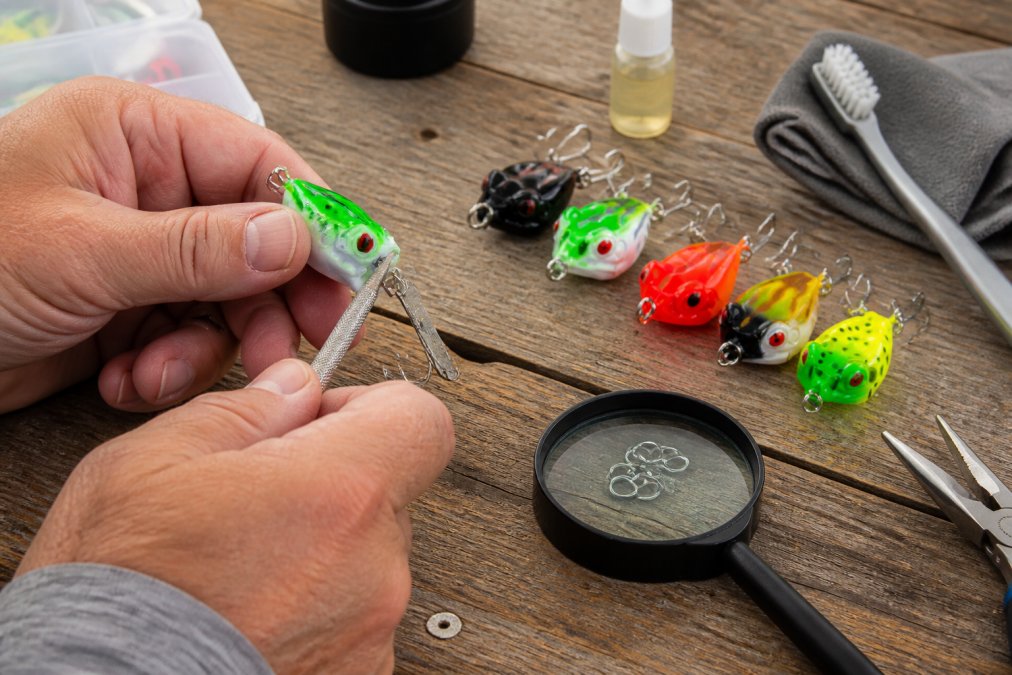
A dull hook fails to penetrate on the strike. Check sharpness by running your thumbnail across the point at a 45-degree angle, a sharp hook catches slightly; a dull hook slides without catching.
Sharpen dull hooks with a hook file using light, even strokes along the point. Maintain the original angle; over-aggressive sharpening weakens the hook.
Inspect swivels for smooth rotation. A swivel that doesn't spin freely indicates corrosion or wear. Test by holding the lure and spinning the swivel with your finger. If stiff or grinding, replace it.
Split rings should be inspected for rust and cracks. Visible rust indicates weakness and requires replacement. Check that the ring closes tightly without gaps.
Tackle box organisation and regular checks
Organise lures by type and size, soft plastics in one compartment, hard baits in another, terminal tackle in a separate section. This prevents cross-contamination and makes lures easy to locate.
Perform monthly inspections during off-season months. Check for corrosion, cracks, or degradation and repair or replace damaged lures. Keep desiccant packets fresh, replacing them monthly in humid climates. Separate new lures from older ones to prevent cross-contamination of corrosion.
Choosing Durable Lures That Last
Lure durability depends on material quality, design, and manufacturing standards. Selecting well-made lures reduces replacement frequency and improves fishing success.
Hard plastic bodies made from quality ABS resist cracking better than thin or brittle plastics. Quality lures feel substantial and solid in your hand. Stainless steel hooks and hardware outlast plated or painted alternatives, check product descriptions or ask retailers whether hooks are stainless or carbon steel. For saltwater fishing, stainless is essential.
Reinforced areas around the hook eye and stress points indicate thoughtful design that distributes stress evenly and reduces tear initiation.
Budget Roo Pty Ltd's range of hard plastic poppers and spoon lures, including the 6X 4cm Popper Poppers Fishing Lure and 4x 6g Metal Spoon Fishing Hard Lure, feature durable ABS bodies with sharp metal hooks and internal steel balls for casting distance. These lures are engineered to withstand repeated casting and handle both saltwater and freshwater conditions without premature failure.


Fishing lures fall apart when you ignore environmental and mechanical stressors that degrade them. Prevention and maintenance are straightforward: store soft plastics in moisture-controlled containers, rinse saltwater lures immediately, inspect hooks and swivels regularly, and replace corroded components. By investing a few minutes per fishing trip in basic maintenance, you'll extend lure life significantly and fish with confidence that your tackle will perform when it matters. Shop Budget Roo Pty Ltd's durable fishing lures and tackle storage solutions to start with equipment designed to last through seasons of active use.
Frequently Asked Questions
Why do soft plastic lures tear so easily?
Soft plastic lures tear due to UV exposure, material fatigue from repeated casting, and abrasion against rocks or structure. Plasticizers in the polymer degrade over time, making the material brittle. Storage near direct sunlight accelerates this breakdown. Additionally, aggressive casting mechanics and contact with sharp objects during retrieval cause micro-cracks that expand into tears. Proper storage in cool, dark containers and limiting casting strain significantly reduces tearing.
What is the best way to store fishing lures to prevent damage?
Store lures in a cool, dark, dry location away from direct sunlight to prevent UV degradation. Use tackle boxes with individual compartments to prevent lures from touching and causing abrasion. Avoid PVC containers, as the plasticiser chemicals can damage soft plastics; instead use polypropylene or clear plastic boxes. Include moisture-absorbing packets to control humidity. Separate hard baits from soft plastics to prevent chemical transfer. For saltwater lures, rinse and dry thoroughly before storage to prevent corrosion on hooks and split rings.
How do I repair a damaged fishing lure?
For minor damage, use epoxy or polyurethane adhesive designed for plastic repair to seal micro-cracks and re-attach split rings or hook hangers. Clean the damaged area thoroughly and apply adhesive according to product instructions, then clamp or wrap with tape while curing. For torn soft plastics, trim loose material and apply a flexible adhesive that won't harden the plastic excessively. Replace corroded hooks and swivels with new stainless-steel or nickel-plated hardware. For severe structural damage, consider the lure's remaining value before investing in repairs; many anglers replace heavily damaged lures rather than repair them.
Do fishing lures expire or degrade over time?
Yes, fishing lures degrade over time, particularly soft plastics. UV exposure causes polymer degradation and brittleness within 12-24 months of storage. Hooks and terminal tackle corrode faster in saltwater environments, sometimes within weeks if not properly maintained. Hard plastic lures last longer than soft plastics but still develop micro-cracks from material fatigue. Environmental factors such as temperature fluctuations, humidity, and exposure to sunlight accelerate degradation. Proper storage extends lure life significantly, but even well-maintained lures eventually lose effectiveness due to hook dulling and material brittleness.
This article was written using GrandRanker