

Table of Contents
- What You'll Need Before Starting
- How to Maintain Fishing Gear After Saltwater Use
- Best Fishing Reel Lubricant: Choosing the Right Products
- How to Clean Fishing Rod Guides and Blanks
- Fishing Reel Maintenance Frequency: When to Service Your Gear
- Saltwater Fishing Gear Maintenance Tips for Long-Term Care
- Troubleshooting Common Mechanical Failures
- Common Mistakes to Avoid When Maintaining Fishing Gear
- Frequently Asked Questions
Last Updated: September 1, 2026
What You'll Need Before Starting
Gather distilled water for rinsing (tap water leaves mineral deposits), microfibre cloths to avoid scratching surfaces, and a soft-bristled brush for debris removal. You'll also need reel oil and synthetic grease designed for fishing equipment. A dedicated maintenance kit stored in one place saves time when you return from a trip, and a neoprene strap or rod holder prevents damage during storage and transport.
How to Maintain Fishing Gear After Saltwater Use
Saltwater exposure accelerates corrosion on fishing tackle. Salt residue bonds to metal surfaces and breaks down protective coatings almost immediately. Post-trip freshwater rinsing is non-negotiable if you want your gear to last.
Post-trip freshwater rinsing
Rinse your entire reel with distilled water within two hours of leaving the water using a gentle stream, high pressure forces salt deeper into the gear mechanism (noaa.gov). Start with the line roller and spool area where salt accumulates fastest, then work around the handle and drag knob, paying special attention to crevices. Flush distilled water through each rod guide from reel to tip, and wipe the rod blank with a damp microfibre cloth to prevent salt from etching the protective coating.
After rinsing, pat everything dry with a clean microfibre cloth. Moisture left behind can trap salt and promote corrosion. This simple step prevents salt residue from re-crystallising as water evaporates.
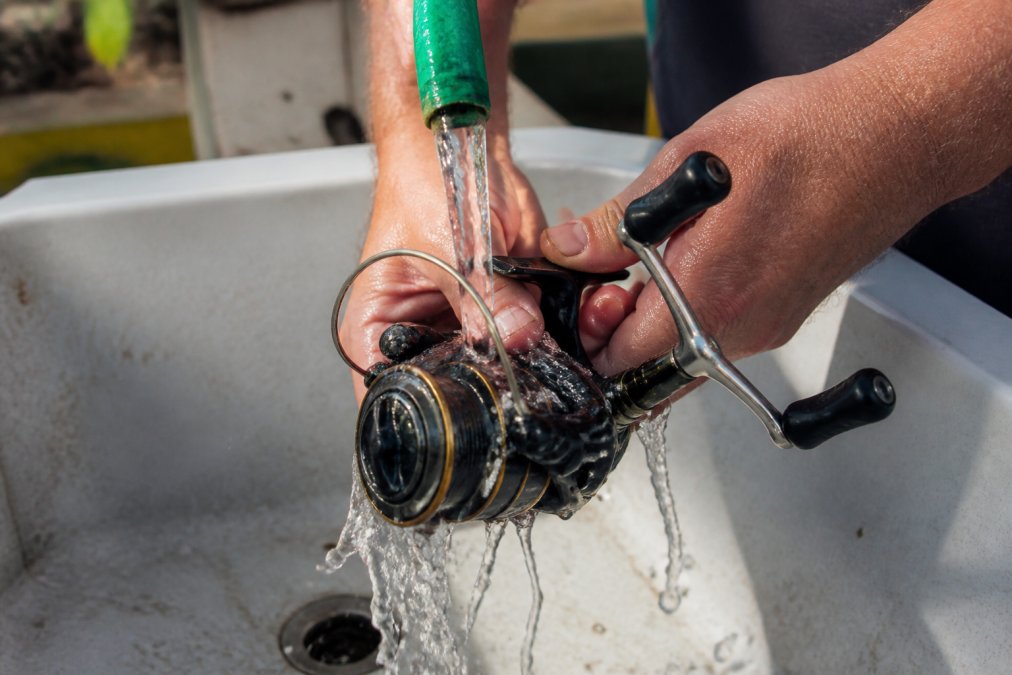
Removing salt residue from reels and handles
For stubborn salt deposits, use a soft-bristled brush and distilled water, working slowly to avoid scratching the finish. The reel handle deserves special attention, salt corrodes the connection point and can make it stiff. Soak the handle area in distilled water for five minutes, then brush away deposits. A small amount of reel oil on the brush can help dissolve stubborn salt without damaging the coating.
Never use tap water for this process. Tap water contains minerals that accelerate corrosion. Distilled water is inexpensive and worth the investment. Many anglers keep a spray bottle of distilled water in their tackle bag for quick post-trip rinsing.
Best Fishing Reel Lubricant: Choosing the Right Products
The lubricant you choose directly affects how smoothly your reel functions and how long it lasts. Most fishing reels perform best with light reel oil for moving parts and synthetic grease for heavier-duty friction areas.
Reel drag maintenance and lubrication
Your drag system is the most critical component to maintain. Apply reel oil sparingly to the drag knob's rotating parts, a single drop is often enough, as excess oil attracts dirt and can gum up the mechanism. Work the drag knob back and forth several times to distribute the oil evenly. The anti-reverse mechanism also benefits from light lubrication; check your reel's manual for the exact location.
Applying synthetic grease to ball bearings
Ball bearings handle the rotational load during retrieval. Synthetic grease protects these bearings from corrosion and reduces friction for smooth retrieves. Apply a grain-sized amount per bearing, too much grease creates drag and slows your reel down. Work the handle back and forth several times to distribute it throughout the bearing assembly.
Synthetic grease outperforms petroleum-based greases in saltwater environments, resisting salt-induced corrosion better and maintaining protective qualities longer between maintenance sessions (peer-reviewed research).
How to Clean Fishing Rod Guides and Blanks
Rod guides are crucial for smooth line movement and casting distance. Salt and debris accumulate inside guides, creating friction that slows your cast and wears your line faster.
Rod blank cleaning and protection
Inspect your rod blank for damage like cracks or splintering. For routine cleaning, use a damp microfibre cloth and distilled water, wiping the entire blank from reel seat to tip. Never use harsh chemicals or abrasive materials that could strip the protective coating. If your rod blank has visible salt deposits, soak a microfibre cloth in distilled water and wrap it around the affected area for a few minutes, then gently wipe away the residue.
Fishing Reel Maintenance Frequency: When to Service Your Gear
How often you maintain your gear depends on fishing frequency and environment. Saltwater fishing demands more frequent attention than freshwater fishing. If you fish saltwater weekly, rinse and dry your gear after every trip and inspect the drag system monthly (fws.gov). For freshwater anglers fishing weekly, thorough cleaning every two weeks usually suffices.
Pay attention to how your reel feels. If the handle becomes stiff, the drag feels inconsistent, or you notice grinding sounds, address problems immediately before they cause line breakage or lost fish.
Saltwater Fishing Gear Maintenance Tips for Long-Term Care
Saltwater fishing accelerates wear on every component. Long-term care requires a different approach than freshwater maintenance.
Seasonal storage preparation
Before storing gear for an extended period, perform a thorough freshwater rinse and allow at least 24 hours of air drying in a cool, dry environment. Moisture trapped inside a reel during storage promotes internal corrosion. Inspect your line before storage, saltwater exposure degrades fishing line faster than freshwater use. If your line shows weakness, brittleness, or discolouration, replace it before storing. Apply a light coat of protective oil to external metal surfaces before long-term storage using a microfibre cloth to apply a thin, even coat.
Storage best practices and protective coatings
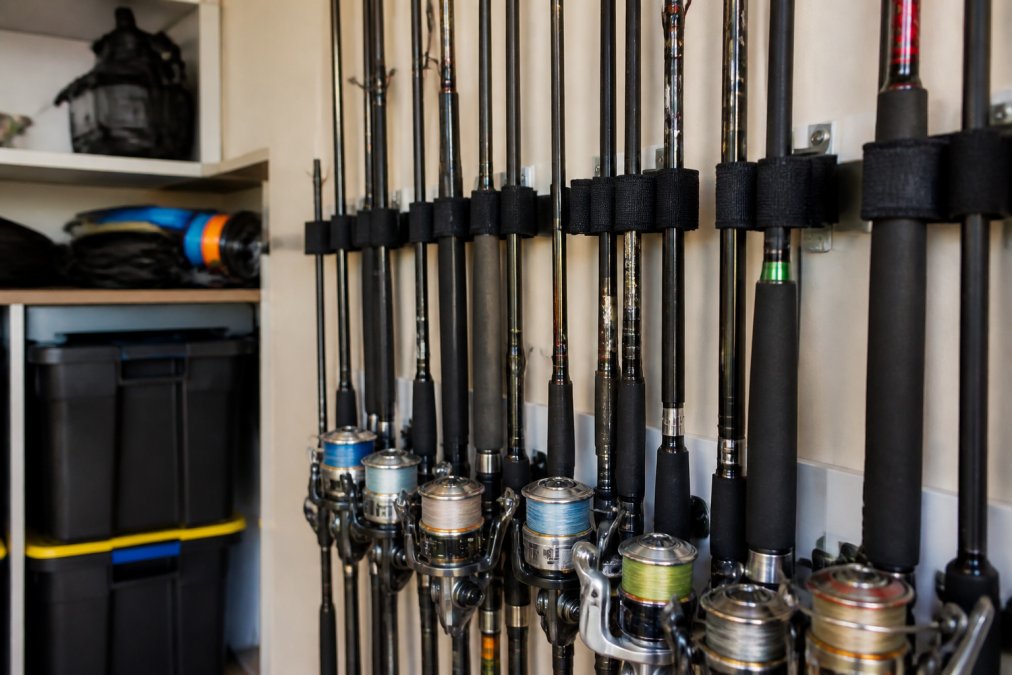
Store rods vertically using neoprene straps or a dedicated rod holder. Horizontal storage can cause the rod blank to develop a permanent curve. Keep your gear in a cool, dry location away from direct sunlight. UV exposure degrades line and protective coatings. A climate-controlled closet is ideal; avoid damp basements or hot attics where temperature and humidity fluctuate.
Consider applying a protective coating to exposed metal surfaces. Some anglers use a thin layer of car wax on the reel body to create a moisture barrier. Apply wax sparingly and buff it to a dull finish.
Troubleshooting Common Mechanical Failures
A stiff reel handle usually indicates corrosion in the bearing assembly or insufficient lubrication. Apply a small amount of reel oil and work the handle back and forth. If stiffness persists, internal corrosion likely requires professional cleaning. Don't force a stiff handle, you risk breaking it or damaging internal components.
Drag slipping or chattering means the friction unit needs cleaning or the drag washers are worn. Rinse the drag area thoroughly with distilled water and reapply synthetic grease. If the problem continues, friction washers may need replacement, a job best left to a professional.
Line roller resistance or grinding sounds indicate debris inside the reel or worn bearings. Try rinsing the line roller area thoroughly with distilled water and applying reel oil. If grinding persists, internal bearing damage is likely and the reel needs professional service.
Common Mistakes to Avoid When Maintaining Fishing Gear
The biggest mistake anglers make is waiting too long to clean their gear. Salt actively corrodes metal and degrades protective coatings. Immediate post-trip rinsing prevents this entirely.
Using tap water for rinsing is another common error. Tap water contains minerals and chlorine that can leave deposits or interact with salt in ways that accelerate corrosion. Distilled water costs very little and eliminates this problem.
Over-lubricating is surprisingly common. Excess lubricant attracts dirt, slows retrieves, and can trap moisture against metal surfaces. A grain-sized amount of synthetic grease and a single drop of reel oil are usually sufficient.
Storing wet gear leads to internal corrosion you can't see until it's too late. Always ensure your reel and rod are completely dry before storage. Neglecting rod guides and rod blanks is easy because they seem less critical than the reel, but salt deposits on guides increase friction and wear your line faster.
Budget Roo Pty Ltd offers quality maintenance supplies including microfibre cloths and protective gear designed for fishing tackle. Having the right tools makes maintenance faster and more effective. When you maintain your fishing gear properly, your equipment stays reliable and performs better for years to come.
Maintaining your fishing gear isn't complicated, but it does require consistency. The difference between gear that lasts five years and gear that lasts fifteen comes down to regular post-trip rinsing, proper lubrication, and careful storage. Budget Roo Pty Ltd offers everything you need to keep your reels and rods in top condition. Shop our maintenance supplies today and protect your investment in quality fishing equipment.
| Maintenance Task | Frequency | Time Required | Priority |
|---|---|---|---|
| Freshwater rinsing after saltwater use | After every trip | 10-15 minutes | Critical |
| Drag system inspection | Monthly | 5 minutes | High |
| Reel oil application | Every 2-3 months | 10 minutes | High |
| Synthetic grease application | Every 3-6 months | 15 minutes | High |
| Rod guide cleaning | Monthly | 10 minutes | Medium |
| Deep cleaning and storage prep | Seasonally | 30-45 minutes | Medium |
| Line inspection and replacement | Annually | 15 minutes | Medium |
Frequently Asked Questions
Q: Should I use WD-40 on my fishing reel?
A: WD-40 is not ideal for fishing reels. It's a penetrating oil designed for rust removal, not long-term lubrication. For fishing reel maintenance, use dedicated reel oil or synthetic grease instead. These products are formulated to stay on moving parts, reduce friction in the drag system, and resist saltwater corrosion. WD-40 can attract debris and wash away quickly, leaving your reel under-protected.
Q: How often should I clean my fishing gear after saltwater use?
A: Rinse your fishing gear with freshwater immediately after every saltwater trip, this is the most critical step for corrosion prevention. Deep cleaning of the reel, including disassembly and lubrication of ball bearings and the drag knob, should happen every 4-6 weeks during regular use. If you fish weekly, monthly deep cleaning is better. For casual anglers, thorough maintenance every 8-12 weeks is sufficient. Always inspect rod guides and the line roller for salt residue buildup.
Q: What is the best lubricant for fishing reels?
A: Synthetic grease and reel-specific oils are the best options. Synthetic grease works well for ball bearings and gears because it stays in place and resists saltwater washout. Reel oil is lighter and suits the drag system and moving friction units. Avoid general-purpose oils, they break down in salt environments. Look for products labelled for fishing reel maintenance. Apply sparingly to avoid attracting sand and debris, which compromise mechanical integrity.
Q: How do I prevent corrosion on fishing hooks and lures?
A: Rinse hooks and lures with distilled water after each saltwater session to remove salt residue. Dry them thoroughly with a microfiber cloth. Store them in a dry environment away from moisture. For long-term storage, apply a light silicone spray to metal parts, this creates a protective coating without attracting debris. Keep tackle in sealed containers or tackle boxes with desiccant packs. Stainless steel hooks corrode slower than carbon steel, so upgrading to stainless options extends gear longevity.
This article was written using GrandRanker