

Quick Summary
To stop mildew on fishing waders, rinse off mud after every trip, hand-wash them with a mild cleaner, dry them fully inside out in a shaded spot, and store them hung up in a ventilated area. Mildew forms when moisture, mud and sweat stay trapped inside, so keeping them dry is the key.
- Rinse waders with fresh water after every trip, inside and out, to remove mud and grit.
- Hand-wash waders in lukewarm water with a mild, pH-neutral cleaner, and avoid bleach and fabric softener.
- Dry waders inside out in a cool, shaded area with good airflow for at least 24 hours.
- Hang waders between trips in a ventilated spot, avoiding plastic bags and sealed containers.
- Avoid tight folding for long periods, since creases can weaken the material over time.
Table of Contents
- How to Clean and Store Fishing Waders to Stop Mildew
- Why Mildew Forms on Fishing Waders and Why It Matters
- Rinse Off Mud and Debris After Every Trip
- How to Clean Neoprene Waders Without Damaging Them
- How to Remove Mould from Waders Already Affected
- How to Dry Fishing Waders Completely
- How to Store Fishing Waders Between Trips
- Booking a Replacement Pair or Checking Your Gear Before the Next Trip
- Frequently Asked Questions
How to Clean and Store Fishing Waders to Stop Mildew
Last Updated: November 6, 2026
Why Mildew Forms on Fishing Waders and Why It Matters
Mildew on fishing waders is one of the most common reasons a good pair goes bad early. Damp conditions, trapped sweat and leftover mud create the perfect place for mould to grow. This is a question anglers ask often, and the fix is simpler than most people expect.
Mildew is a fungus that thrives in warm, damp, dark spaces. Waders hold moisture on the inside long after a trip ends. Add a bit of mud and dead skin cells, and you have a feast for mould spores.
Why does this matter? Mildew smells bad, weakens the material and can leave stains that never fully wash out. Left alone, it can also make the lining feel sticky and uncomfortable. Learning to clean and store your waders properly saves money and keeps you dry on the water. For more on packing and organising gear so it stays dry and protected, see packing gear to keep it dry.
Here is what causes most mildew problems:
- Packing waders away while still wet
- Leaving mud and debris on the surface
- Storing them in a sealed bag or damp shed
- Ignoring sweat build-up inside the legs and feet
Rinse Off Mud and Debris After Every Trip
Rinse your waders with fresh water as soon as you get home. Mud left to dry on neoprene or rubber breaks down the surface over time.
Use a garden hose or a bucket of clean water. Rinse the outside first, then turn the waders inside out and rinse the lining. Pay attention to the seams, cuffs and boot area, where grit tends to hide.
A quick rinse takes about five minutes. Skipping it often means a much longer clean later.
Watch out: Do not use hot water for rinsing. Heat can warp neoprene and weaken glued seams.
How to Clean Neoprene Waders Without Damaging Them
Neoprene needs gentle care, but so do breathable and rubber waders, and the right approach differs by material. Before you touch a cleaner, read the garment label and any care card that came with the waders. Manufacturer instructions take precedence over general advice, including everything below. If the label says hand-wash only, or names a specific cleaner, follow it.
A common pattern across materials is to clean by hand in lukewarm water with a mild, pH-neutral cleaner, then rinse until no suds remain. What changes is how much agitation the material tolerates and where moisture hides.
Breathable waders
Breathable fabrics rely on a membrane and a durable water-repellent finish. Abrasion and the wrong detergent are the main threats. Hand-wash in lukewarm water with a mild technical-gear cleaner, and use a soft sponge rather than a brush on the membrane side. Avoid detergents with brighteners, softeners or bleach, because residue can clog the membrane and reduce breathability. Rinse thoroughly, inside and out, until the water runs clear. Breathable waders may benefit from occasional re-proofing according to the garment label once the outer fabric starts wetting out rather than beading. Because the same care helps preserve the membrane and water-repellent finish, the principles for clean technical outdoor fabrics apply to other breathable gear as well.
Neoprene waders
Neoprene is durable but vulnerable to heat and harsh chemicals. Hand-washing is the safer choice. Fill a basin with lukewarm water and a small amount of mild cleaner, swish the waders, pay extra attention to the inside, then rinse until no suds remain. Machine-washing can work for some neoprene waders, but it carries more risk: a front-loading machine on a gentle cycle, cold water, no spin, and only if the label permits it. Heat can warp neoprene and weaken glued seams, so keep water lukewarm at most.
Rubber waders
Rubber and PVC waders are the most forgiving of water but the least tolerant of solvents and heat. Wipe down with lukewarm water and a mild cleaner, rinse, and dry thoroughly. Avoid bleach, fabric softener and strong detergents, which can break down rubber over time. Do not leave rubber waders in direct sun or near heaters, because heat makes the material stiff and brittle.
Hand-washing versus machine-washing
Hand-washing is the safer choice for every material. Machine-washing can work for some waders, but it carries more risk. A front-loading machine on a gentle cycle, with cold water and no spin, is the safest option if you go this way. Always check the manufacturer's label first. If it says hand-wash only, follow that advice.
Choosing a gentle cleaner and what to avoid
Pick a mild, pH-neutral wash made for technical outdoor gear. Many people use a small amount of gentle dish soap in a pinch, but dedicated products cost little and work better. Avoid these:
- Bleach, which breaks down rubber and neoprene
- Fabric softener, which coats the lining and traps odour
- Strong detergents with added brighteners
- Hot water above lukewarm temperatures
- Solvent-based cleaners, which can damage membranes and rubber
Watch out: If you are unsure which material you have, or the label is missing, treat the waders as breathable and hand-wash only with a mild cleaner until you can confirm with the manufacturer.
How to Remove Mould from Waders Already Affected
If mildew has already formed, act quickly, but work in stages. Early treatment works far better than scrubbing months later, and a cautious sequence avoids spreading spores or damaging the material.
Step 1: Isolate and assess
Take the waders outside before you start. Mildew spores spread easily indoors. Look for visible spots, fuzzy patches, dark staining and a musty smell. Note where the problem sits: exterior, lining, seams, booties or pockets. If the waders are heavily contaminated, or the material feels stiff, sticky or weak, stop and contact the manufacturer or a reputable repairer rather than reaching for harsh chemicals.
Step 2: Start with the mildest treatment
Mix a small amount of mild, pH-neutral cleaner with cool water. Wipe the affected area with a soft cloth, working gently in small circles. For stubborn spots, use a soft brush and let the solution sit for a few minutes before rinsing. Rinse thoroughly and dry the waders fully before storage. Mould that returns within days usually means some spores survived, so repeat the process.
Step 3: Address persistent odour
A musty smell that survives a full wash and dry often means moisture is trapped in seams, booties or pockets. Re-check the dryness of those areas using the dryness check in the drying section. If the odour persists after a second full clean and dry, the contamination may be deeper than surface mildew.
Step 4: Know when to stop
Some stains and smells may not come out completely. If the material feels stiff, sticky or weak after treatment, the damage may be permanent and a replacement could be the better choice. Do not escalate to bleach, solvent-based products or strong disinfectants to force a result: these can break down rubber, neoprene and membranes, and they may void the manufacturer's care guidance. If you are unsure, contact the manufacturer with details of the material and the problem before trying anything stronger.
Watch out: Never mix cleaning chemicals, and never use bleach on waders, even diluted, because it can break down rubber and neoprene and damage breathable membranes.
How to Dry Fishing Waders Completely
Drying is where many people go wrong. Waders can look dry on the outside while the lining stays damp for hours.
Hang them inside out in a cool, shaded area with good airflow. A garage or covered outdoor space works well. Direct sunlight and heaters can damage neoprene, so avoid both.
Use a wide hanger or hang the waders by the boot straps so air reaches the inside. Let them dry for at least 24 hours, longer in humid weather.
A simple dryness check before you store them
Before packing your waders away, run your hand along the inside of the legs, the crotch and the boots. Feel for any cool, clammy patches. If you find one, keep drying.
Check the seams and the smell too. A musty odour means moisture is still trapped somewhere.
How to Store Fishing Waders Between Trips
Proper storage keeps mildew away between seasons. The goal is simple: keep the waders dry, cool and open to air.
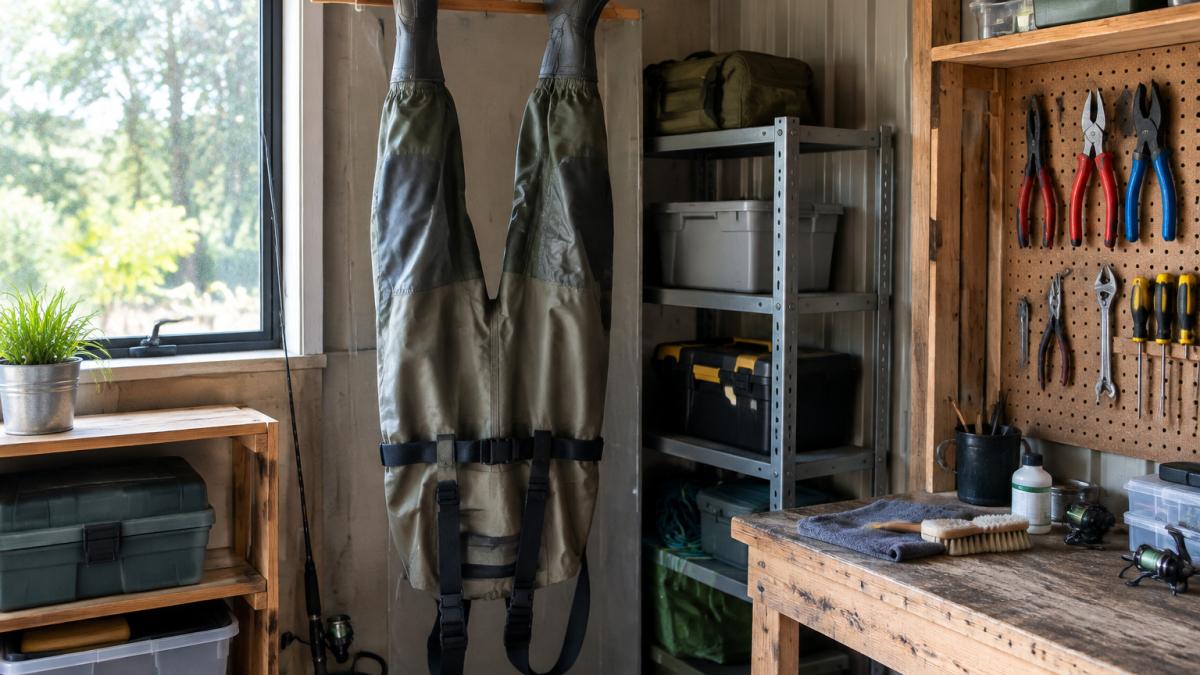
Hang your waders in a dry, ventilated spot away from direct sunlight. For ideas on keeping gear in good condition, read about lightweight gear and care. Avoid plastic bags and sealed containers, since they trap any remaining moisture.
!Pair of neoprene fishing waders hung upside down on a wooden hanger in a shaded, ventilated garage beside a window
Keep them away from fuel, chemicals and sharp tools. A simple wall hook or a dedicated gear rack works well for most anglers.
Watch out: Folding waders tightly for long periods can create creases that weaken the material over time. Hanging is the better option where you have space.
Here is a quick summary of the routine:
| Step | When | What to Do |
|---|---|---|
| Rinse | After every trip | Fresh water, inside and out |
| Clean | Monthly during season | Mild cleaner, hand-wash |
| Dry | Immediately after cleaning | Inside out, shaded, 24 hours |
| Store | Between trips | Hang, ventilated, away from sun |
Booking a Replacement Pair or Checking Your Gear Before the Next Trip
If your waders are still holding water, smell musty after drying or show cracks, it may be time to think about a replacement. Use this checklist for judging gear quality to decide whether they are still good enough. Check the seams, cuffs and boots for leaks before your next trip. If the waders are damaged, read about your warranty rights and how to make a claim. A quick test in a bath or bucket shows problems early.
Budget Roo Pty Ltd stocks fishing gear and outdoor equipment, and you can check current options on our website. Before you buy, see how returns and replacements work for Australian shoppers. Pricing depends on the product and stock, so visit the site for the latest details before you buy.
Frequently Asked Questions
How do you clean fishing waders?
Rinse the outside with cool water to remove mud and grit, then turn the waders inside out and wash the lining. Use a gentle wader cleaner or a mild detergent in lukewarm water, and avoid bleach and fabric softener. Rinse thoroughly until no soap remains, then let them air dry. Spot clean stubborn marks with a soft brush rather than scrubbing hard, which can damage the coating and the stitching over time.
Can you put fishing waders in a washing machine?
Many manufacturers advise against machine washing because the agitation and spin can stress seams, neoprene and the water-repellent finish. If you do use a machine, choose a gentle cycle, cold water and a mild cleaner, and wash them inside out. Hand washing is the safer option for most pairs, and it lets you control the rinse and avoid harsh detergents that leave residue.
Can mildew damage fishing waders?
Yes. Mildew feeds on sweat, dirt and organic residue trapped in the lining, and it can cause stains, a musty smell and gradual deterioration of breathable and synthetic fabrics. Once it has taken hold, it can be hard to remove completely. Cleaning after each trip and drying fully before storage is the most effective way to stop it from forming in the first place.
How should you store fishing waders between trips?
Store them in a cool, dry, well-ventilated place away from direct sunlight and heat, which can weaken materials over time. Hang them by the suspenders or boot section so air can circulate, rather than folding them into a sealed bag or box. Keep them away from damp concrete floors and avoid compressing them under heavy items, as this can crease seams and trap moisture.
