

Last Updated: October 30, 2026
Quick Summary
To prepare for multi-day hikes, start a structured training plan at least eight to twelve weeks before you leave, building weekly walks, strength work, hills and loaded pack walks. Train with a loaded backpack and back-to-back days, then check your readiness two to three weeks out.
- Start training six to eight weeks out for an easy two-day walk, or twelve to sixteen weeks for a week-long trip.
- Increase your long-walk distance by no more than about 10 per cent a week, holding steady every fourth week.
- Do two strength sessions a week focused on legs, core and back, keeping each to 20 to 30 minutes.
- Begin loaded pack training with 5 kg and build toward your expected pack weight over several weeks.
- Carry one extra day of food beyond your resupply points and add an electrolyte tablet to one bottle a day.
Table of Contents
- Start with a Multi-Day Hiking Training Plan
- Train with a Loaded Backpack and Back-to-Back Days
- Build Your Multi-Day Hiking Packing List
- What to Eat on a Multi-Day Hike
- How Much Water to Carry Hiking (and How to Plan Resupply)
- Plan Your Route, Weather and Emergency Backup
- Get Your Gear Ready Before You Go
- Frequently Asked Questions
Start with a Multi-Day Hiking Training Plan
The best way to prepare for multi-day hikes is to start a structured training plan at least eight to twelve weeks before you leave.
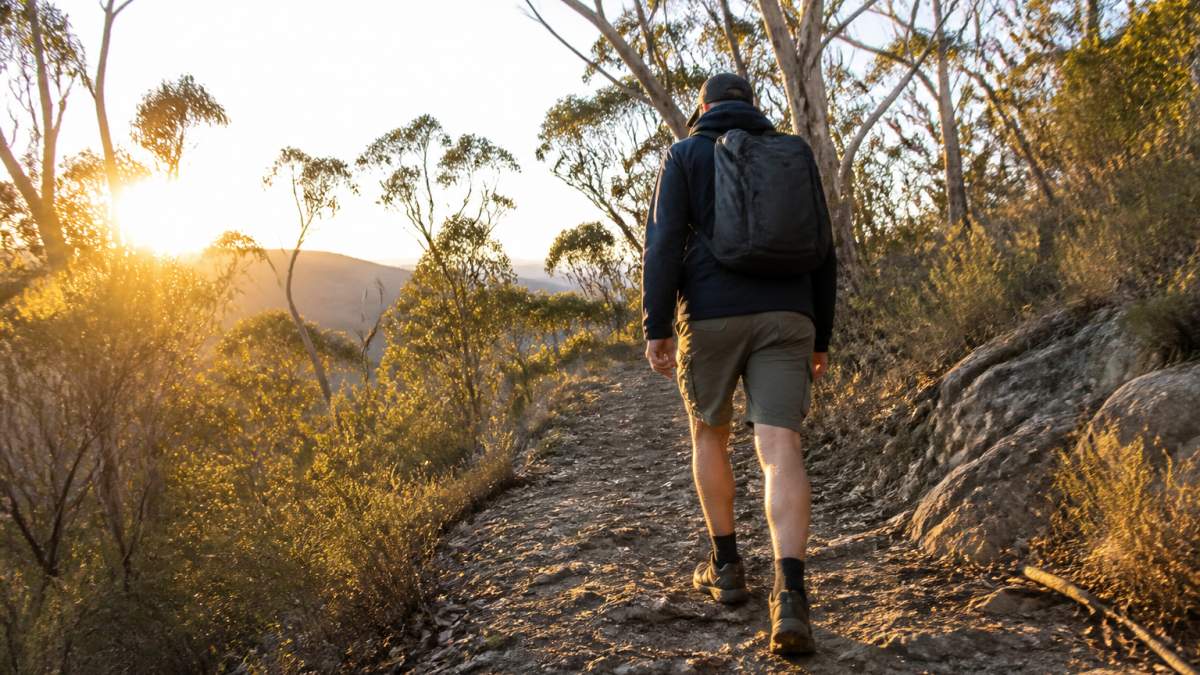
This guide covers training, pack weight, food, water and route planning, and shows how to build a plan that matches your trip length and fitness.
That second part is what most people underestimate. Anyone can grind out one big day.
Match Your Training Timeline to Your Trip
How far out you start depends on how hard the trip is. Use this as a working guide:
- Overnight or two-day easy walk: 6 to 8 weeks of consistent training.
- Three to five days with moderate climbs: 10 to 12 weeks.
- A week or more, or sustained elevation gain: 12 to 16 weeks, with at least one full back-to-back weekend block.
If you already walk regularly, compress the early weeks. Starting from a desk-bound base, add two weeks to every band. The point is to arrive at the trailhead having already done the hardest day of your trip in training.
Build Your Base with Weekly Walks
Start with three walks a week. Two should be short, around 30 to 45 minutes. Make the third one longer, and add a few kilometres each week.
A common mistake is jumping straight to big distances. Joints and tendons adapt slower than lungs, so gradual progression matters more than pace.
A sample eight-week build for a fit beginner aiming at a three-day walk:
- Week 1: 5 km, 5 km, 8 km
- Week 2: 5 km, 6 km, 10 km
- Week 3: 6 km, 6 km, 12 km
Aim for a comfortable distance you can repeat the next day, not a personal best.
Add Strength Training and Hills
Two strength sessions a week will do more for your hiking fitness than extra walking. Focus on legs, core and back.
Squats, step-ups, lunges and calf raises cover most of it. Add planks and rowing or band pulls to protect your shoulders under pack weight.
Then find hills. Walking up and down slopes builds stamina and trains the muscles that handle elevation gain.
Check Your Readiness Before You Go
Two to three weeks out, run a self-check. You're on track if you can tick most of these:
- Walk 15 to 20 km with your loaded pack and feel tired but not wrecked the next day
- Complete a back-to-back weekend (long walk Saturday, shorter walk Sunday)
- Climb the equivalent of your biggest trip day in elevation over a training walk
If you can't tick these, add a week or two of training or scale back the trip's daily distance. Adjusting the plan is cheaper than abandoning it on day three.
Train with a Loaded Backpack and Back-to-Back Days
Training with a loaded backpack is the step most people skip, and it's the one that matters most.
Do this on your long walk each week. Keep the weight low at first.
Then add back-to-back days. Walk a long distance on Saturday, then a shorter one on Sunday.
Rest days are part of the plan, not a break from it.
Build Your Multi-Day Hiking Packing List
A multi-day hiking packing list should cover shelter, sleep, clothing layers, food, water and safety gear, and nothing more. Our guide to the most forgotten camping item shows what you're missing.
Pack weight is the number to watch. Keep your loaded pack as light as you can manage.
Here's a working list:
- Shelter: tent or hammock, pegs, footprint
- Sleep: sleeping bag, mat, pillow
- Clothing: base layers, insulation, rain shell, spare socks
- Cooking: stove, fuel, pot, lighter
If you want specific pack recommendations for longer trips, our guide to the top hiking backpacks for long distance trekking covers what to look for. For overnight shelter, see how to choose a lightweight camping tent for hiking.
For sleep gear, our Weisshorn sleeping bag handles cold nights with a 190T polyester ripstop outer, 300g/m² hollow fibre filling and a 5 degree comfort rating. It's $101.95 and ships free. A camping hammock with mosquito net at $69.95 is a lighter option for overnight hikes where trees are available.
Footwear and Foot Care
Your boots or shoes should be broken in before the trip, not during it. Wear them on your long training walks for at least a month.
Blister prevention comes down to three things: dry feet, good socks and a snug fit. Change socks at lunch, and stop early if you feel a hot spot forming.
- Boots worn on at least four long walks
- Two pairs of wool or synthetic socks packed
- Blister plasters in the first aid kit
- Toenails trimmed short before you leave
What to Eat on a Multi-Day Hike
Plan your food so you're getting enough energy for each day's effort, adjusting for your size and how hard you're working. Similar nutritional considerations apply when packing dog food for your four-legged companion to ensure they maintain the stamina required for long days on the trail.
Weisshorn Sleeping Bag Camping Hiking Tent Outdoor Comfort 5 Degree Navy →
Calorie-dense foods such as nuts, chocolate and dehydrated meals are a practical choice because they pack a lot of energy into little weight.
Build a Daily Eating Schedule
Eat on a rhythm rather than waiting until you're starving. A common pattern is:
- Breakfast: oats with powdered milk and dried fruit, or a dehydrated breakfast meal
- Mid-morning snack: nuts or a muesli bar
- Lunch: wraps with cheese, tuna sachets or salami
- Afternoon snack: chocolate, dried fruit or a second bar
Snacks should be easy to eat while walking, so keep a handful in your hip-belt pocket rather than buried in your pack. Aim to eat something every 60 to 90 minutes on the move.
Work Out How Much Food to Carry
Work out how many days of food you need between resupply points, then add one extra day as a buffer.
Weigh your food before you leave. Your food weight will depend on how calorie-dense your choices are, so weigh your pack before you leave.
- Breakfast: oats, powdered milk, dried fruit
- Snacks: nuts, muesli bars, chocolate, jerky
- Lunch: wraps, cheese, tuna sachets
- Dinner: dehydrated meals, pasta, rice
Cold nights change the plan. If you're hiking in the cold season, our layering guide to stay warm in cold seasons explains how to dress so you're not burning calories just staying warm.
Plan Hydration and Electrolytes Across Days
Hydration matters just as much as food. Drink before you feel thirsty, and keep a hydration kit with your bottles or bladder at all times.
On hot days or long climbs, plain water isn't enough. Sweat carries salt, and a multi-day effort depletes it.
On a moderate day, drink regularly through the day, and drink more in heat or on big climbs.
Resupply and Food Safety on the Trail
If your route passes a town or road access, plan a resupply stop and post or buy food there rather than carrying everything. Check opening hours and whether the store stocks what you need before you rely on it.
Food safety matters more than most hikers expect. Keep cooked and raw food separate, don't leave food in your tent overnight, and hang or store it away from where you sleep if wildlife is a concern.
How Much Water to Carry Hiking (and How to Plan Resupply)
Carry enough water for the hours you'll be walking, and adjust for heat, effort and your own sweat rate.
Water is heavy, so don't carry more than you need between refills. Plan resupply points along your route before you leave.
- Mark every reliable water source on your map
- Call ahead to check tanks or taps are working
- Carry a filter or treatment tablets as backup
- Never rely on a single source
In dry conditions, carry extra and treat every source as uncertain. A hydration kit with a filter gives you options when a planned refill fails.
Plan Your Route, Weather and Emergency Backup
Route planning is where preparation for multi-day hikes gets serious.
Research the route in detail, including water sources, campsites, escape routes and elevation gain for each day. Set a realistic pace and build in buffer time.
Check the forecast in the week before you leave, and again the day before.
Leave your plan with a trusted contact: route, campsite locations and expected return time.
For safety information and bushwalking guidance, check the Bushwalking and hiking safety advice from the state health service. The Bureau of Meteorology gives forecast warnings for the area you're walking.
Get Your Gear Ready Before You Go
Test every piece of gear before the trip, not at the campsite.
A gear shakedown walk is the simplest way to do this. Load your full pack and do a long day walk at home.
Our guide on how to test camping gear quality gives you seven checks to run before you go.
| Task | When | Why It Matters |
|---|---|---|
| Break in boots | 4+ weeks out | Prevents blisters |
| Test tent and stove | 2 weeks out | Catches faults early |
| Gear shakedown walk | 1-2 weeks out | Confirms pack fit |
| Check weather and water | Day before | Adjusts the plan |
| Share route with contact | Day before | Safety backup |
Watch out: packing gear you've never used is the most common way a multi-day hike goes wrong.
Frequently Asked Questions
How many months should you train before a multi-day hike?
Most people need at least 8 to 12 weeks of consistent training before a multi-day hike, and longer if the trip involves big elevation gain or daily distances over 15 kilometres. Start with comfortable walks of 5 to 8 kilometres three times a week, then add distance and pack weight gradually. If you are new to hiking or returning from injury, allow 12 to 16 weeks so your joints, feet and cardiovascular fitness adapt without breaking down.
How far should you walk to prepare for a multi-day hike?
Aim to build up to walking at least 70 to 80 percent of your longest planned hiking day before you leave. If your biggest day on the trail will be 20 kilometres, your training walks should reach around 15 kilometres with a loaded backpack. Do this at least two or three times in the final month, and include one back-to-back weekend where you walk on consecutive days to test how your body recovers.
What should you pack for a multi-day hike?
Your multi-day hiking packing list should cover shelter, sleep system, clothing layers, food, water, navigation, first aid and emergency items. That means a tent or hammock, a sleeping bag rated for the conditions, a sleeping mat, rain shell, warm mid-layer, head torch, maps or GPS, a whistle, a basic first aid kit, a portable charger and enough food and water for the days between resupply. Weigh your pack fully loaded before you go so you know what you're carrying.
How do you prepare your feet for a multi-day hike?
Break in your boots or shoes at least a month before the trip by wearing them on shorter walks, and test them with the socks you plan to hike in. Keep toenails trimmed short and straight, and treat any hot spots immediately with tape or blister patches before they become blisters. Carry a small foot care kit with blister plasters, tape and a spare pair of socks, and change socks at lunch if your feet get sweaty. Tired, wet feet are the most common reason multi-day hikes end early.
A multi-day hike rewards the people who prepare, and punishes the ones who don't. If you want gear you can trust on the trail, Budget Roo stocks sleeping bags, hammocks, pillows and camping essentials at prices that leave room for the rest of your kit. Every item is built for real conditions and ships free. Get started with Budget Roo and head out knowing your gear will hold up.
