

Table of Contents
- The Most Forgotten Item When Camping
- Commonly Forgotten Camping Items by Trip Type
- Building Your Camping Checklist
- Camping Essentials for Beginners
- Family Camping Checklist: Don't Leave These Behind
- Last-Minute Packing Audit: Check Before You Leave
- Frequently Asked Questions
Last Updated: October 15, 2026
The Most Forgotten Item When Camping
Pillows are among the most forgotten camping items when people head outdoors. It sounds simple, but most campers leave home without proper head and neck support, then spend the night uncomfortable and unable to sleep well.
Why does this happen? Campers assume they can improvise, rolling up a jacket, using a backpack, or skipping support entirely. None of these work. Your neck needs proper alignment, especially on an uneven ground surface. Without it, you wake with stiffness and soreness that can ruin the next day's activities.
Beginners think pillows are optional. Experienced campers know they're essential. The good news is that a quality camping pillow takes almost no space and weighs almost nothing, making it one of the easiest items to pack.
Why Pillows and Comfortable Sleep Gear Get Left Behind
Most campers underestimate how much comfort matters outdoors. They focus on the big items, tent, sleeping bag, stove, and overlook the small details that determine whether you actually rest. A pillow feels like a luxury until you're lying on hard ground at 2am wishing you had one.
The KILIROO Inflatable Camping Travel Pillow addresses this gap perfectly. It weighs just 84 grams, folds to the size of a small book (6.5 × 13 centimetres), and inflates in seconds. The TPU fabric is water-resistant and durable.

Beyond pillows, comfortable sleep gear includes your sleeping bag and any additional insulation. A quality sleeping bag isn't optional, it's foundational. The Weisshorn Sleeping Bag ($101.95) includes two pillows, offers a 5-degree comfort rating, and converts into two single bags if needed.
Other Frequently Overlooked Essentials
Lighting gets left behind surprisingly often, even by experienced campers. You pack a flashlight, but forget spare batteries. Or you bring one light source and no backup.
The EL608 Rechargeable LED Night Light ($42.95) features a rechargeable battery and motion-sensor modes. It charges via USB, so you can top it up before leaving.
Water bottles and hydration gear are frequently forgotten or undersized. Campers pack one bottle and assume it's enough.
The 32oz Water Tracker Bottle ($19.95) holds a litre and features a leak-proof flip-top lid. It's food-grade, handles both hot and cold drinks, and encourages consistent hydration.
Electronics and chargers create another common gap. Mobile phones die. Torches need fresh batteries. GPS devices run out of power. A solar charger bridges this gap.
First-aid supplies and personal hygiene items get overlooked because campers assume they won't need them.
Commonly Forgotten Camping Items by Trip Type
What you forget depends on how long you're camping and who's with you. A weekend solo trip has different needs than a week-long family adventure.
Weekend Getaways vs Extended Trips
Weekend trips create a false sense of simplicity. You think three days is short enough that you don't need much. Then you arrive and realise you've forgotten something critical, usually something small that cascades into frustration.
For weekend trips, focus on comfort items first: pillow, sleeping bag, extra socks. Then add lighting and hydration. These four categories cover most of what people forget on short trips.

Extended trips (5+ days) shift the priority. You can't improvise for a week. Comfort becomes even more critical because discomfort compounds over time.
The longer the trip, the more you realise that "just making do" doesn't work. A pillow you skip for one night becomes a necessity for five nights. A single torch isn't enough when you're camping in low-light conditions every evening.
Family Camping vs Solo Adventures
Family trips add complexity because you're managing multiple people's needs. Parents forget items for their children, extra shoes, specific snacks, comfort items, while focusing on the group's logistics.
Solo camping is different. You're only managing yourself, so the checklist is simpler. But solo campers often underpack because they're trying to keep their pack light. They skip items that would improve comfort because weight feels more important than convenience.
Family trips require a different packing philosophy: pack for comfort and safety first, weight second. Children need proper sleep gear, appropriate clothing, and entertainment. A child who sleeps poorly affects the entire group's experience.
Building Your Camping Checklist
A systematic approach prevents forgotten items. Start with a master list, then customise it for your specific trip.
Core Gear That Matters Most
Your foundation includes shelter, sleeping gear, and clothing. Everything else builds on these three categories. A tent protects you from weather. A sleeping bag and pillow keep you warm and rested. Clothing adapts to temperature changes.
From there, add lighting, water, and food. These are non-negotiable. You need to see after dark, stay hydrated, and have energy. A camping trip without these three fails quickly.
Then comes everything else: first aid, hygiene, entertainment, navigation. These items prevent problems and improve the experience, but you can improvise with them if necessary. Your core gear has no substitutes.
Lighting and Power: What You Actually Need
Don't assume one light source is enough. Bring a primary torch, a backup torch, and a lantern if possible. Include spare batteries or a rechargeable option. The CHOETECH solar charger ($89.95) works during the day and keeps your devices charged.

For motion-sensing lighting around your campsite, the EL608 ($42.95) provides hands-free illumination. Set it to sensor mode and it activates when you move near it. This is particularly useful around the camp kitchen or near the tent entrance.
Personal Hygiene and Comfort Items
Toothbrush, toothpaste, soap, and sunscreen are easy to forget because they're daily habits at home. You assume you'll do without them for a few days. In reality, basic hygiene matters more outdoors. Dirt accumulates faster, sun exposure is greater, and minor cuts are more likely.
KILIROO Inflatable Camping Travel Pillow - Turquoise KR-TP-100-SM →
Pack a small towel or cloth. Wet wipes take minimal space and handle multiple cleaning needs. Insect repellent prevents bites that can ruin your sleep and comfort.
Camping Essentials for Beginners
First-time campers make predictable mistakes. They overpack some items and underpacks others. They forget that comfort outdoors requires different thinking than comfort at home.
Start Simple: What First-Timers Actually Need
Begin with these five essentials: tent, sleeping bag, pillow, water bottle, and torch. Everything else is secondary. If you have these five items in good condition, you can camp safely and reasonably comfortably.
Add clothing appropriate to the season and weather forecast. Include a basic first-aid kit. Bring food and a way to cook it. These additions cover the fundamentals.
Don't buy expensive gear before your first trip. Rent or borrow items to test what you actually need. Many beginners invest heavily in equipment they later discover they don't use. Start minimal, learn what matters to you, then upgrade specific items.
Common Mistakes New Campers Make
Beginners often pack too much, then realise they can't carry it all. They bring clothes they don't wear and skip items they desperately need. They forget that outdoor conditions change quickly, what's comfortable at midday is cold at night.
Another common error is underestimating the importance of sleep. Beginners think they can sleep anywhere. Most can't, not well anyway. A proper pillow and sleeping bag make the difference between a miserable night and actual rest.
New campers also skip backup items. One torch seems like enough until it breaks or the batteries die. One water bottle seems sufficient until you're thirsty in the afternoon with hours until camp. Redundancy isn't wasteful, it's smart planning.
Family Camping Checklist: Don't Leave These Behind
Families have additional responsibilities. Children need specific items, and parents must anticipate problems that might not affect solo campers.
Child-Specific Items Parents Forget
Children need extra shoes. One pair gets wet or uncomfortable, and you need a backup. Extra socks prevent blisters and keep feet dry. These items take minimal space but prevent significant problems.
Bring comfort items from home, a favourite toy, a familiar pillow, or a specific snack. These psychological comforts help children adjust to an unfamiliar environment. A child who feels secure sleeps better and behaves better.
Include child-appropriate first-aid items: bandages in smaller sizes, pain relief suitable for children, and any medications they need. Pack more snacks than you think you'll need. Hungry children become difficult children.
Keeping Everyone Comfortable and Safe
Ensure everyone has proper clothing for temperature changes. Layers are essential. Bring more socks and underwear than seems necessary, wet or dirty pairs accumulate quickly with children.
Pack a headlamp or torch for each person. Children feel safer with their own light source, and it prevents accidents around camp. The EL608 rechargeable light ($42.95) is compact enough for children to carry.
Establish a hydration routine. Make water bottles visible and encourage regular drinking. Children often forget to drink until they're already dehydrated. A water bottle with a tracker feature (like the 32oz model at $19.95) makes hydration visible and fun.
Last-Minute Packing Audit: Check Before You Leave
The night before departure, conduct a final review. This catches forgotten items before you're on the road.
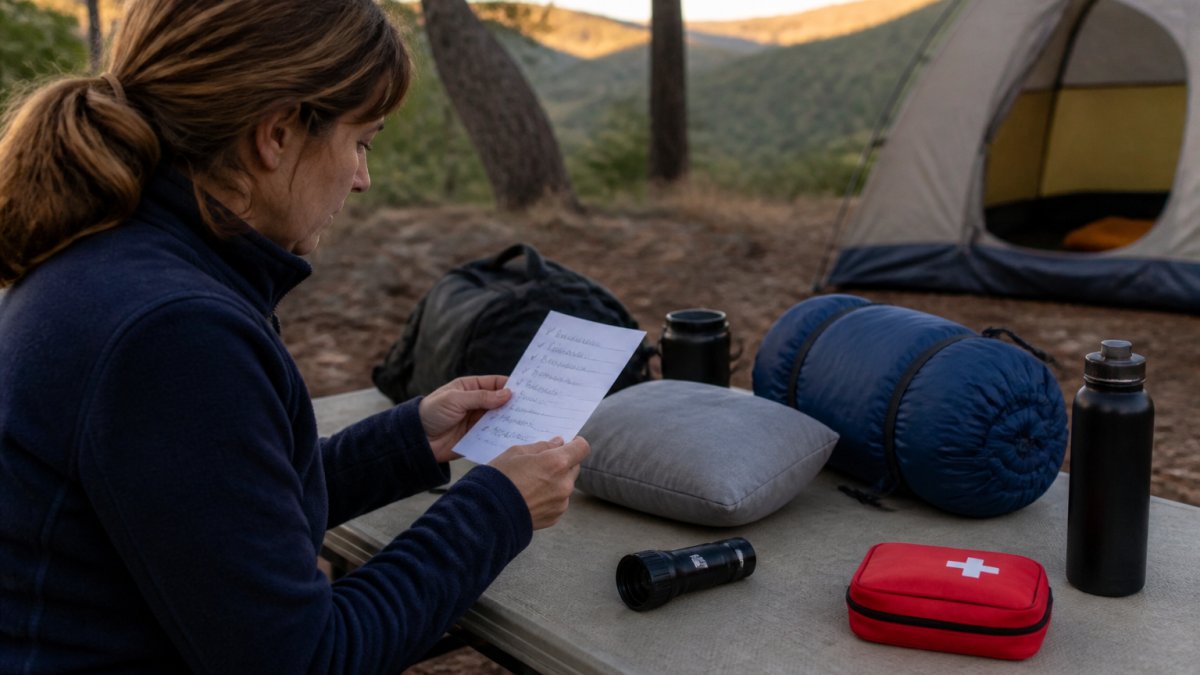
The Night-Before Checklist
Walk through each category: shelter, sleep, clothing, lighting, water, food, first aid, hygiene. For each category, verify you have the item and it's in good condition. Check batteries in torches. Confirm your sleeping bag isn't still in the wash. Verify your pillow is packed.
Check the weather forecast one final time. If conditions have changed, adjust your clothing or gear. If rain is now predicted, confirm your tent is waterproofed and you have extra tarps.
Confirm your vehicle has fuel and your phone is charged. Verify you have directions or GPS ready. These logistics matter as much as your gear.
What to Do If You Forget Something
If you realise something is missing after you've left home, prioritise. Is it essential or convenient? Essential items (pillow, sleeping bag, torch, water bottle) warrant a return trip or a stop at a local shop. Convenient items (specific toiletries, entertainment) can often be improvised or skipped.
Many camping areas have small shops or nearby towns. A forgotten toothbrush or snack can be replaced. A forgotten sleeping bag or torch cannot.
Create a mental hierarchy: sleep gear and lighting are non-negotiable. Everything else is negotiable. This mindset prevents panic if you forget something minor.
Forgetting items is part of camping. Even experienced campers leave something behind occasionally. The key is preparing for the most common oversights, particularly sleep gear and lighting, so that minor forgotten items don't derail your trip.
Frequently Asked Questions
What is the most commonly forgotten item when camping?
Pillows are the most frequently forgotten camping items. Many campers assume they'll sleep on their sleeping bag or a makeshift pillow, but comfort matters more than expected. Without proper neck and head support, sleep quality suffers, affecting the entire trip. A lightweight inflatable pillow like the KILIROO Inflatable Camping Travel Pillow (AUD $14.95) solves this, it weighs just 84 grams, folds to pocket size, and provides genuine comfort without bulk.
What should be on a camping checklist to avoid forgetting essentials?
A solid camping checklist includes sleeping gear, lighting, water bottles, first-aid supplies, toiletries, extra clothing, and food. Organise it by category: shelter and sleep (tent, sleeping bag, pillow), lighting (flashlight, spare batteries), hydration (water bottles), personal care (toothbrush, soap, sunscreen), and clothing (extra socks, warm layers). Check your list the night before departure. Many campers forget items because they pack last-minute without a reference list.
What are camping essentials for beginners that are easy to overlook?
Beginners often forget spare batteries, a reliable light source, a comfortable pillow, and extra footwear. You'll also overlook weather protection, a light rain jacket or extra jumper makes a huge difference. Water bottles are essential but frequently left behind because campers assume they'll find water on-site. Start with basics: sleeping bag, tent, pillow, torch, water bottle, and a basic first-aid kit. Don't overload with gear; focus on comfort and safety first.
How do I create an effective family camping checklist?
A family camping checklist must include items for each family member plus shared gear. Add child-specific items: extra clothing (kids get dirty), nappies or pull-ups if needed, comfort items (favourite toy or blanket), and child-safe toiletries. Include a first-aid kit with items for minor injuries, medications, and insect repellent. Pack more water than you think you'll need, families use more. Check the weather forecast and pack accordingly. Use a printed checklist and tick items off as you pack to avoid last-minute scrambling.