

Table of Contents
- Understanding Lightweight Camping Tent Weight Categories
- Backpacking Tent Weight Guide: Comparing Advertised Specifications
- One-Person vs Two-Person Hiking Tent: Capacity and Fit
- Hiking Tent Weather Protection: Materials, Coatings, and Durability
- Tent Design: Freestanding, Non-Freestanding, and Trekking-Pole Options
- Tent Footprint for Backpacking: Protection and Setup Considerations
- Making Your Decision: Weight Trade-Offs and Real-World Conditions
- Frequently Asked Questions
Last Updated: October 10, 2026
Understanding Lightweight Camping Tent Weight Categories
Choosing a lightweight camping tent for hiking requires understanding how tent weight is measured and what actually counts as lightweight.

Packed weight versus trail weight
Packed weight includes everything that ships in the box: the tent body, rainfly, poles, stakes, guy lines, and carry bag. Trail weight (also called minimum weight) excludes the carry bag and sometimes the stakes and guy lines, since experienced hikers often carry their own stakes or leave them behind.
When comparing tents, always ask which weight you're looking at. Many manufacturers list packed weight prominently while burying trail weight in the fine print. If you're evaluating a lightweight camping tent, request both figures so you know the real weight going into your pack.
What counts as lightweight or ultralight
The outdoor community uses these rough categories for a one-person hiking tent: lightweight tents typically fall between 1.0 and 1.5 kg packed weight, while ultralight designs weigh under 1.0 kg. For a two-person tent, lightweight is roughly 1.5 to 2.0 kg, and ultralight is under 1.5 kg.
However, these categories depend on tent capacity and intended use. A 1.2 kg two-person tent is genuinely lightweight. A 1.2 kg four-person tent would be considered ultralight and likely involves significant compromises in durability or weather protection.
Backpacking Tent Weight Guide: Comparing Advertised Specifications
Understanding how to read tent specifications helps you make fair comparisons across brands. A tent's actual performance depends on multiple factors beyond its weight, and comparing apples to apples requires knowing what you're measuring.
The weight listed for a tent usually refers to the shelter only: tent body, rainfly, and poles. Some manufacturers include stakes and guy lines; others don't. The carry bag is almost never included in the weight figure, even though you'll carry it to the trailhead. Check the product page carefully for what's included in each weight claim.
Trail weight comparisons also vary by how manufacturers count components. Some include only the tent body and rainfly (the minimum shelter), while others add poles and stakes. A tent advertised as 850 grams might weigh 950 grams once you add the poles that weren't counted. This is why reading the detailed specifications matters more than comparing headline numbers.
For a fair comparison, look at the complete packed weight, then subtract the carry bag weight (usually 50-100 grams) to estimate trail weight. Compare tents using the same measurement method. At Budget Roo, we stock a range of backpacking tents with clear weight specifications.
One-Person vs Two-Person Hiking Tent: Capacity and Fit
Tent capacity and choosing a size for the number of hikers
A one-person tent typically has a floor area of 1.2 to 1.5 square metres, while a two-person tent ranges from 2.0 to 2.5 square metres. These figures matter because they determine how much room you actually have inside.
For solo hiking, a one-person tent saves weight and packs smaller. For two people, a two-person tent gives you more comfort and storage space for backpacks and supplies. However, a lightweight two-person tent often weighs less than a standard one-person tent, making it a practical choice for couples or hiking partners who want to share weight savings.
Floor area, peak height, and livability
Peak height (the distance from the floor to the highest point of the tent) affects how comfortable you'll be sitting upright inside. A peak height of 1.0 metre or less forces you to crouch, while 1.2 metres or higher lets you sit comfortably. For lightweight camping tents used on short trips, lower peak height is acceptable.
Floor area and peak height together determine livability, which is how comfortable the tent feels during extended use. A tent with 2.0 square metres of floor space and 1.3 metres of peak height feels noticeably more spacious than one with the same floor area but only 1.0 metre of peak height.
Hiking Tent Weather Protection: Materials, Coatings, and Durability
Fabric types and waterproofing standards
Most lightweight camping tents use nylon or polyester for the tent body and rainfly. Nylon is lighter and more durable under stress, while polyester resists UV damage better and is often cheaper. Both materials are treated with coatings to improve waterproofing.
The tent body (the inner layer you sleep in) is typically made from breathable nylon mesh, which allows moisture to escape while the rainfly (outer layer) blocks rain. This two-layer design reduces condensation inside the tent, keeping your sleeping bag drier during cool nights.
For a lightweight camping tent used on weekend hikes, a 3000 mm PU-coated rainfly is sufficient. For extended trips in wet conditions, consider tents with higher waterproofing ratings or double-layered construction, though these add weight.

Season rating and ventilation for condensation control
Season ratings indicate how well a tent handles cold and moisture. A three-season tent is designed for spring, summer, and autumn use and includes good ventilation to manage condensation.
Weisshorn Instant Up Camping Tent 4-5 Person Pop up Tents Family Hiking Beach →
Ventilation comes from mesh panels and vents that allow moist air to escape. Poor ventilation leads to condensation inside the tent, which can wet your sleeping bag and reduce insulation. A lightweight camping tent with mesh windows and a vented rainfly performs well in most conditions.
Tent Design: Freestanding, Non-Freestanding, and Trekking-Pole Options
Freestanding versus non-freestanding designs
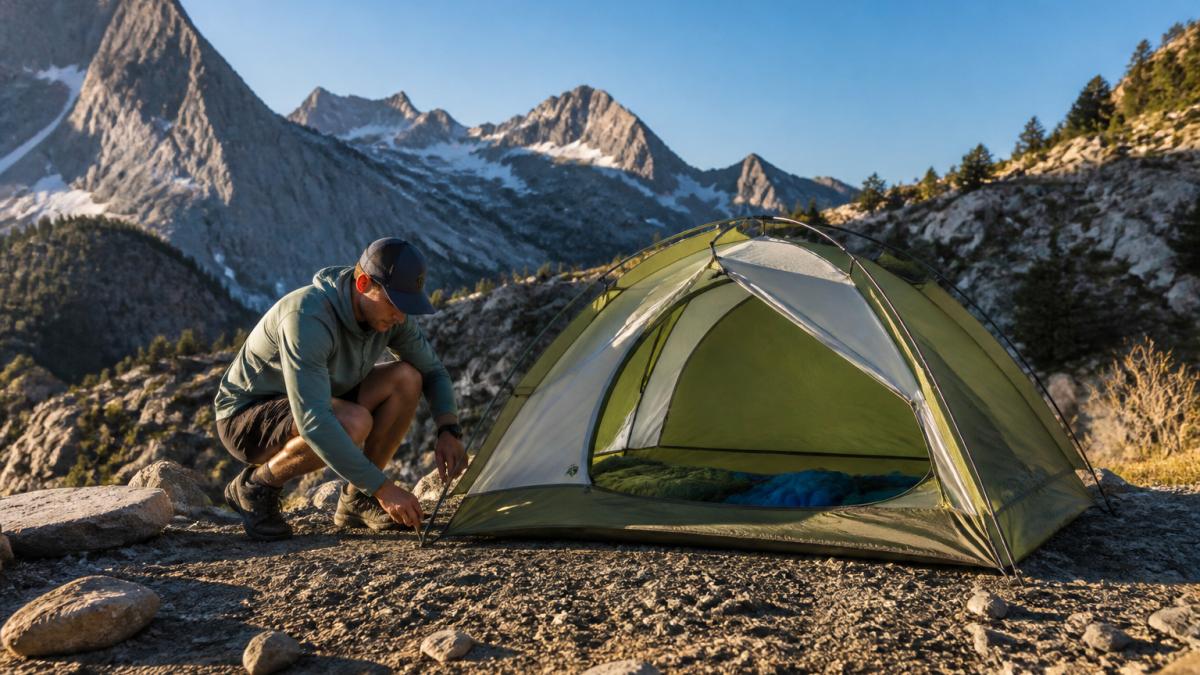
A freestanding tent stands on its own without needing stakes or guy lines, making it quick to set up and easy to move if you find a better spot.
Non-freestanding tents (also called ground tents) rely on stakes and guy lines for stability. They're lighter because the frame is minimal, but they require a clear, flat area to pitch and take longer to set up.
For most hiking trips, a freestanding lightweight camping tent offers the best balance of weight, convenience, and reliability. You can pitch it almost anywhere, and you don't need to worry about stakes holding in soft ground.
Trekking-pole tents and their support requirements
A trekking-pole tent uses your hiking poles instead of traditional tent poles to create the shelter. This design saves significant weight because you're not carrying a second set of poles.
Trekking-pole tents work well for experienced hikers on lightweight trips where every gram counts. They typically weigh 400-600 grams for a one-person design, making them genuinely ultralight.
For most hikers, a traditional freestanding lightweight camping tent is more practical. At Budget Roo, we stock options that balance weight savings with reliability and ease of use.
Tent Footprint for Backpacking: Protection and Setup Considerations
A tent footprint is a groundsheet that sits under your tent to protect the floor from abrasion and moisture. It extends the life of your tent and keeps the interior drier, but it adds weight (usually 100-150 grams) and bulk to your pack.
For weekend hikes on established campsites, a footprint is optional. For multi-day trips or camping on rough terrain, a footprint protects your tent's floor from punctures and extends its durability significantly. Many hikers compromise by using a lightweight plastic sheet instead of a purpose-made footprint, saving weight while still protecting the tent.
A footprint also helps with setup on wet ground. You can lay it down first to create a dry base, then pitch the tent on top. This is especially useful when camping after rain or in areas where the ground is damp.
Making Your Decision: Weight Trade-Offs and Real-World Conditions
When ultralight designs are a poor choice
Ultralight tents (under 1.0 kg) often involve compromises that make them unsuitable for certain conditions. They typically have minimal ventilation, lower peak height, smaller floor area, and thinner fabrics that tear more easily. An ultralight tent is excellent for a solo hiker on a dry-weather trip where weight is the priority.
Ultralight designs also require more skill to use effectively. You need to manage condensation carefully, pitch in sheltered locations, and handle the tent gently to avoid damage. For casual hikers or families, a standard lightweight tent offers better reliability and comfort.
Weight trade-offs across your whole sleep system
Your tent is part of a larger sleep system that includes your sleeping bag, mat, and clothing. A heavier tent with better insulation and ventilation might let you use a lighter sleeping bag, resulting in overall weight savings. Conversely, an ultralight tent might force you to carry a heavier sleeping bag for warmth if the tent doesn't retain heat well.
When evaluating a lightweight camping tent, consider the total weight of your sleep system, not just the tent alone. A 1.5 kg tent with excellent weather protection might be a better choice than a 1.0 kg tent that requires a heavier sleeping bag or additional insulation.
| Tent Type | Typical Weight | Best For | Key Trade-Off |
|---|---|---|---|
| Ultralight freestanding | 0.8-1.2 kg | Solo, dry weather, weight-focused | Reduced durability, minimal features |
| Lightweight freestanding | 1.2-1.8 kg | Couples, multi-day hikes, general use | Slightly heavier but more reliable |
| Non-freestanding ultralight | 0.5-0.9 kg | Expert hikers, weight-critical trips | Requires stakes, slower setup |
| Trekking-pole tent | 0.4-0.7 kg | Ultralight solo trips, experienced users | Poles committed to tent, complex setup |
Choosing the right lightweight camping tent comes down to matching the tent to your actual hiking style and conditions. Our Weisshorn Family Camping Tent 4 Person offers excellent weather protection with a 3000 mm PU-coated rainfly and double-layer construction at an accessible price point, making it ideal for families and casual hikers. For solo trips where weight matters more, our Weisshorn Instant Up Camping Tent sets up in seconds and provides reliable shelter without excessive weight.
Frequently Asked Questions
What weight should a lightweight camping tent be for hiking?
A lightweight tent typically weighs 1.5-2.5 kg for a one-person shelter and 2-3.5 kg for a two-person design. Ultralight models drop below 1.5 kg but often sacrifice livability or durability. Your choice depends on trip length and terrain. A multi-day backpacking tent should balance weight savings with weather protection and interior space. Consider packed weight rather than just the fabric and poles, include the rainfly, stakes, and guylines in your total.
Is a one-person or two-person hiking tent better for solo backpacking?
A one-person tent saves 500-800 grams compared to a two-person model, making it ideal for solo weight-conscious hikers. However, a two-person tent offers more interior space for gear storage during bad weather and greater comfort on longer trips. If you occasionally hike with a partner or need extra room for a dog, a two-person tent provides flexibility. For pure weight savings on solo trips, a one-person design wins; for versatility, two-person is the better choice.
How important is a tent footprint for backpacking?
A footprint extends your tent's lifespan by protecting the floor from abrasion and punctures. On multi-day hikes, it prevents moisture seeping up from damp ground and reduces condensation inside. A footprint typically adds 200-300 grams, which is worthwhile for regular backpacking. Skip it only on very short trips or when weight is absolutely critical. For most hikers, the durability and comfort gains justify the small weight penalty.
What features matter most in a lightweight camping tent for hiking?
Prioritise waterproofing (a PU-coated rainfly rated 3000 mm or higher), ventilation to prevent condensation, and a sturdy pole structure that handles wind. Freestanding designs are more versatile on rocky or wet ground than non-freestanding tents. Check floor area for comfort, at least 0.8 m² per person, and peak height for headroom. Double-layer fabric construction improves durability and condensation control. Balance these features against your trip type: a solo alpine trip needs different priorities than a weekend family camp.