

Table of Contents
- How Layering Works to Keep You Warm
- Choosing the Right Base Layer Materials
- Mid-Layer Insulation: Building Thermal Retention
- Best Insulated Jackets for Winter Conditions
- How to Layer for Winter Hikes and Outdoor Activities
- Active Insulation and Heated Gear for Cold-Weather Comfort
- Common Mistakes That Sabotage Warmth
- Frequently Asked Questions
Last Updated: September 26, 2026
How Layering Works to Keep You Warm
The core principle behind staying warm in winter is simple: layering traps air between fabric layers, creating insulation that prevents body heat from escaping. This is why a three-layer system outperforms a single thick jacket. Each layer serves a distinct purpose, and understanding how they work together is essential to stay warm during cold seasons.
The science behind layering is straightforward. Your body radiates heat constantly. When that heat meets cold air, your core temperature drops. Layering interrupts this process by creating dead air space; the actual insulator isn't the fabric itself, but the trapped air within and between layers.
The three-layer framework works like this: a base layer pulls moisture away from your skin, a mid-layer traps warm air, and an outer shell blocks wind and water. Skip any layer, and your system fails. Use the wrong materials, and you'll stay damp and cold regardless of how many layers you wear.
Choosing the Right Base Layer Materials
Your base layer is the foundation of thermal insulation and moisture management. It sits directly against your skin and determines whether sweat moves away from your body or stays trapped, turning you into a human ice pack.
Merino Wool Base Layers
Merino wool is the gold standard for base layers because it regulates temperature across a wider range than synthetic alternatives. Unlike regular wool, merino fibres are fine enough to feel soft against skin, and the material naturally wicks moisture while maintaining insulating properties even when damp.
The thermal insulation properties of merino wool come from its crimp structure; the natural waviness of the fibre creates air pockets that retain heat. What sets it apart is that it continues to insulate at 60% moisture content, whereas synthetic fibres lose effectiveness much faster. For serious outdoor activities in cold-weather performance conditions, merino wool is worth the investment.
Merino also has natural antimicrobial properties, meaning you can wear it multiple days without washing. This matters on extended trips where laundry isn't an option.
Synthetic Fibres vs Natural Materials
Synthetic fibres like polyester and polypropylene are engineered specifically for moisture-wicking. They dry faster than merino wool and cost significantly less, making them ideal for budget-conscious layering systems. The trade-off is durability; synthetics pill and degrade faster with repeated washing.
Natural materials like merino wool offer superior temperature regulation and longevity. They resist pilling and maintain their properties for years.
For casual outdoor activity, synthetic base layers are perfectly adequate. Budget Roo Pty Ltd stocks both options, allowing you to match your choice to your activity level and budget.
| Base Layer Material | Moisture-Wicking Speed | Warmth When Damp | Cost | Best For |
|---|---|---|---|---|
| Merino Wool | Moderate | Excellent | Higher | Extended trips, serious hikers |
| Polyester | Fast | Good | Lower | Day hikes, casual outdoor use |
| Polypropylene | Very Fast | Moderate | Lowest | Budget-focused beginners |
Mid-Layer Insulation: Building Thermal Retention
The mid-layer is where heat retention happens. While your base layer manages moisture, your mid-layer traps warm air and prevents it from escaping. This is the insulating properties layer that determines whether you stay warm or gradually cool down.
Fleece and down are the two primary mid-layer options. Fleece (typically polyester) is lightweight, dries quickly, and maintains insulation when damp. Down fill power, measured in cubic inches per ounce, indicates how much air a down cluster can trap. Higher loft means better insulation in dry conditions, but down loses all insulating properties when wet.
Active insulation has emerged as a middle ground. These synthetic materials mimic down's warmth-to-weight ratio while maintaining performance when damp. They're ideal for unpredictable conditions where moisture exposure is likely.
The mid-layer should fit snugly without restricting movement. Too loose and air escapes; too tight and you compress the loft, reducing insulation. Most outdoor enthusiasts find a fleece hoodie or lightweight insulated jacket provides the right balance of warmth, packability, and breathability for variable conditions.
Best Insulated Jackets for Winter Conditions
An outer shell jacket protects your mid-layer and base layers from wind and water. Windproof and water-resistant shells are non-negotiable to stay warm in cold seasons in unpredictable weather.
Look for jackets with breathability ratings, measured in grams of moisture transmission per square metre per 24 hours. Higher numbers mean sweat escapes faster, preventing that damp feeling even when you're working hard. Taped seams are essential; they seal the needle holes that would otherwise let water in.
Budget Roo Pty Ltd's Heated Jacket Men's Women's Jacket with USB Heating offers an active insulation approach. With 21 smart heated areas including neck, shoulders, arms, back, waist, and belly, this jacket provides comprehensive warmth for motorcycle riders and outdoor enthusiasts who need extra thermal conductivity in extreme cold. USB-powered with three temperature settings (25°C, 35°C, and 45°C), it's ideal for activities where passive layering isn't enough. At $79.95, it delivers serious heat retention without the bulk of traditional down jackets.
Heated Jacket Men's Women's Jacket USB →
For traditional layering systems, prioritise shells with pit zips, underarm zippers that allow heat to escape when you're working hard. This prevents overheating and moisture buildup, which paradoxically makes you colder when you stop moving.
How to Layer for Winter Hikes and Outdoor Activities
The layering system adapts to your activity level and conditions. A winter hike demands different gear than a motorcycle commute or a fishing expedition, but the three-layer principle remains constant.
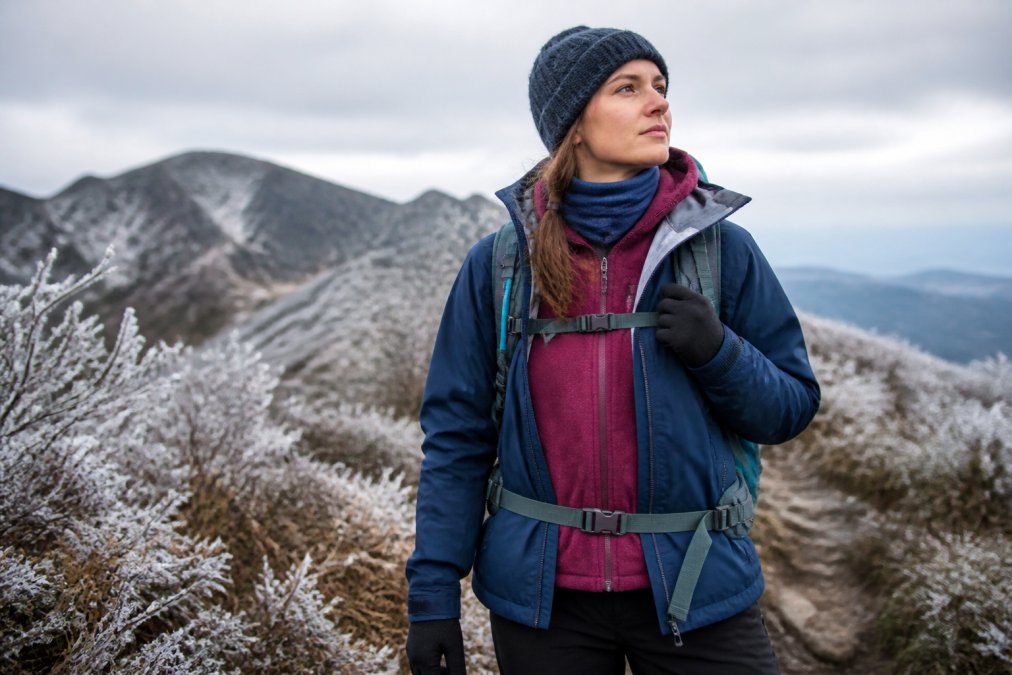
Start with your base layer, merino wool or synthetic, depending on your budget and trip duration. Add your mid-layer (fleece or down) once you're on the trail. Keep your outer shell accessible but not on yet; you'll add it when wind picks up or precipitation starts. This approach prevents overheating and moisture accumulation during the climb.
As you descend and your exertion drops, add layers progressively. Your body generates less heat at rest, so you'll need more insulation. The reverse of your climb: shell first, then mid-layer if needed, always keeping your base layer dry.
Managing Moisture and Sweat During Activity
Sweat is your enemy in cold weather. It conducts heat away from your body 25 times faster than dry air, meaning wet clothing turns you hypothermic even at temperatures that wouldn't otherwise be dangerous. This is why moisture-wicking is non-negotiable; your base layer must pull sweat away from skin.
Adjust your layers before you start sweating heavily. Remove your outer shell or mid-layer at the first sign of overheating. Most hikers make the mistake of pushing through discomfort and sweating into their layers, then getting dangerously cold when they stop moving. Prevent this by shedding layers early.
Synthetic base layers dry faster than merino, making them better for high-intensity activities where sweat production is heavy. Merino wool maintains its insulating properties even when damp, making it superior for lower-intensity, longer-duration activities where drying isn't possible.
Protecting Extremities and Head
Your body prioritises core temperature, sacrificing fingers, toes, and ears when it gets cold. This is why head and extremity protection is critical; you lose disproportionate heat through your head and hands.
A quality winter beanie traps warm air around your scalp and ears. Insulated gloves with water-resistant outer shells prevent frostbite and maintain dexterity. Wool or synthetic blend socks keep feet warm and dry; cotton socks are useless in cold conditions.
The Weisshorn Sleeping Bag (available in Navy or Grey at $101.95) provides exceptional insulation with 300g/m² hollow fibre filling, making it ideal for cold-weather camping where extremity protection extends to your entire body during sleep.
Active Insulation and Heated Gear for Cold-Weather Comfort
Active insulation uses synthetic materials engineered to trap air like down but maintain performance when wet. These jackets bridge the gap between passive layering and powered heating solutions, offering reliable warmth without batteries or power requirements.
Common Mistakes That Sabotage Warmth
The biggest error is wearing too many layers without proper moisture management. You'll overheat, sweat into your insulation, then get dangerously cold when you stop moving. Better to start cool and add layers than to start warm and have nowhere to go.
Frequently Asked Questions
What is the best gear to wear in winter to stay warm and comfortable during cold seasons?
Effective winter gear combines three layers: a moisture-wicking base layer (merino wool or synthetic), an insulating mid-layer for heat retention, and a windproof, water-resistant outer shell. The Heated Jacket with 21 smart heated areas offers targeted warmth for extreme cold, while layering systems provide flexibility for varying temperatures. Choose materials based on activity level; merino wool regulates temperature naturally, whilst synthetic fibres dry faster during active pursuits.
How does layering work for outdoor activities in cold weather?
Layering traps body heat whilst managing moisture through thermal conductivity and breathability. Your base layer wicks sweat away from skin, the mid-layer provides insulation by trapping warm air, and the outer shell blocks wind and water. This system lets you adjust thermal regulation by adding or removing layers as your activity intensity changes. Proper layering prevents hypothermia by maintaining consistent body temperature and keeping you dry.
What materials are best for retaining heat in cold weather?
Merino wool naturally regulates temperature and retains warmth even when damp, making it ideal for active pursuits. Synthetic hollow-fibre materials like those in the Weisshorn Sleeping Bag (300g/m² filling) provide excellent loft and insulating properties. Down fill power offers superior warmth-to-weight ratios for static activities. Cotton should be avoided; it absorbs moisture and loses insulating properties. Synthetic blends balance durability, cost, and cold-weather performance for budget-conscious outdoor enthusiasts.
How do I know if my insulated jacket will actually keep me warm in proper cold?
Look for fill weight or loft measurement, and outer shell materials that are windproof and water-resistant. Active insulation like heated jackets with multiple thermal zones provide consistent warmth regardless of conditions. Check customer reviews for real-world performance in your climate. Budget Roo Pty Ltd's Heated Jacket offers 21 heated areas reaching 45°C, ideal for extreme conditions, whilst layering systems adapt to various cold-weather scenarios.