

Last Updated: November 5, 2026
Quick Summary
Fishing rod action describes where a rod bends under load, from fast action that bends in the top third to slow action that bends down near the handle. Fishing rod power describes how much lure or line weight the rod can handle before it is overloaded. Action affects how the rod feels and sets hooks, while power sets the load limits.
- Fast action rods bend mostly in the top third and suit quick hook sets and long casts.
- Slow action rods bend through most of their length and cushion fish runs but are less precise.
- Rod power ratings run from ultra-light to heavy and come with suggested lure and line weight ranges.
- Stay inside both the lure weight and line weight limits printed on the rod label.
- Medium power is the safe first choice because it covers the widest range of lure weights and fish sizes.
Table of Contents
- Fishing Rod Action Explained: How the Rod Bends
- Fishing Rod Power Explained: How Much Load a Rod Handles
- The Difference Between Action and Power, Side by Side
- Fishing Rod Action Chart: Fast to Slow Explained
- Fishing Rod Power Chart: Ultra-Light to Heavy Explained
- Best Rod Action for Soft Plastics and Medium vs Medium-Heavy Rods
- Choosing Your Rod: Your Next Step Before You Buy
- Frequently Asked Questions
Walk into any tackle shop and you'll hear anglers throw around "fast action," "medium power," and "heavy" like everyone already knows what they mean. Budget Roo sells a range of fishing gear, and rod action and power are two terms beginners often ask about. Here's the plain version: action describes where a rod bends, and power describes how much force it can handle before it bends too far.
Fishing rod action is the part of the rod that flexes most when you load it. Fishing rod power is the amount of weight the rod is designed to handle, usually measured in lure weight or line weight. Action and power work together, but they answer different questions.
Fishing Rod Action Explained: How the Rod Bends
Rod action describes the point along the blank where the rod bends under load. A fast action rod bends mostly in the top third. A slow action rod bends through most of its length, all the way down to the handle.
Here's what that means when you cast and fight a fish:
- Fast action: Quick, sharp response. Good for hook sets and long casts.
- Moderate action: Bends further down the rod. Forgiving with lighter lures.
- Slow action: Deep, soft bend. Cushions fish runs but is less precise.
A common mistake is buying the fastest rod on the shelf. Fast action feels impressive, but beginners often miss strikes because they set the hook too late.
Fishing Rod Power Explained: How Much Load a Rod Handles
Rod power is the rating that tells you how much stress the blank can take. Manufacturers usually print it on the rod as a label such as ultra-light, light, medium, medium-heavy, or heavy.
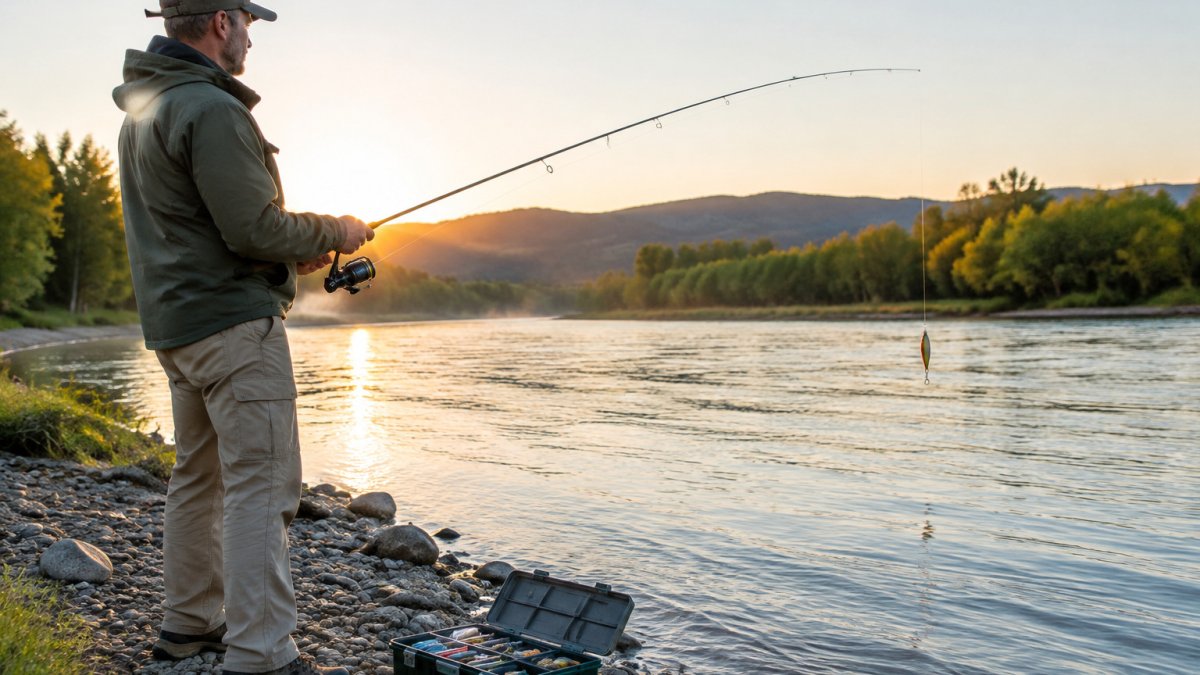
Power ratings come with a suggested lure weight range and a line weight range. Stay inside those numbers. Going over the upper limit risks snapping the rod, while going under can leave you with a rod that feels mushy when you hook something.
Match the power to the fish you're chasing. A light rod suits small bream and trout. A heavy rod suits larger fish and heavier lures.
The Difference Between Action and Power, Side by Side
The easiest way to remember the difference is this: power tells you how strong the rod is, and action tells you how it bends.
| Feature | Action | Power |
|---|---|---|
| What it describes | Where the rod bends | How much load it handles |
| Common labels | Fast, moderate, slow | Ultra-light to heavy |
| What it affects | Hook sets, casting feel | Lure weight, line weight |
| Best question to ask | "How does it feel?" | "What can it lift?" |
You can have a medium power rod with fast action, or a medium power rod with slow action. Both handle the same load, but they feel very different in your hands.
Fishing Rod Action Chart: Fast to Slow Explained
Action is best understood as a percentage of the blank that flexes under load. Most manufacturers describe it by where the bend starts, and that bend point changes how the rod casts, hooks fish, and absorbs runs. The chart below gives the practical range for each category.
| Action | Where it bends | Typical use | Trade-off |
|---|---|---|---|
| Extra-fast | Top 10-15% (tip only) | Precise jigging, soft-plastic hook sets, heavy braid | Least forgiving; easy to pull hooks on light line |
| Fast | Top 25-30% | All-round lure fishing, Texas rigs, small crankbaits | Stiff tip can under-load light lures |
| Moderate-fast | Top 40-45% | Moving baits, spinnerbaits, lighter jigs | Slightly slower hook set than fast |
| Moderate | Middle 50-60% | Beginners, crankbaits, treble-hooked lures | Less bite sensitivity through the tip |
| Slow | Bottom 60-70% (near handle) | Light line, big fish on small lures, rolling casts | Poor hook-setting power at long range |
A fast action rod bends mostly in the top third, which is why it feels crisp and transmits a lot of vibration back to your hand. That sensitivity is useful for feeling a soft plastic get picked up, but it also means the rod stores less energy on the cast. A moderate action rod loads deeper, so it casts lighter lures more easily and cushions the surge of a fish at the boat. Because action affects how a rod loads and responds, matching it to your lure’s weight and movement is part of selecting fishing lures.
Watch out: buying extra-fast action for a beginner setup often leads to pulled hooks on treble-lured fish, because the stiff tip gives very little shock absorption when the fish shakes its head.
Use the chart as a starting point, not a rule. Two rods labelled "fast" can feel different because blank material and taper also affect the bend. A fast rod built from a higher-modulus graphite blank will feel stiffer and more sensitive than a fast rod built from a lower-modulus blend, even though the action label is the same. If you are choosing your first lure rod, fast or moderate-fast covers the widest range of techniques without demanding precise hook-set timing.
Fishing Rod Power Chart: Ultra-Light to Heavy Explained
Power is the load rating of the blank, and it is usually printed alongside a suggested lure weight range and line weight range. Those two numbers are the most useful thing on the rod label, because they tell you what the manufacturer expects the rod to cast and fight without over-stressing the blank. The chart below gives the common ranges you will see on tackle shelves.
| Power | Typical lure weight | Typical line weight | Common target species and techniques |
|---|---|---|---|
| Ultra-light | 1-5 g | 1-3 kg | Bream, whiting, small trout on light plastics and hardbody lures |
| Light | 3-10 g | 2-5 kg | Estuary perch, bass, flathead on soft plastics and small crankbaits |
| Medium | 7-21 g | 3-8 kg | All-round freshwater and estuary lure fishing, medium plastics, spinnerbaits |
| Medium-heavy | 14-35 g | 5-10 kg | Barramundi, mangrove jack, heavier jigs, structure fishing |
| Heavy | 28-80 g | 8-15 kg | Murray cod, large saltwater species, heavy offshore jigs and swimbaits |
These ranges are guides, not absolutes. A medium rod rated to 21 g will cast a 25 g lure, but it will feel overloaded and the blank will not recover cleanly, which costs distance and accuracy. Going under the lower limit is just as bad: a medium rod trying to cast a 5 g plastic will not load at all, so the lure travels a short distance and the rod feels dead in the hand.
Match power to the fish you chase most. A light rod suits small bream and trout, and it lets you cast the lighter lures those fish respond to. A heavy rod suits larger fish and heavier lures, but it will make small fish feel like nothing and can pull hooks on light line. If you only buy one rod, medium is the safe pick because it covers the widest band of lure weights and fish sizes without being specialist at either end.
Watch out: line weight and lure weight are separate limits. A rod rated to 8 kg line can still snap if you cast a lure above its upper lure weight, because the load on the blank during the cast is different from the load during the fight. Stay inside both numbers.
Power also interacts with action. A medium power rod with fast action and a medium power rod with moderate action handle the same load, but the fast one feels stiffer and the moderate one feels softer. That is why the label alone does not tell you how a rod will fish; you need both numbers together.
Best Rod Action for Soft Plastics and Medium vs Medium-Heavy Rods
Soft plastics are light and need a rod that can feel small bites. For specific soft plastic and hardbody picks that suit this setup for bream in rivers, see our best fishing lures for bream in rivers. A medium power rod with fast or moderate-fast action works well here. The fast tip helps you detect bites and set the hook, while the medium power keeps the rod from being too stiff.
Medium-heavy rods suit heavier soft plastics and jigs, or fishing in heavy cover where you need to pull fish out fast. The trade-off is that medium-heavy rods feel stiffer and can make light bites harder to notice.
Here's a quick way to choose:
- Pick medium for lighter soft plastics, smaller fish, and longer days of casting.
- Pick medium-heavy for heavier lures, structure fishing, and bigger species.
- Pick fast action for quick hook sets and feeling bites.
- Pick moderate action if you want a softer rod that's easier to fight fish with.
Your line type also matters, so pair the rod with the right line. Check out our guide on braided vs monofilament line for beginners before you spool up.
Choosing Your Rod: Your Next Step Before You Buy
Before you buy, check the label for action, power, and the lure and line weight ranges. Then decide what you fish for most and pick the rod that fits that job. Keeping your gear in good shape after you buy it makes a big difference too, so read our guide on how to maintain fishing gear to protect your investment.
If you're unsure whether a rod is well made, our camping gear quality checks list shows you what to inspect in store. Budget Roo stocks a range of fishing rods, and current pricing depends on the model and availability, so check the Budget Roo website for up-to-date prices and options before you choose the right fit for your next trip.
Frequently Asked Questions
What is the difference between fishing rod action and power?
Power is how much force a rod can handle, usually rated from ultra-light to extra-heavy and linked to the lure weight and line weight it suits. Action describes where the rod bends along its length when you apply pressure, rated from slow to fast. Power tells you how strong the rod is, while action tells you how it bends and how quickly it recovers. Two rods with the same power can feel very different because their actions differ, so you need to consider both when choosing a rod for a specific species or fishing style.
What does fast action mean on a fishing rod?
A fast action rod bends mainly in the top third, near the tip, and returns to straight quickly. This gives strong hook sets and good sensitivity, which helps when you need to feel subtle bites or drive a hook into a fish's mouth at range. Fast action rods suit fishing with heavier lures, braided line and species with hard mouths. They can feel stiff for beginners casting light lures, so a moderate or moderate-fast action may be easier to start with.
What rod action is best for soft plastics?
Most anglers choose a fast or moderate-fast action rod for soft plastics. The tip needs enough sensitivity to feel the lure hit the bottom and the light bite of a fish, while the backbone still gives enough hook-setting power. A medium power rod paired with a moderate-fast action is a practical all-rounder for common soft plastic work. If you fish with very light jig heads, a lighter power rod with a fast tip will help you detect subtle strikes.
How can I tell the action and power of a fishing rod?
Check the rod's markings or packaging. Power is usually printed on the blank near the handle, using terms like ultra-light, light, medium, medium-heavy and heavy, often with a lure weight range. Action is often labelled as fast, moderate or slow, or sometimes listed as a tip-flex or taper description. If the details are missing, flex the rod gently by hand: a tip that bends a lot indicates a slower action, while a rod that flexes only near the tip suggests a fast action.
