

Table of Contents
- Why Return Policies Matter for Outdoor Gear
- Australian Consumer Law Refunds: Your Basic Rights
- Change of Mind Return Policy Australia: What to Expect
- Returning Used Outdoor Gear: Faulty vs. Normal Wear
- Step-by-Step Return Process for Outdoor Equipment
- Gear-Specific Exceptions and Safety Restrictions
- Sustainability, Repairs, and Your Gear's Second Life
- Final Tips for a Smooth Return Experience
- Frequently Asked Questions
Last Updated: September 8, 2026
Why Return Policies Matter for Outdoor Gear
An outdoor gear return policy explained simply: it is the set of rules a retailer applies when you bring back camping, fishing, or adventure equipment, and understanding the outdoor gear return process starts here. Unlike everyday purchases, outdoor gear faces rain, mud, salt, and heavy use, which makes the terms around damage and wear genuinely important. A clear policy tells you whether a leaking tent is a faulty product or your own setup mistake, and whether a snapped fishing rod qualifies for a refund or a repair.
A fair return policy is part of the gear itself. It protects your purchase when conditions turn rough, and it separates retailers who stand behind their products from those who disappear after checkout. This guide walks through your rights, the typical change of mind terms, and the steps to follow when gear does not live up to expectations.
Before you buy anything, know this: the return process starts before you leave the shop or click checkout. Keep your order invoice, note the return window, and photograph the item when it arrives. That small habit makes every later step far easier.
Australian Consumer Law Refunds: Your Basic Rights
Australian Consumer Law refunds are the floor beneath every store policy, and no retailer can take them away from you. These protections apply automatically when goods are faulty, not fit for purpose, or do not match their description. For serious problems, you are entitled to a repair, replacement, or full refund, and the choice is generally yours.
The key distinction is who caused the problem. If a tent pole snaps on the second use due to poor manufacturing, that is a fault. If it snaps after a storm bent it at an awkward angle, the retailer may argue normal wear. The official guidance from the Australian Competition and Consumer Commission on consumer guarantees explains that products must last a reasonable time, which for outdoor gear means surviving genuine outdoor conditions.
Retailers cannot force you to accept store credit when the item is faulty. You have the right to choose between a refund and a replacement for major failures. For minor issues, the retailer can offer a repair first, but the repair must be free and completed within a reasonable time.
Change of Mind Return Policy Australia: What to Expect
A change of mind return policy Australia-wide is far more variable, because it is not protected by law. These are voluntary store terms, so each retailer sets its own window, conditions, and refund method. Most outlets give you between 14 and 60 days, but the gear must be unused, unopened, and in original packaging with tags attached.
The critical distinction is that a change of mind return is a grace period, not a right. Retailers structure these policies to protect their margins on seasonal, technical, and hygiene-sensitive stock. Here is what to check before relying on a change of mind return:
- Confirm the return window in writing, not from memory. The window often starts from the delivery date for online orders, not the purchase date. A 30-day window can quietly expire while a tent sits unopened before a trip.
- Keep all original packaging, including plastic wraps and instruction booklets. Many retailers require the item to be in a 'resaleable condition', which means the original polybag and cable ties must be intact. Losing a single stuff sack can trigger a restocking fee or outright refusal.
- Check whether shipping costs come out of your refund or the store's pocket. For change of mind returns, the consumer almost always bears the return shipping cost. Some retailers deduct a flat rate (often $10-$15) from the refund; others require you to arrange and pay for your own tracked parcel.
- Ask whether you receive a full refund or store credit. Store credit is common for sale items or for returns processed after the standard window. Credit often expires after 12 months, which matters if you are banking it for a future season.
- Verify if the item has any hygiene or safety exclusions. Wetsuits, water bladders, and undergarments must have their original seals intact. Climbing helmets and harnesses are frequently excluded from change of mind returns entirely, regardless of condition.
A common pattern across Australian outdoor retailers is a tiered approach. Full-price items returned within 14 days typically receive a full refund to the original payment method. Between 15 and 30 days, many switch to store credit. After 30 days, most change of mind requests are declined unless the item is unopened and the retailer is feeling generous.
Sale items deserve special attention. Clearance gear is often marked 'final sale' at the product level, which overrides the store-wide policy. If the listing does not explicitly say 'final sale', the standard change of mind terms apply, but do not assume, confirm before you pay.
If you simply bought the wrong size sleeping bag or changed your mind on a colour, the store has full discretion. Some charge a restocking fee of 10-20% for large items like kayaks or rooftop tents, others only offer store credit, and many exclude sale items entirely. When you order, the product listing states the exact change of mind terms before you pay, so there are no surprises later.
Returning Used Outdoor Gear: Faulty vs. Normal Wear
Returning used outdoor gear hinges on one question: is the damage a manufacturer defect or normal wear? Returning used outdoor gear that has been genuinely faulty is protected under consumer law, but gear that simply aged through use is not. A hiking boot sole that separates after three weeks is faulty. The same sole after three years of trails is wear and tear.
Outdoor brands face a constant battle here because their products are designed for abuse. A kayak paddle blade that cracks on first contact with rocks may be defective, but the retailer will inspect for impact damage. Product inspection is standard practice. They will check for scuffs, bent frames, and whether the item was used beyond its intended conditions.
The inspection process itself follows a predictable pattern. A technician or trained staff member will examine the failure point, looking for evidence of manufacturing defects such as uneven seam tension, delamination, or material fatigue. They will also look for signs of misuse: impact marks, abrasion patterns, or exposure to heat or chemicals. For electronics like GPS units or headlamps, they may check for water ingress through seals that should have been maintained.
Your best evidence is documentation. Photograph the fault immediately, keep the transaction receipt, and describe exactly what happened during use. Retailers are far more willing to help when you present a clear fault timeline rather than a vague complaint. If the item has a warranty claim, those terms often extend beyond the standard return window. equipment return policies.
A critical distinction many consumers miss is the difference between a refund and a repair under warranty. For a major fault, one that would stop a reasonable person from buying the product, you can choose between a refund, replacement, or repair. For a minor fault, the retailer can offer a repair first, but it must be free and completed within a reasonable time. What counts as 'reasonable' depends on the complexity; a zip replacement might take two weeks, while a custom tent pole could take six.
If the retailer claims normal wear, ask for the specific reason in writing. Under Australian Consumer Law, the burden of proof sits with the retailer to show the damage was not a fault. A vague 'wear and tear' response is not sufficient, they need to point to the specific evidence that led to their conclusion.
Step-by-Step Return Process for Outdoor Equipment
The return process for outdoor equipment follows a predictable path, whether you bought online or in-store. Start by contacting the retailer before sending anything back. Many require return authorization, and sending gear without approval can delay or void your claim.
- Locate your order invoice and confirm the purchase date
- Contact customer service with your order number and fault description
- Receive a return label or in-store return instructions
- Pack the item securely in original packaging where possible
- Include all accessories, tags, and documentation
- Ship with a tracking number or deliver in person
- Allow for processing time, typically several business days after arrival
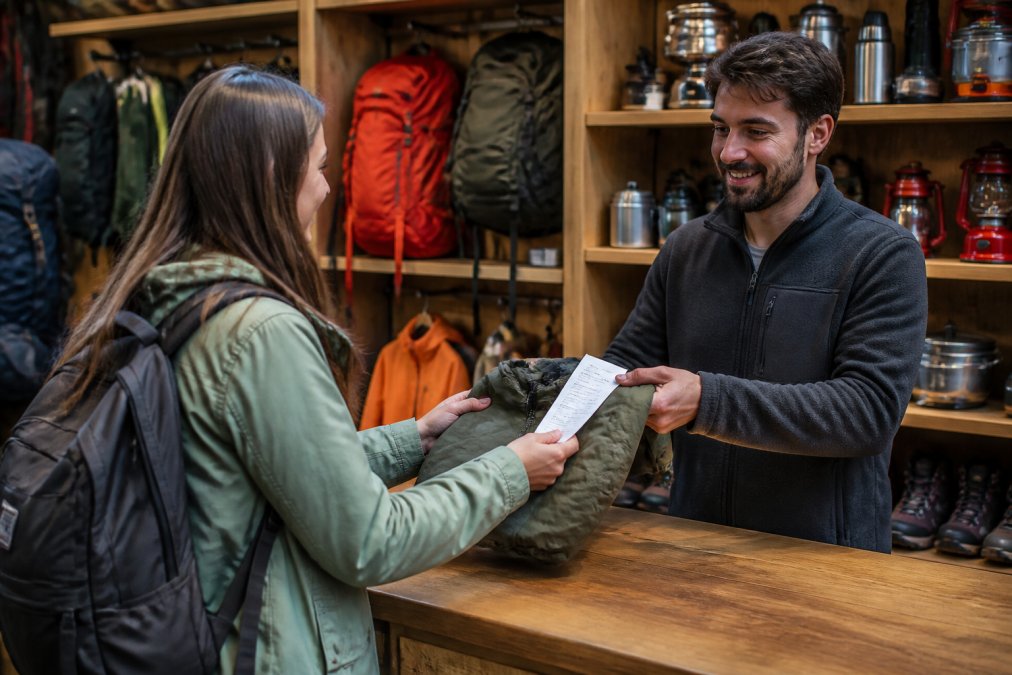
In-store returns are usually faster because staff can inspect the item immediately. Online purchases require you to manage the shipping carrier and wait for the product to arrive back before your refund processes. Faulty goods should not cost you for return shipping, but change of mind returns often do.
Gear-Specific Exceptions and Safety Restrictions
Not all gear returns the same way, and some categories carry serious safety restrictions. Helmets, climbing rope, and harnesses are often excluded from change of mind returns because their safety depends on never being dropped or stressed. Once purchased, a helmet that has been worn cannot be guaranteed safe, so retailers will not resell it.
Gas canisters and fuel bottles fall under transport and safety rules that restrict shipping entirely. Return authorization for these items is rare, and most retailers treat them as final sale. Similarly, hygiene-sensitive products like wetsuits, water bladders, and undergarments must have their original seals intact for any return.
Understanding these exceptions prevents frustration. If you buy a climbing helmet and discover it does not fit, you are likely stuck with it unless it is unused and fully packaged. Always confirm these exclusions before purchase, because they override the standard change of mind policy.
Sustainability, Repairs, and Your Gear's Second Life
A return is not always the most sustainable outcome for outdoor gear. When a jacket has a broken zip or a tent has a small tear, repair often beats replacement. Many retailers now partner with repair services, and some brands offer replacement parts for common failure points like poles, pegs, and buckles.
Before requesting a return, consider whether the issue is fixable. A seam that has come undone can be resealed. A sleeping bag zip can often be replaced. Choosing repair keeps gear out of landfill and usually costs less than a new item. This matters because outdoor equipment is resource-intensive to manufacture, and extending its life is the single most effective way to reduce its footprint.
If the item is genuinely faulty and beyond repair, a refund or replacement is the right path. Ask your retailer whether they recycle or responsibly dispose of damaged gear. Some stores focus on durability so your gear lasts longer and needs fewer returns in the first place.
Final Tips for a Smooth Return Experience
A smooth return experience comes down to preparation and timing. Act within the return window, keep every document, and communicate clearly about the issue. Retailers process hundreds of returns daily, and the ones that go smoothly are those with clear evidence and reasonable expectations.
Check your consumer rights before assuming a store can refuse you. The official consumer guarantees guidance outlines what retailers must do for faulty products, while the ACCC's refunds and returns page clarifies the difference between your legal rights and voluntary store policies. Understanding this distinction is the most useful skill you can bring to any return counter.
When you buy quality gear from a retailer that stands behind it, returns become rare events rather than regular battles. Durable products, honest policies, and clear communication solve most problems before they start.
Frequently Asked Questions
Can I return an item after 2 years?
Under the Australian Consumer Law, you can seek a remedy for faulty goods within a 'reasonable time', which can extend beyond a manufacturer's express warranty period. For a high-quality tent, two years might be reasonable; for a cheap torch, it likely isn't. The remedy depends on the failure's severity. A major failure allows you to choose a refund or replacement, while a minor failure means the retailer can choose to offer a repair first. Always contact the retailer with your proof of purchase to start the claim.
Is it legal to not offer a refund for change of mind?
Yes, it is legal for a store to refuse a refund if you simply change your mind. The Australian Consumer Law guarantees remedies only for faulty, defective, or misdescribed goods. A change of mind return policy Australia is a voluntary store offering, not a legal requirement. Retailers can set their own terms for these returns, such as requiring original packaging, a receipt, or imposing a time limit like 30 days. The item must be unused and in resellable condition.
Can I return a product after using it?
Yes, if the product fails to meet consumer guarantees, such as being of acceptable quality or fit for purpose. Returning used outdoor gear is possible under the Australian Consumer Law if a fault appears during normal use, like a sleeping bag zip breaking after a few trips. However, you cannot return it for normal wear and tear. The store can assess the fault, and you may be entitled to a repair, replacement, or refund depending on the severity.
What items cannot be returned for safety reasons?
For safety and hygiene reasons, retailers often cannot accept returns on certain items once used. This includes climbing ropes, harnesses, carabiners, and helmets, as their safety integrity cannot be guaranteed after sale. Similarly, items like sleeping bags or water bladders may be non-returnable if hygiene seals are broken. These restrictions usually apply to change-of-mind returns; faulty safety equipment must still be handled under the Australian Consumer Law warranty provisions.
Buying outdoor gear should feel exciting, not risky. The best defence against return headaches is choosing equipment built to last, backed by a retailer with transparent terms. At Budget Roo Pty Ltd, we focus on durable, affordable gear for camping, fishing, and adventure, because fewer problems start with better products. Browse our range and get the gear you need for your next trip.