

Last Updated: November 20, 2026
Quick Summary
Choosing swag comes down to matching the swag to your trip rather than just the price. Start with size, single for solo campers and double for two, then weigh weather protection, weight and mattress thickness against the conditions you expect.
- A single swag suits solo campers and light carrying, while a double suits couples who want more room.
- Check internal length and headroom, since tall campers may need a longer footprint than the packed size suggests.
- Canvas swags often weigh 10-14 kg for a single and 18-25 kg or more for a double.
- Look for a full rainfly, covered zips and taped seams to protect against rain and leaks.
- Dry a swag fully after every wet trip, since trapped moisture can cause mould and leaks.
Table of Contents
- What a Swag Needs to Do on Australian Camping Trips
- Single vs Double Swag: Which Size Fits Your Trip
- Traditional vs Dome Swags: Setup, Materials and Construction
- Waterproof Camping Swag Features for Rain, Wind and Heat
- Swag Mattress Thickness and Sleeping Comfort
- How to Care for a Canvas Swag So It Lasts
- Booking Your Swag: Budgets, Comparisons and Next Steps
- Frequently Asked Questions
What a Swag Needs to Do on Australian Camping Trips
Choosing swag for Australian camping comes down to matching the swag to your trip, not just to the price tag. A swag that works well for a weekend at a coastal caravan park can feel miserable on a dry outback trip, where hot days give way to cold nights. Campers planning their first big trip often ask the same questions.
A swag has to do three jobs well: keep you dry, keep you comfortable, and be practical to carry and set up. Most campers quickly learn that a swag is only as good as its weakest feature. A thin mattress or a fly that leaks in the first storm will spoil a trip fast.
If you are comparing a swag with a tent, our swag vs tent for camping guide walks through the trade-offs in more detail. For now, the rest of this guide focuses on the features that decide whether a swag suits your style.
Single vs Double Swag: Which Size Fits Your Trip
The first decision is size, and it is worth getting right because a swag is one of the few camping purchases where a few centimetres of internal width changes how well you sleep. A single swag suits solo campers and anyone who wants a light, compact setup. When choosing swag for two people, a double suits couples or anyone who wants room to spread out and move around.
Campers often pick a double swag for comfort, then find it is awkward to pack and heavy to carry to a remote site. Others buy a single and feel cramped after a few nights. Think about how much space you need inside, and how far you will carry the swag.
A practical way to decide is to work backwards from your trip. If you are hiking or carrying the swag any distance from the vehicle, a single is usually the easier choice. If you are car-based and setting up beside the vehicle, a double adds comfort at the cost of boot space and weight.
Swag Dimensions, Headroom and Sleeping Space
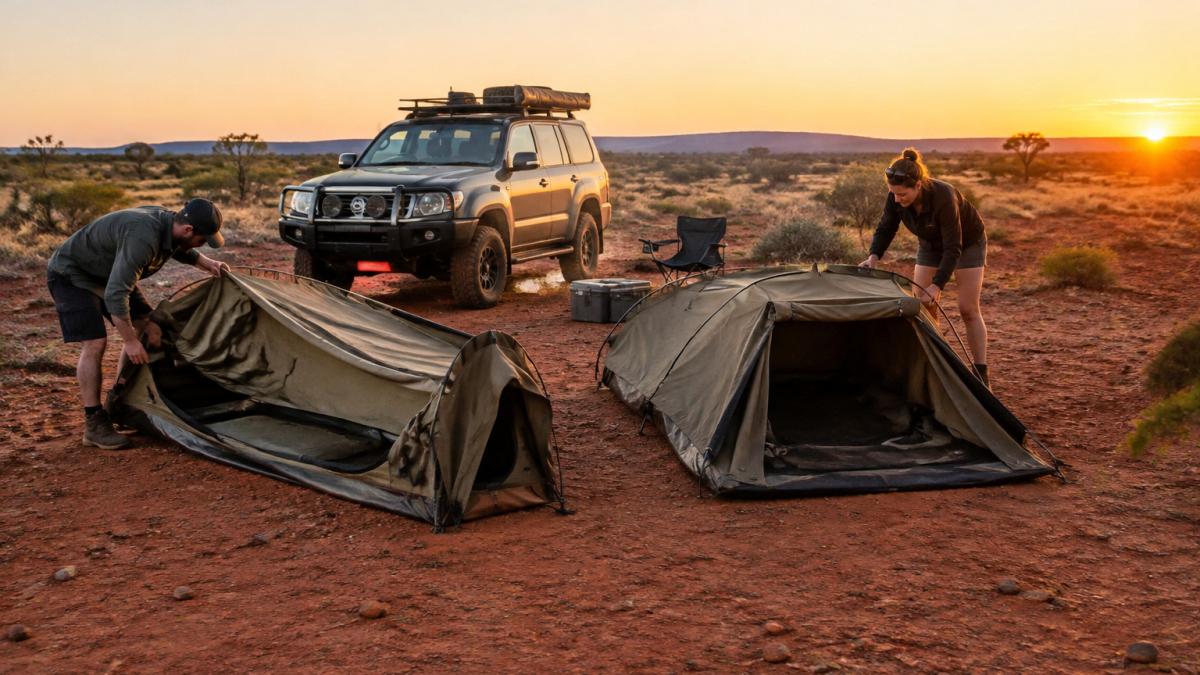
Check the internal length and width, not just the packed size. Check the internal length and width of any swag you consider, since a sleeping bag and pillow eat into usable length, and a tall camper can end up with feet pressed against the canvas if the swag is too short.
Headroom matters if you like to sit up or read in bed. Traditional flat swags offer very little; dome swags with poles give enough height to sit upright at the shoulder end. If you are taller than about 185 cm, measure the internal length carefully and look for a model with a longer footprint rather than trusting the packed-size label.
Weight, Packed Size and Transport Compatibility
Weight and packed size decide how easily a swag fits in your vehicle and how far you can carry it. A canvas single swag with a foam mattress commonly weighs around 10-14 kg, while a double canvas swag with a thicker mattress can run 18-25 kg or more. Synthetic singles can be lighter, but the mattress often accounts for much of the weight.
Packed dimensions matter as much as weight. A rolled double swag can be 40-50 cm in diameter and over a metre long, which may not fit across a small hatchback boot or inside a roof pod. Check the packed dimensions against your luggage space before you buy, and consider whether a roof rack or tray is part of your setup. A roomier swag is a genuine comfort upgrade, but only if you can transport it without strapping it to the roof every trip.
Watch out: a swag that fits your vehicle on the drive to the campsite can still be too bulky to carry from a car park to a walk-in site, so match the packed weight to the distance you will actually carry it.
Traditional vs Dome Swags: Setup, Materials and Construction
Traditional swags roll out flat, with a fixed sleeping area and a simple canvas or synthetic cover. Dome swags use poles to create a higher, tent-like shape, which generally gives more headroom.
Canvas is a popular material because it breathes well. It is also heavier and needs more care. Synthetic materials are generally lighter. Think about which trade-off suits your camping style.
Waterproof Camping Swag Features for Rain, Wind and Heat
Weather protection is where swags differ most, and where marketing claims are least useful. Instead of reading waterproof ratings in isolation, match the swag's features to the conditions you will actually meet. Australian camping conditions vary enormously by region and season, and a swag that suits a dry inland trip may be the wrong choice for a humid coastal summer or a cold alpine night.
Look for a rainfly that extends well past the sleeping area and a floor that is treated or coated to resist moisture. Check that zips are covered by a storm flap, since an exposed zip is a common leak point. Seams should be taped or sealed, and the canvas should be seasoned before first use so it swells and closes its weave.
Ventilation matters just as much on hot nights. Mesh panels and adjustable vents can help with airflow. In humid conditions, condensation inside a swag can be more uncomfortable than rain outside, so a swag with limited airflow will feel clammy even when it is waterproof. A swag that traps heat can feel stuffy even on a mild night.
Wind is the third variable. Traditional flat swags can sag and flap in strong wind, while dome swags with poles hold their shape better. If you camp in exposed areas, look for guy-out points and a fly that can be pegged down securely.
A simple decision framework helps. For hot, humid summer trips, prioritise mesh ventilation and a fly that can be opened up. For cold nights, prioritise a fly that closes down and a canvas that blocks wind. For wet trips, prioritise a full rainfly, covered zips, and a floor with a raised edge. For alpine or cold-climate camping, add an insulating mat and consider a swag with a heavier canvas.
Remember that waterproof ratings are only part of the picture. Site selection, drainage and wind exposure all affect how a swag performs. Site selection, drainage, and wind exposure matter as much as the swag itself, and a swag may be unsuitable on ground that floods or in extreme wind.
Watch out: a swag that has been stored damp will leak through its seams regardless of its rating, so dry it fully after every wet trip before you judge its performance.
Swag Mattress Thickness and Sleeping Comfort
Most swags come with a foam mattress, and the thickness varies a lot. A thin mattress may be fine for a warm summer trip, but it will feel hard on rough ground. Many campers add a self-inflating mat or a folding foam pad under the swag mattress for extra comfort.
If back pain or hip pressure is a concern, a thicker mattress or an added mat makes a noticeable difference. Our guide to camping mattresses for back pain covers the options in more depth. Also consider a synthetic vs down sleeping bag comparison if you plan to layer bedding for cold nights.
How to Care for a Canvas Swag So It Lasts
Canvas swags need regular care to stay in good shape. Always dry the swag fully before packing it away, because trapped moisture leads to mould and mildew. Air it out in the sun for a few hours after a wet trip, keeping the canvas out of direct sun for long periods if it is very hot.
Brush off dirt and dried mud rather than washing the whole swag often. Store it in a dry, ventilated spot rather than a damp shed. Check the poles, zips and stitching before each trip so small problems do not become big ones on the road.
Booking Your Swag: Budgets, Comparisons and Next Steps
Start by setting a realistic budget, then decide which features matter most for your trips. A budget swag can serve well for occasional camping, while frequent campers may get better value from a more durable build. Compare size, weight, material and weather protection side by side before you commit.
Here is a quick summary to help you decide:
| Factor | What to look for | Best for |
|---|---|---|
| Size | Single for solo, double for two | Matching your sleeping space |
| Style | Traditional for quick setup, dome for headroom | Your pitching preferences |
| Material | Canvas for breathability, synthetic for light weight | Your climate and transport |
| Mattress | Thicker foam or added mat | Comfort on rough ground |
| Weather | Full rainfly, covered zips, vents | Rain, wind and heat |
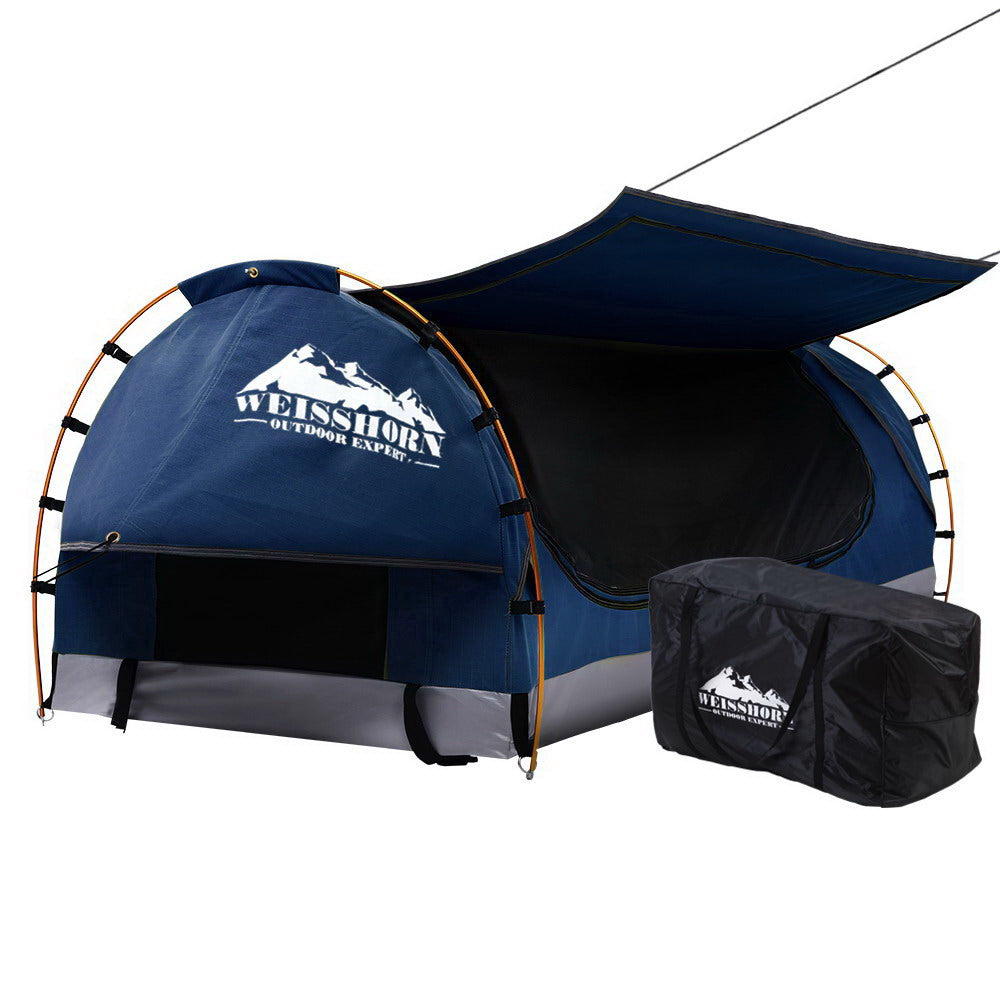
Once you know what you need, browse our range of camping gear. For a single-person canvas dome swag with a 7cm mattress, the Weisshorn Swag King Single Camping Swags Canvas Free Standing Dome Tent is a practical starting point for solo campers who want headroom and a comfortable sleep.
Budget Roo focuses on affordability and value for camping and outdoor gear. Shop Now and choose the swag that fits your next trip.
Frequently Asked Questions
How do I choose the right swag for camping?
Start with how you travel and where you sleep. Solo campers on short trips usually suit a single swag, while couples or anyone wanting extra room should look at a double. Check the internal length and headroom, then weigh the packed size against your vehicle space. Think about the season too: a heavier canvas swag handles cold nights and wind well, while lighter options suit warm weather and fly camping. Match the swag to your most common trip, not your rare one.
Should I buy a single or double swag?
A single swag suits solo campers, lighter loads and tight vehicle space. A double swag suits couples, larger sleepers, or anyone who wants room to move without touching a partner. Doubles are heavier and bulkier to pack, so measure your storage first. If you camp with a partner most of the time, a double is usually more comfortable than two singles, though budget-minded buyers may find two single swags more flexible across trips.
Are swags suitable for camping in wet weather?
Swags can handle wet weather well if they have a waterproof outer layer, a sealed or well-designed flysheet, and sound stitching at the seams. Canvas repels light rain but can soak through in heavy storms if not treated and dried correctly. Pitch the swag on high, level ground, use a ground sheet, and keep the zip closed. Good ventilation matters too, because a sealed swag can trap condensation and make bedding damp.
How much should I spend on a camping swag?
Swag prices vary widely, so compare prices and features before you decide. Spend more if you camp often in rain, wind or cold, since better canvas, zips and waterproofing tend to last longer. For occasional weekend camping, a mid-range swag with a decent mattress and reliable zips usually gives the best value. Compare weight, size and warranty alongside price rather than choosing on cost alone.
