

Table of Contents
- Swag vs Tent: Core Differences
- Setup, Pack-Down, and Portability
- Are Swags Warmer Than Tents?
- Sleeping Comfort, Space, and Headroom
- Swag vs Tent for Families
- Best Budget Camping Tent Options
- Best Value Camping Swag for Solo Trips
- Weather Protection and Maintenance
- Frequently Asked Questions
Last Updated: October 5, 2026
Swag vs Tent: Core Differences
A swag is a compact, ground-level canvas shelter designed for one or two people, whilst a traditional tent is a freestanding structure that offers more interior space and headroom. For Australian camping, understanding this distinction matters because your choice affects everything from setup time to weather protection to how comfortable you'll actually be sleeping outdoors.
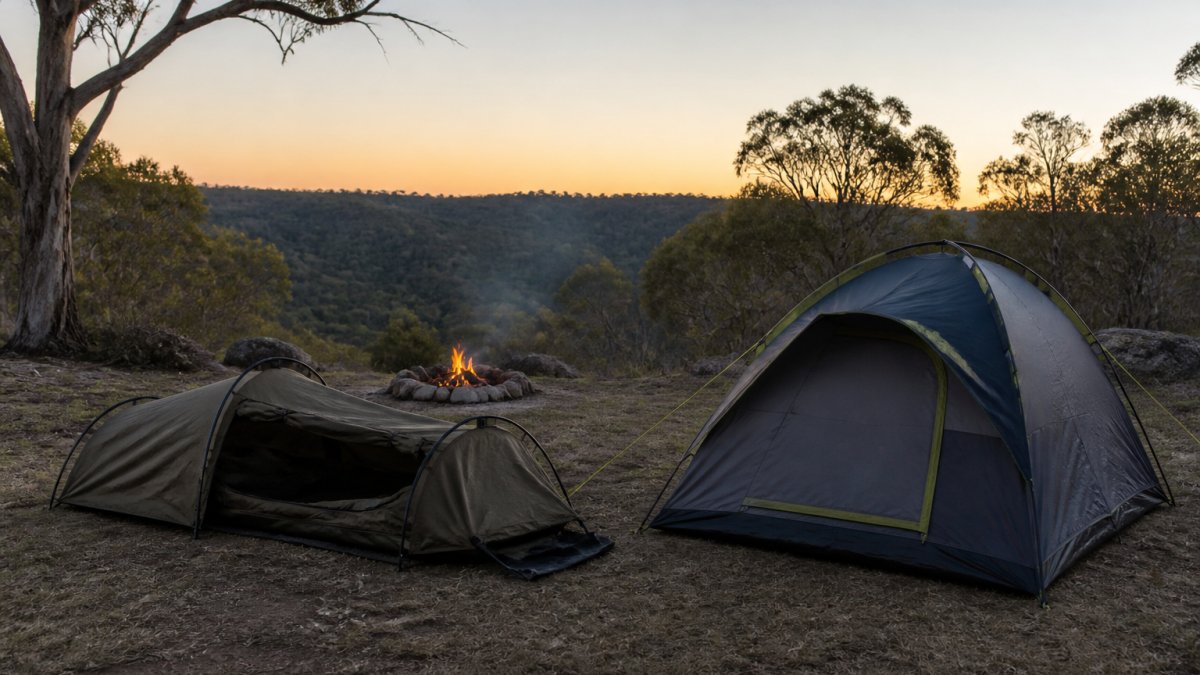
The key difference comes down to design philosophy. A swag wraps around you like a cocoon, canvas cover on top, waterproof floor beneath, and minimal interior volume. A tent creates an enclosed room with vertical walls, a peaked roof, and space to move around inside. Neither is universally "better," but they suit different trips and different people entirely.
At Budget Roo Pty Ltd, we stock both styles because we know campers have different priorities. Some want the fastest possible setup after a long drive. Others need room for a family or gear. Let's break down where each wins.
| Feature | Swag | Tent |
|---|---|---|
| Setup time | 2-5 minutes | 10-20 minutes |
| Packed size | Small (85×55×55 cm) | Larger (60×18×18 cm to 63×23×23 cm) |
| Interior headroom | 75 cm (sitting height) | 138-200 cm (standing height) |
| Sleeping capacity | 1-2 people | 4-6+ people |
| Weight | Moderate | Moderate to heavy |
| Best for | Solo trips, couples, quick getaways | Families, groups, longer stays |
Setup, Pack-Down, and Portability
How fast you can get shelter up and down matters when you're tired, it's getting dark, or you're moving between multiple campsites. Swags win decisively here.
A swag takes roughly 2-5 minutes to set up. You unroll it, spread the canvas cover, lock the aluminium spreader poles into place, and you're done. No pegging required if you don't want to, many are free-standing. Pack-down is just as quick: collapse the poles, roll the canvas, zip it into the carry bag.
Tents require more assembly. Even a pop-up tent takes about one minute to deploy, but traditional dome tents need you to thread poles through sleeves, secure guy ropes, peg corners, and adjust tension. Pack-down reverses that process. For a family tent, you're looking at 15-20 minutes each way.
The portability difference shows when you're loading your vehicle. A swag's carry bag measures roughly 85×55×55 centimetres. A family tent's packed dimensions can reach 63×23×23 centimetres. If you're touring remote areas or have limited boot space, a swag's compact rolled profile makes a real difference.
Are Swags Warmer Than Tents?
This question gets asked often, and the answer depends on what you mean by "warm." Swags and tents handle warmth differently.
A swag's canvas construction and tight-fitting design trap body heat efficiently. The 70mm foam mattress provides insulation from the ground, which is where most heat loss occurs when camping. Because the canvas sits close to your body, you're essentially sleeping inside a warm envelope. Many campers report that swags feel warmer in cold conditions than a tent of similar quality.
Tents offer ventilation and airflow that swags don't. A tent's mesh windows and breathable fabric allow air circulation, which prevents condensation buildup but also means heat escapes more easily. In winter, this can feel colder unless you're using a quality sleeping bag rated for the temperature. In summer, that same ventilation is a blessing, tents keep you cooler when it's hot.
The real issue isn't which is warmer in absolute terms; it's condensation and moisture management. Swags can trap condensation inside the canvas on cold mornings because there's nowhere for moisture to escape. Tents with proper ventilation (mesh panels, dual vents) manage moisture better. For Australian camping, where humidity varies wildly by region and season, this matters more than raw warmth.
Sleeping Comfort, Space, and Headroom
Comfort is subjective, but space is measurable. Here's where the differences become practical.
A swag gives you roughly 215×90 centimetres of sleeping surface, enough for one person to sprawl or two people to fit snugly. Headroom maxes out at 75 centimetres, so you're sitting upright at best. You cannot stand, dress, or move around inside. The 70mm foam mattress is firm and supportive, which many campers prefer over an air mattress that deflates overnight.
A tent offers genuine living space. A 4-person dome tent (like the Weisshorn Family Camping Tent 4 Person) measures 255×253×193 centimetres, giving you room to sit up, change clothes, and store gear. A 6-person tent (like the Weisshorn Camping Tent 6 Person) stretches to 405×310×200 centimetres, you can actually stand and move around.

For couples, a swag works fine if you're comfortable sleeping close together. For families or groups, a tent becomes essential. You need space for sleeping bags, a changing area, and somewhere to keep backpacks and supplies out of the weather.
The mattress question also differs. Swags come with integrated foam mattresses (usually 70mm thick), which are durable and won't deflate. Tents typically don't include a mattress, so you'll need to add an air mattress, camping mat, or foam pad separately, an extra cost and another item to pack.
Swag vs Tent for Families
If you're camping with children or a group, a tent is almost always the better choice. Here's why.
Kids need space to move, change clothes, and stay entertained if weather turns bad. A swag confines you to a sleeping position, there's no room for a restless child, toys, or extra gear. A family tent gives everyone their own sleeping zone and shared living space.
Practical concerns also shift with family camping. You need to supervise children, store nappies and supplies, and have somewhere to sit together during meals or bad weather. A 4-person or 6-person tent handles all of this. The Weisshorn Instant Up Camping Tent 4-5 Person Pop-up Tents, for example, sets up in seconds and gives families genuine comfort without complex assembly.
Condensation and ventilation matter more with families too. Multiple people sleeping in a swag creates heavy moisture buildup overnight. Tents with mesh windows and cross-pole ventilation keep the air fresher, which matters when you're sharing space with children.
Budget-wise, a family tent from Budget Roo Pty Ltd starts at $102.95 for a 4-person model, making it an affordable entry point for families who want to try camping without major expense.
Weisshorn Swag King Single Camping Swags Canvas Free Standing Dome Tent Dark →
Best Budget Camping Tent Options
For families and groups on a budget, we recommend starting with one of these options.
The Weisshorn Family Camping Tent 4 Person Hiking Beach Tents Green ($102.95) is the most affordable entry point. It offers double-layer fabric construction for weather protection, a cross-pole roof design for extra headroom, and dimensions of 255×253×193 centimetres. That's genuine living space for four people without breaking the bank.
The Weisshorn Instant Up Camping Tent 4-5 Person Pop-up Tents Family Hiking Beach Dome ($216.95) sacrifices nothing on comfort but saves you setup time. It deploys in less than one minute, literally throw it into an open area and watch it pop up.

For larger groups or families who want maximum space, the Weisshorn Camping Tent 6 Person Tents Family Hiking Dome ($259.95) steps up significantly. At 405×310×200 centimetres, it's genuinely spacious. The double-layer fabric, cross-pole roof, entrance shade awning, and double-sided zippers make it feel like a proper cabin rather than a camping shelter. Steel and fibre glass poles ensure durability across years of use.
All three include carry bags and come with pegs and guide ropes. None requires complex assembly, and all are designed to handle Australian weather conditions without fuss.
Best Value Camping Swag for Solo Trips
If you're camping alone or as a couple, a swag offers unbeatable value and convenience.
The Weisshorn Swag King Single Camping Swags Canvas Free Standing Dome Tent Dark Blue with 7CM Mattress ($383.95) combines durability with genuine comfort. The 12oz 380gsm water-repellent ripstop canvas cover is tough enough for rough handling. The 500gsm PVC waterproof flooring prevents dew leakage with its 10cm extra-high edge.
The Weisshorn Swag King Single Camping Swags Canvas Free Standing Dome Tent Red with 7CM Mattress ($393.95) is the same design in red, with a slightly heavier 14oz 400gsm canvas cover for extra durability. If you camp frequently or in harsh conditions, the upgraded canvas is worth the small price difference.

Both swags measure 215×90 centimetres and stand 75 centimetres high. They're free-standing (no pegging required), fold into an 85×55×55 centimetre carry bag, and come with everything you need: spreader poles, pegs, guide ropes, and assembly kit. Setup takes 2-5 minutes. Pack-down is just as quick.
For solo campers and couples who value speed and simplicity over space, a swag from Budget Roo Pty Ltd delivers genuine value. You're not paying for features you won't use, and the quality means it'll last through years of weekend trips and road adventures.
Weather Protection and Maintenance
Both swags and tents protect you from rain and wind, but they handle moisture and maintenance differently.
Swags excel at keeping rain out. The ripstop canvas and PVC flooring are genuinely waterproof, the 10cm high edge prevents dew and rain from seeping in around the edges. Canvas breathes slightly, which is why condensation can build up on cold mornings, but it doesn't leak.
Tents with quality polyester fabric and PU coatings (like the Weisshorn models we stock) are also waterproof, but they handle condensation differently. Mesh windows and ventilation allow moisture to escape, reducing the heavy condensation you get in a swag.
Maintenance differs too. Canvas swags need to be dried after wet trips and stored in a dry place. The canvas can develop mildew if left damp. Polyester tents are easier to maintain, wipe them down, let them dry, pack away.
For Australian conditions, where humidity varies from coastal dampness to dry inland heat, tent ventilation often wins during summer. In winter, a swag's heat retention is an advantage, provided you manage condensation by cracking the canvas opening slightly for airflow.
Choosing between a swag and a tent comes down to your camping style. Solo travellers and couples who value speed and simplicity should choose a swag, you'll set up faster, pack smaller, and sleep warm.
Budget Roo Pty Ltd stocks both in quality options at genuine value prices. Whether you choose the Weisshorn Swag King Single or one of our family tents, you're getting durable gear that will handle Australian camping conditions without compromise. Shop Now and start planning your next adventure.
Frequently Asked Questions
What is the main difference between a swag and a tent?
A swag is a low-profile canvas shelter with a built-in mattress, designed for one person and quick setup. A tent is a freestanding fabric structure with a frame, typically offering more internal space and capacity for multiple people. Swags prioritise portability and speed; tents prioritise comfort and group accommodation.
Are swags warmer than tents?
Swags generally retain heat better due to their enclosed design and canvas material, which insulates effectively. Tents offer better temperature control through ventilation but may feel cooler in winter. For cold-weather camping, a swag's compact, fully-enclosed structure typically provides superior warmth retention.
Which is better for families: a swag or tent?
Tents are better for families. They provide ample headroom, standing room, and capacity for multiple sleepers. The Weisshorn 6-person tent ($259.95) offers 405 cm × 310 cm of space with excellent ventilation, ideal for family trips. Swags suit solo travellers or couples seeking quick setup and portability.
How long does it take to set up a swag versus a tent?
Swags typically take minutes to set up, requiring minimal assembly. The Weisshorn pop-up tent sets up in under one minute, just throw it open and it springs into shape. Traditional tents take longer depending on size and design. For spontaneous trips or frequent relocation, swags and pop-up tents save significant time.
What is the best budget camping tent for families?
The Weisshorn Family Camping Tent 4 Person ($102.95) offers excellent value with double-layer fabric, cross-pole design for headroom, and water-resistant construction. For larger groups, the 6-person tent ($259.95) provides more space and an entrance shade awning. Both include carry bags and deliver reliable weather protection at competitive prices.