

Table of Contents
- Canvas vs Polyester Tents: Key Differences for Australian Conditions
- Waterproofing Canvas Tents: What You Need to Know
- Polyester Tent Performance in Heat and UV Exposure
- Tent Maintenance Tips for Humid Climates
- Best Budget Camping Gear Australia 2026: Canvas and Polyester Options
- Durability and Longevity: Which Lasts Longer?
- Comparison Table: Canvas and Polyester at a Glance
- Which Tent Type Should You Choose?
- Frequently Asked Questions
Last Updated: October 3, 2026
Canvas vs Polyester Tents: Key Differences for Australian Conditions
Canvas is a natural fibre fabric that breathes well and regulates temperature, whilst polyester is a synthetic material engineered for water resistance and UV protection.
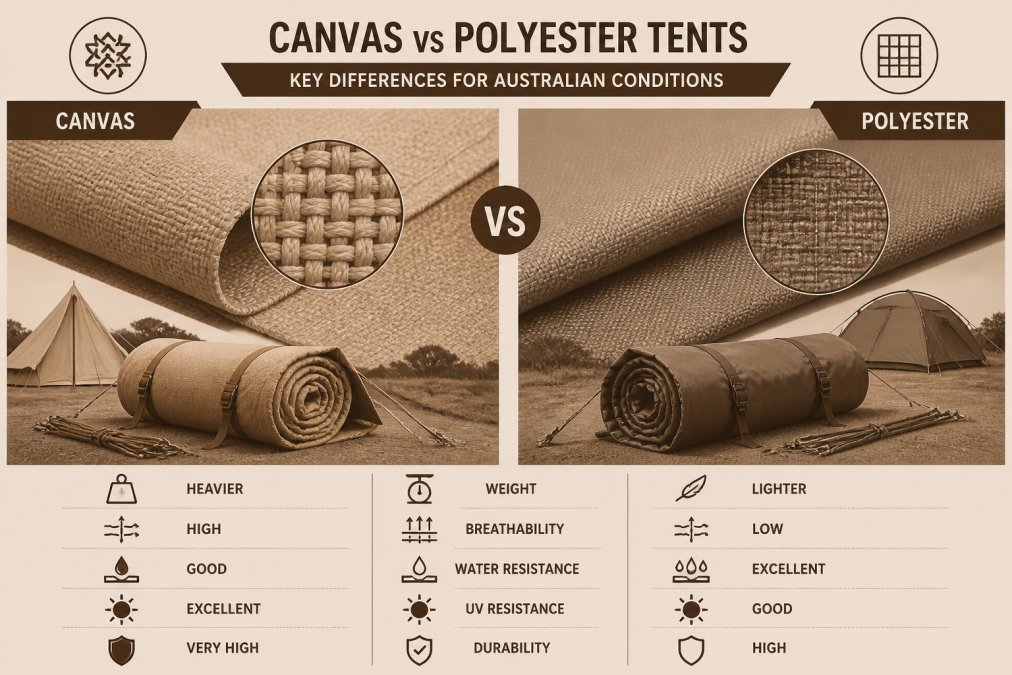
Canvas excels in cooler alpine regions and extended trips where breathability prevents condensation buildup. Polyester dominates for families, quick weekend trips, and high-UV coastal camping where speed of setup and UV resistance matter most.
Material composition and construction
Canvas is woven from cotton or cotton-blend fibres (380-400 gsm) with inherent water-repellent properties when treated, though it requires ongoing maintenance. Polyester is a synthetic fibre that's lighter, more durable against UV exposure, and requires minimal after-care.
Canvas tents rely on heavy-duty stitching and reinforced seam sealing to achieve waterproofing. Polyester tents use PU (polyurethane) coatings applied directly to the fabric, typically 3000mm hydrostatic head ratings, providing immediate water resistance without the curing process canvas requires.
Weight and portability trade-offs
Canvas tents are heavier due to fabric density and PVC flooring. Our Weisshorn Swag King Single Camping Swags Canvas Free Standing Dome Tent weighs substantially more than equivalent polyester options.

Polyester tents are significantly lighter and pack down smaller. The Weisshorn Instant Up Camping Tent 4-5 Person Pop up Tents sets up in under a minute, making it ideal for families and weekend trips.

Waterproofing Canvas Tents: What You Need to Know
Canvas waterproofing relies on fabric treatment, seam sealing, and the natural swelling of cotton fibres when wet. When damp, the fibres expand slightly, creating a tighter weave that sheds water effectively once properly cured and maintained.
Hydrostatic head ratings and seam sealing
Canvas tents typically achieve 1500-2000mm hydrostatic head ratings once properly treated, excellent for Australian conditions. Polyester tents usually come rated at 3000mm or higher, offering more immediate protection without curing.
Canvas requires careful seam sealing with wax or specialised sealants that degrade over time in humid climates. Polyester seams are heat-sealed during manufacturing, making them more reliable long-term, though they can still fail if the PU coating cracks.
Performance in heavy rain and coastal conditions
In coastal regions, canvas's natural fibres absorb moisture and salt, leading to mildew and corrosion. Polyester resists salt spray far better because synthetic fibres don't absorb moisture, making it superior for beachside camping.
Canvas sheds water effectively once cured; polyester sheds water immediately. After the trip, canvas requires thorough drying and mildew inspection, whilst polyester needs only a quick wipe-down.
Polyester Tent Performance in Heat and UV Exposure
Polyester resists UV degradation far better than canvas, preventing colour fade and fabric weakening under intense sun. This matters significantly in Australian summers, especially in outback regions.
UV degradation and thermal regulation
Canvas absorbs and retains heat, making interiors warm during the day but retaining warmth at night, better for cooler climates. Polyester reflects heat, keeping interiors cooler during the day but offering less thermal insulation when temperatures drop.
Canvas fades and loses tensile strength after repeated sun exposure, particularly in high-altitude regions. Polyester maintains structural integrity and appearance for years without degradation.
Breathability and condensation management
Canvas breathes naturally, allowing moisture vapour to escape and preventing condensation buildup in humid climates, tropical regions, and coastal areas. Polyester doesn't breathe as effectively, trapping moisture and causing condensation that drips onto sleeping bags and gear.
Mesh windows, proper airflow, and opening tent doors help manage polyester condensation. In high-humidity conditions without active ventilation, canvas handles moisture far better.
Tent Maintenance Tips for Humid Climates
Humid Australian regions demand different maintenance approaches depending on your tent material. Mildew resistance isn't built into either material, it's a result of proper after-care.
Mildew resistance and long-term mold prevention
Canvas is vulnerable to mildew in humid climates. Prevention means drying completely before storage and storing in well-ventilated areas. Some campers treat canvas with mildew-resistant products, requiring annual reapplication.
Polyester resists mildew naturally because synthetic fibres don't absorb moisture. However, mildew can develop if water pools or the tent is stored damp.
Cleaning, storage, and curing processes
Canvas cleaning requires gentle handling: brush off dirt, rinse with fresh water, and air-dry completely. Avoid harsh scrubbing. For stubborn stains, use mild soap, rinse thoroughly, and dry in sunlight.
Polyester is more forgiving: a quick rinse and air-dry is sufficient. The PU coating resists staining, so heavy cleaning is rarely necessary.
Canvas requires periodic curing, especially after repairs or resealing. Set up the tent in rain and allow it to dry naturally to reactivate water-repellent treatments and tighten the weave.
Weisshorn Swag King Single Camping Swags Canvas Free Standing Dome Tent Dark →
Best Budget Camping Gear Australia 2026: Canvas and Polyester Options
At Budget Roo Pty Ltd, we stock both canvas and polyester options to suit different camping needs and budgets. Here's what we recommend based on your situation.
Canvas swags for solo and lightweight camping
Our Weisshorn Swag King Single Camping Swags Canvas Free Standing Dome Tent at $383.95 features 12oz ripstop canvas with 500gsm PVC flooring for tear resistance and waterproofing. The 70mm foam mattress and breathable inner fabric prevent condensation buildup during cool nights.
Polyester family tents for quick setup
Our Weisshorn Instant Up Camping Tent 4-5 Person Pop up Tents at $216.95 sets up in seconds with 190T polyester and 3000mm PU coating. Mesh windows, steel frame, and oversized entrance make it ideal for families.
For casual camping, beach trips, and situations where setup speed matters, polyester is the smarter choice. The Weisshorn Family Camping Tent 4 Person Hiking Beach Tents Green at $102.95 offers even better value. Double-layer polyester construction with cross-pole design provides excellent headroom and weather protection. The elevated seams on the ground sheet prevent dew leaks, a critical feature in humid conditions.
Durability and Longevity: Which Lasts Longer?
Canvas outlasts polyester when properly maintained, but polyester requires far less maintenance to achieve similar longevity. This is the real trade-off.
Tear resistance, abrasion resistance, and fabric density
Canvas's high fabric density (measured in gsm, grams per square metre) gives it superior tear and abrasion resistance. A 400gsm canvas swag can withstand rough handling, sharp branches, and rocky ground better than polyester. The ripstop weave adds further protection against spreading tears.
Polyester is more prone to punctures and tears because the fabric is thinner. However, modern polyester uses reinforced stitching and strategic fabric placement to minimise these risks. A polyester tent won't last as long under harsh conditions, but for typical camping use, it performs adequately.
Canvas tensile strength, the force required to tear the fabric, remains stable throughout the tent's life if properly cared for.
Environmental impact of synthetic fibres versus natural materials
Canvas is biodegradable and made from renewable cotton (Next generation cotton). Polyester is a petroleum-derived synthetic that doesn't biodegrade. Both have environmental costs.
Comparison Table: Canvas and Polyester at a Glance
| Feature | Canvas | Polyester |
|---|---|---|
| Setup Time | 10-15 minutes | Under 1 minute |
| Weight | Heavier (8-12kg for single swag) | Lighter (3-5kg for similar capacity) |
| Waterproofing | 1500-2000mm hydrostatic head (after curing) | 3000mm hydrostatic head (immediate) |
| Breathability | Excellent (natural ventilation) | Moderate (requires active airflow) |
| Condensation Risk | Low (breathes moisture away) | Moderate to high (traps moisture) |
| UV Resistance | Poor (fades and weakens over time) | Excellent (maintains integrity for years) |
| Mildew Resistance | Poor (requires careful drying) | Good (synthetic fibres resist moisture) |
| Maintenance | High (curing, sealing, drying) | Low (occasional cleaning) |
| Durability | 15-20 years with care | 8-12 years typical use |
| Best For | Alpine camping, extended trips, cool climates | Family trips, quick setup, hot/coastal regions |
| Price Range | $380-$400+ | $100-$260 |
Which Tent Type Should You Choose?
The decision hinges on three factors: your camping style, your climate, and how much maintenance you're willing to do.
Canvas for alpine and extended camping
Choose canvas if you camp regularly in cooler regions, plan multi-day trips, or prioritise breathability over convenience. Canvas excels in variable weather and high-altitude conditions where condensation management is critical. The heavier weight is a trade-off you accept for superior thermal regulation and moisture handling.
Canvas also suits campers who enjoy the ritual of setup and maintenance, treating tent care as part of the camping experience rather than a chore.
Our Weisshorn Swag King Single Camping Swags Canvas Free Standing Dome Tent Red with 7CM Mattress at $393.95 is ideal for this purpose. The 14oz ripstop canvas is heavier and more durable than lighter alternatives, and the included mattress means you're ready to camp immediately.

Polyester for families and casual trips
Choose polyester if you camp occasionally, need quick setup, or camp in hot, sunny, or coastal regions. Polyester demands minimal maintenance, sets up in seconds, and handles UV exposure without degradation. For families with young children, the convenience factor alone justifies the choice.
Polyester is also the smarter choice if you're uncertain about long-term commitment to camping.
The Weisshorn Camping Tent 6 Person Tents Family Hiking Dome at $259.95 balances capacity, durability, and value. The double-layer polyester construction with cross-pole design provides excellent weather protection and headroom for larger families.
Choosing between canvas vs polyester tents means balancing durability against convenience, and breathability against UV protection. Shop our canvas swags and polyester family tents to find the right shelter for your next adventure.
Frequently Asked Questions
Which tent material is better for hot and humid conditions?
Polyester tents excel in hot, humid climates because they resist mildew better and dry faster than canvas. Canvas retains moisture longer, which can promote mould growth in high-humidity regions. However, canvas offers superior breathability when properly ventilated, reducing condensation buildup. For tropical or coastal areas with persistent dampness, polyester's synthetic fibres and quick-drying properties make it the more practical choice for long-term camping.
Are canvas tents waterproof enough for heavy storms?
Yes, canvas tents are highly waterproof when properly treated and maintained. Quality canvas has a high hydrostatic head rating (typically 1500mm or higher) and benefits from water-repellent coatings and seam sealing. The key is ensuring seams are sealed and the fabric's curing process is complete before use. Canvas actually improves with age and weathering. That said, polyester tents with PU coatings also provide excellent waterproofing and require less maintenance to maintain that protection.
Do canvas tents provide better insulation than polyester?
Canvas offers superior thermal insulation and temperature regulation compared to polyester. The natural fibre's density traps air, keeping interiors warmer in cold conditions and cooler in heat. This makes canvas ideal for alpine camping and all-season performance. Polyester, being thinner and less dense, provides minimal insulation but compensates with faster setup and lighter pack weight. For extended trips in variable climates, canvas's thermal properties are a significant advantage.
What is the best budget camping gear for Australian conditions in 2026?
For budget-conscious campers, canvas swags like the Weisshorn King Single offer exceptional value at $383.95, combining canvas durability ideal for Australian weather. For families needing quick setup, polyester options such as the Weisshorn 4-Person Tent ($102.95) provide waterproofing and ventilation at lower cost. Choose canvas for durability and all-season use; choose polyester for convenience and lightweight portability on short trips.
Which tent material is easier to maintain and clean?
Polyester is easier to maintain day-to-day because it resists mildew, dries quickly, and requires minimal treatment. Canvas demands more attention: it needs regular cleaning, occasional reproofing with waterproof coatings, and careful drying to prevent mould in humid climates. However, canvas is more repairable. For low-maintenance camping, polyester wins. For long-term investment and repairability, canvas requires more care.