

Last Updated: November 17, 2026
Quick Summary
Returning online outdoor gear purchases in Australia is governed first by the Australian Consumer Law, which gives you guarantees for faulty or mismatched products regardless of the seller's policy. Change of mind returns depend on the retailer's own conditions, while faulty items should be returned at the seller's cost.
- Faulty gear is covered by consumer guarantees, even if the seller's return policy says otherwise.
- Change of mind returns are not legally required, and you may pay return postage.
- Check the gear, photograph any fault, and pack it with all accessories and tags before posting.
- Do not post a return until you have a return authorisation number, and keep your postage receipt.
- Write a short, factual email with your order number, fault details and photos if the online form does not fit.
Table of Contents
- What Australian Consumer Law Says About Online Returns
- Change of Mind Returns Versus Faulty Gear
- Checking Outdoor Gear Before You Send It Back
- Step-by-Step: How to Start an Online Return
- Writing a Return Request Email That Gets Results
- Who Pays Return Postage for Online Orders
- Your Next Step Before the Return Window Closes
- Frequently Asked Questions
What Australian Consumer Law Says About Online Returns
Returning online outdoor gear in Australia is easier than many shoppers expect, but the rules depend on why you want to send it back, and the process for returning online outdoor gear purchases in Australia is clearer once you know your rights. The short answer is that the Australian Consumer Law (ACL) gives you guarantees that apply whether you bought in a shop or online (Buying products and services).
Australian Consumer Law consumer guarantees overview
Under the ACL, goods must be of acceptable quality, match their description, and be fit for their purpose (Consumer rights and guarantees). If a product fails any of these, you have a right to a remedy, even when the seller's own return policy says otherwise.
The return policy you see on a retailer's site is the second thing to check. Our own policy is explained in full here: Outdoor Gear Return Policy Explained for Aussie Shoppers. Read it alongside the consumer law rights above, not instead of them.
Change of Mind Returns Versus Faulty Gear
Not every return is the same. A change of mind is when the item works fine but you no longer want it. A faulty return is when the item has a defect, does not match its listing, or fails within a reasonable time.
Change of mind returns:
- The seller is not legally required to accept them
- Many stores accept them within a set window, with conditions
- You may have to pay return postage
Faulty returns:
- You are entitled to a remedy under the ACL
- The seller usually covers reasonable return costs
- You can ask for a repair, replacement, or refund
Knowing which category you are in changes what you should ask for. Be clear about the reason when you contact the seller.
What Counts as a Faulty Product
A product is faulty if it is not of acceptable quality. For outdoor gear, that might mean a zip that splits on first use, a tent pole that snaps under normal pitching, or a stove that will not ignite.
Normal wear is not a fault. A small scuff after a weekend hike is different from a seam that fails in its first trip. If you are unsure, check how to make a warranty claim before you return the item: Camping Gear Warranty Support in Australia: Your Rights and Claims.
Used, Tested and Assembled Gear
Used, tested, or assembled gear is a grey area. Many shoppers assume they cannot return anything once it has been out of the box. That is not always true. A product that is faulty can still be returned, even if you tested it. But a product that has been used in ways that cause the damage usually cannot be claimed.
Assembled items, such as a camp kitchen or a pop-up shelter, often fall into the same category. Keep the instructions and note what state the item arrived in.
Checking Outdoor Gear Before You Send It Back
Before you post anything back from your returning online outdoor gear purchases in Australia, check it properly and prepare it for transit.
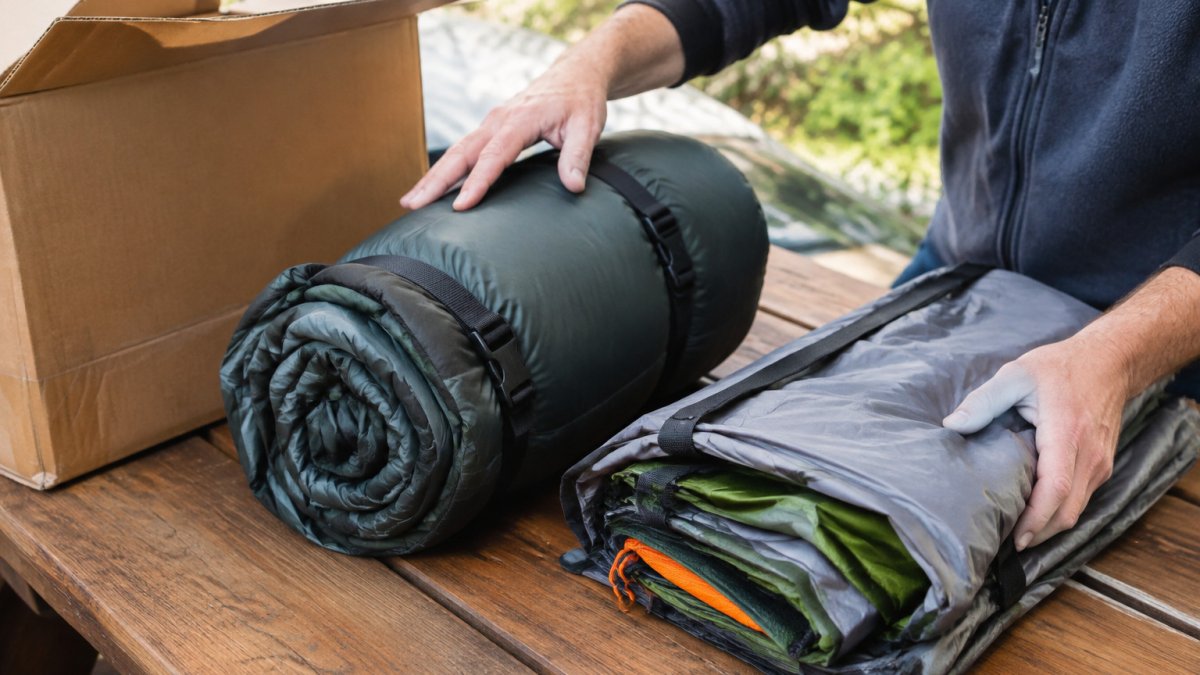
!A pair of hands inspecting a rolled-up sleeping bag and tent fabric on a wooden table beside a parcel box, natural daylight
A simple check routine
- Inspect zips, buckles, and stitching for splits or loose threads
- Test any moving parts, such as poles, valves, and clips
- Confirm the item matches the product description and size
- Note any damage that was present when you unpacked it
- Keep all tags, accessories, and original packaging
Prepare each gear type before it goes back
- Tents and shelters. Pitch or lay out the tent in dry weather, brush off grit, and wipe down the floor. Let it dry completely before packing, a damp tent in a sealed box for days can develop mildew, and mildew is usually treated as customer-caused damage. Count the pegs, guylines, and pole sections against the contents list, and pack the original stuff sack and pole bag.
- Backpacks and packs. Empty every pocket, including hip-belt pockets and lid compartments. Shake out sand and crumbs, wipe the base, and check that the rain cover and any detachable straps are included. Avoid washing a pack before returning it unless the retailer asks you to.
- Footwear. Brush off mud and let boots or shoes air-dry. Do not put them in a dryer or on a heater, because heat can delaminate soles and distort uppers. Keep the original box and any spare laces. If you tried them indoors on carpet, say so, that is different from trail use.
- Technical clothing. Follow the care label only if the item is being kept. For a return, avoid washing unless the retailer asks you to; some waterproof and insulated garments carry care instructions that affect the warranty. Fold rather than cram, and include any stuff sack or repair patch kit.
- Cooking and stove gear. Empty fuel from stoves and lanterns, and let them air out fully. Fuel residue can be a dangerous-goods issue for couriers, so empty fuel from stoves and lanterns before posting. Clean cooking surfaces lightly and include the original box and instructions.
Document the condition
Photograph the item from several angles before packing, including any fault close-up and the serial or batch label if there is one.
Pack it the way it arrived
Use the original packaging where you still have it, or a sturdy outer box with padding.
For a structured checklist you can work through at home, see: How to Test Camping Gear Quality: 7 Checks Before You Go. If you decide to keep the gear after testing, our tips on packing it well for trips may help: How to Pack Light for Camping: 2026 Guide.
Watch out: Do not clean a faulty item so thoroughly that you remove the evidence.
Step-by-Step: How to Start an Online Return
Starting a return is faster when you have the right details ready. Follow these steps:
- Find your order number and the date you bought the item.
- Check the return window in the store policy.
- Log in to your account or use the returns link in your order email.
- Select the item and give a clear reason for the return.
- Print or save the return label if one is provided.
- Pack the item securely with all accessories and tags.
- Post it and keep your postage receipt and tracking number.
| Step | What You Need | Typical Time |
|---|---|---|
| Find order details | Order number, purchase date | 2 minutes |
| Start request | Login or order email | 5 minutes |
| Pack and post | Box, tape, label | 15 minutes |
| Track return | Tracking number | Ongoing |
Watch out: Do not post a return before you have an approval or return authorisation number. Parcels sent without one can be refused or delayed.
Writing a Return Request Email That Gets Results
If the online form does not fit your situation, a short email often works well. Keep it factual and polite. Include your order number, the product name, the reason for the return, and what outcome you want.
Subject: Return request for order [order number]
Hi [store name] team,
I bought [product name] on [purchase date] under order [order number]. The [describe fault, e.g. zip split on first use].
Attach clear photos and keep a copy of everything you send.
Who Pays Return Postage for Online Orders
Who pays depends on why the item is going back, and on what the retailer's policy says. For a faulty item, the seller should generally cover reasonable return postage.
The main return shipping routes
- Prepaid label supplied by the retailer. The most common arrangement for change-of-mind returns at larger stores. You print the label or show a QR code at the counter, and the retailer's carrier account is billed. Check whether the cost is deducted from your refund or charged upfront.
- Australia Post drop-off. Postal satchels are one option for smaller gear. Keep the lodgement receipt, it carries the article ID you need if the parcel goes missing.
- Parcel Collect and Parcel Locker. Useful if you cannot get to a post office during opening hours. Confirm the retailer accepts these as proof of lodgement, because some returns systems only recognise a counter-scanned receipt.
- Courier collection. Common for tents, packs, and other bulky items. The retailer or its freight partner books the pickup; you need the item boxed and ready at the nominated address on the day.
- Retailer's own return portal. Some stores issue a return authorisation and a carrier booking in one step. Do not bypass it, a parcel that arrives without the authorisation reference can sit in the returns queue or be refused.
What it typically costs
Change-of-mind return fees vary between retailers and are usually set out in each retailer's policy. Read the policy before you post.
Bulky, heavy and awkward gear
Tents, swags, roof boxes, and framed packs fall outside standard satchel pricing. A few practical points:
- Weigh and measure the packed item before you choose a carrier; Carriers can price on both cubic weight and actual weight, so a bulky item may cost more to send than its weight suggests.
- Ask the retailer whether it will arrange collection for a faulty bulky item. Some retailers offer this, so check before you post a bulky item.
- Photograph the packed parcel and the label before it leaves your hands. If the item arrives damaged, that record is your evidence.
- For very large items, confirm whether the return goes to a retail store or a distribution centre. Sending a swag to the wrong address can mean a redelivery fee.
Watch out: Do not assume the returns label covers the full journey.
Keep the paper trail
Retain the lodgement receipt, the tracking number, and any photos of the packed item until the refund lands.
Your Next Step Before the Return Window Closes
Return windows are often shorter than people expect, so act early. Check your order date today, read the store policy, and decide whether your issue is a change of mind or a fault. If it is a fault, use the email template above and ask for a clear outcome.
If your camping or outdoor gear does not work as expected, contact Budget Roo with your order details and check the return terms on our website for current guidance.
Frequently Asked Questions
How do I return outdoor gear bought online?
Start with the retailer's returns portal or the returns section of your order confirmation, and have your order number ready. Most retailers ask you to request a return authorisation before posting anything, so the parcel is matched to your order. Pack the item securely, include the packing slip if one was supplied, and keep your postage receipt and tracking number. Under the Australian Consumer Law, a change of mind return is governed by the retailer's stated policy, while faulty items are covered by consumer guarantees that the retailer must honour.
Can I return an online purchase if I have opened or used it?
It depends on why you are returning it. For a change of mind, many retailers only accept unused items in original condition, so camping gear that has been pitched in the backyard may not qualify. However, if the item is faulty, has a major failure or does not match its description, you may still be entitled to a remedy under the Australian Consumer Law even after it has been used. Check the retailer's policy, then describe the problem clearly in your request so it is assessed properly.
Who pays return postage for an online purchase?
If the item is faulty or was sent in error, the retailer should generally cover reasonable return postage. For a change of mind return, the retailer's policy determines who pays, and many outdoor gear retailers charge a flat-rate return fee or ask the customer to pay postage. Always check the terms before posting a parcel, and keep your postage receipt, because you may need it to claim the cost back if the return was the retailer's responsibility.
