

Last Updated: November 26, 2026
Quick Summary
To learn how to store fishing rods long term, clean and dry every rod completely, back off the drag and remove the reel, then support the rod along its length in a cool, dry, dark space, either vertically in a rack or horizontally in a tube or sleeve. Preparation matters more than the rack you buy.
- Rinse rods with fresh water and dry them fully after every saltwater trip, not just at season's end.
- Remove the reel, back off the drag, and store reels separately from rods.
- Support each rod at two or more points and never hang a rod by its tip.
- Keep rods out of roof spaces and away from walls that take direct afternoon sun.
- Check stored rods monthly and give them a full inspection at the start of each season.
Table of Contents
- How do you store fishing rods long term?
- Fishing rod storage ideas for every space and budget
- Vertical vs horizontal fishing rod storage: which suits your space
- How to clean a fishing rod after use and before storage
- Choosing a fishing rod storage rack that protects your gear
- Storage conditions and environmental risks to watch
- Seasonal inspection and maintenance schedule
- Stock your storage setup at Budget Roo
- Frequently Asked Questions
How do you store fishing rods long term?
Learning how to store fishing rods long term starts with cleaning and drying every rod completely, backing off the drag and removing the reel, then supporting the rod along its length in a cool, dry, dark space, either vertically in a rack or horizontally in a tube or sleeve. Keeping reels and other metal gear dry alongside the rods also helps prevent rust on fishing knives and protects the rest of your tackle from moisture.
Anglers often blame their storage rack for damage that started on the cleaning bench. A rod stored dirty keeps salt, grit and moisture against the blank for months, pitting guides and softening cork.
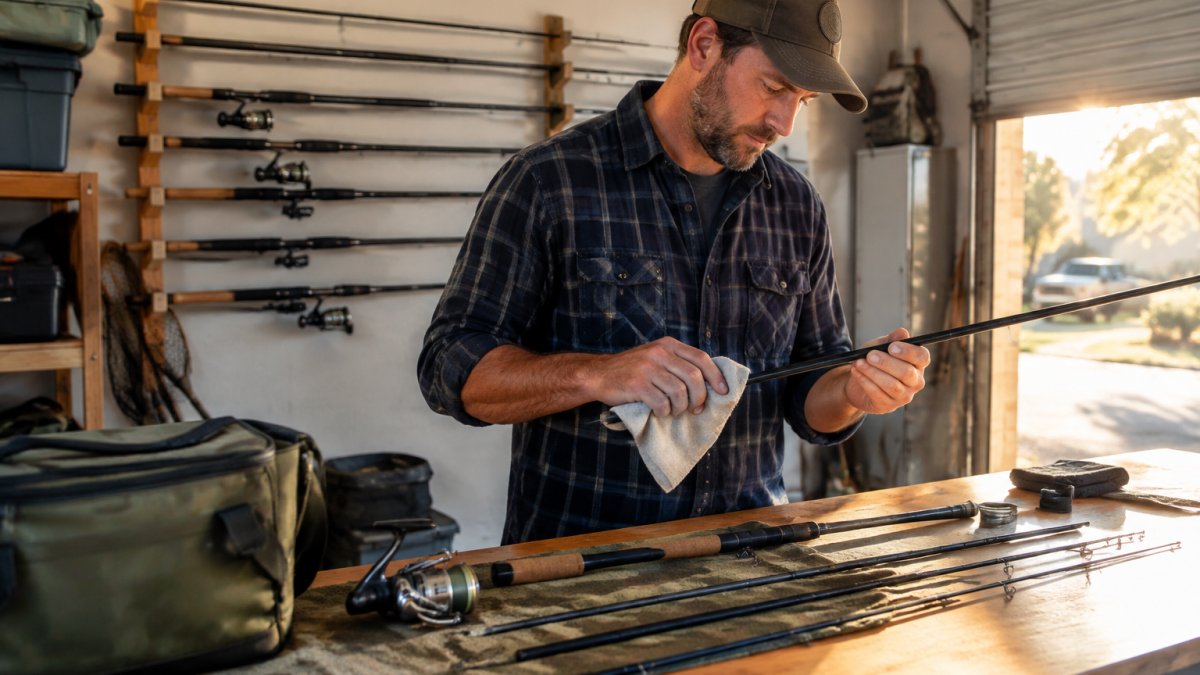
Why preparation matters more than the rack you buy
Knowing how to store fishing rods long term means accepting that a good rack holds a rod safely but cannot undo a wet reel seat or a salt-packed guide.
The five-step long-term storage routine
- Rinse the rod with fresh water and dry it fully.
- Remove the reel and loosen the drag.
- Break the rod down into its sections.
- Fit rod socks or sleeves and cap the guides.
- Store it supported, cool and dry, away from sunlight.
Fishing rod storage ideas for every space and budget
Storage ideas range from a simple wall rack in the garage to a rod tube under the bed. Pick based on how much vacant space you have and how long the rods will sit.
Racks, tubes, sleeves, and bags compared
| Storage option | Best for | Watch out for |
|---|---|---|
| Wall-mounted rack | Garages and sheds with spare wall space | Rods can bow if held at one point |
| Ceiling rack | Tight floor space | Heat rises, so keep it out of roof hot spots |
| Floor-standing rack | Renters and portable setups | Can tip if bumped |
| Rod tube | Long-term storage and travel | Trap moisture if the rod goes in damp |
| Rod sleeve or sock | Dust and scratch protection | No crush protection |
| Rod bag | Carrying several rods | Not for long-term storage |
A common mistake is buying the biggest rack first. Measure your longest rod and free wall space before you spend anything.
If you keep gear on a boat, our guide on how to organise a small boat tackle box pairs well with a compact rod setup.
Vertical vs horizontal fishing rod storage: which suits your space
Vertical storage suits rods you use often and rooms with height to spare.
Vertical racks save floor space and let rods drain and dry. The catch is pressure. A rod leaning in a corner for months can take a set, a permanent bend.
Horizontal storage spreads the rod's weight along its length. That is gentler on the blank.
How much support a rod needs comes down to its action and power. Our plain guide to fishing rod action and power explains why a soft, fast-action rod wants more support points than a stiff heavy one.
How to clean a fishing rod after use and before storage
Cleaning a rod before storage means rinsing it with fresh water, wiping the blank and guides dry, and checking each guide for grit or corrosion. Do this after every saltwater trip, not just at season's end.
Work through it in this order:
- Rinse the blank and guides with fresh water. Never dunk a reel.
- Wipe down with a soft cloth, working from butt to tip.
- Run a cotton bud around each guide frame to lift salt and grit.
Drying and protecting guides, cork, and blank
Drying is where most people rush. Stand the rod sections upright in a warm, airy spot and let them air dry fully before they go into any sleeve, trapped moisture causes corrosion and mould.
For the rest of your kit, our step-by-step guide on how to maintain fishing gear covers reels, line and terminal tackle.
Choosing a fishing rod storage rack that protects your gear
A good rod rack holds each rod at two or more points, keeps rods apart, and does not rely on the tip for support. Check these before you buy:
- Support points: two or more per rod, spaced apart.
- Cradle shape: wide enough that the rod cannot roll.
- Spacing: enough gap to stop rods knocking together.
For rods stored in tight spots, a floor-standing rack or a ceiling rack works better than a wall rack. Just check the load rating before you hang anything overhead.
Storage conditions and environmental risks to watch
Rods last longest in a cool, dry, dark place with steady temperature. Heat, damp and direct sun each attack a rod differently, and each fix differs too.
Heat and temperature swings
A hot shed or roof space softens finishes and warps cork, but the bigger problem is the swing: a tin shed hitting 45°C by day and 10°C overnight expands and contracts the blank, guide wraps and reel seat insert at different rates. Over months that cycling cracks finish at the guide feet and loosens reel seats. Keep rods out of roof spaces, off the top shelf, and away from walls that take direct afternoon sun; a steady internal wall or cupboard beats a shed that bakes.
Damp and humidity
Moisture drives corrosion on guides and reel seats and feeds mould on cork and line. The trap is a sealed tube or bag holding a rod that went in with any moisture, a damp sleeve, a wet grip, humid air trapped on a cool night. If your storage space feels damp or shows condensation on tools or metal shelving, rods should not live there.
Sunlight and UV
UV breaks down line, dulls blanks and degrades the clear coat on graphite faster than most anglers expect. A rod left in front of a window or under a clear roof panel will fade and chalk over a season. Keep stored rods out of direct sun, and cover any rack near a window with a sleeve or light cloth.
Pressure and load
Leaning rods or stacking weight on them causes bends. A rod that takes a set, a permanent curve, has usually been held at one point or pressed against something for months, not damaged in a single event. Support rods at two or more points, never hang a rod by its tip, and never rest a bag or tackle box on stored rods.
Pests
Rodents chew cork grips and line in sheds and nest in rod bags and sleeves. Keep stored rods off the floor, out of open bags, and away from corners with droppings or gnaw marks. A sealed tub or a wall rack well off the ground is the simplest defence.
Salt and residue
Salt is the risk that starts before storage. A rod put away with salt on the guides keeps that salt against the metal and insert for months, pitting the frame and lifting inserts. Rinse and dry fully before storage, the cleaning section above covers the sequence, and never store a saltwater rod without a fresh-water rinse and full dry.
Matching the risk to the material
Different rod materials fail differently in storage. Graphite blanks are stiff and light but brittle under point loads and show UV fade. Fibreglass is tougher but takes a set more readily under sustained load, so support points matter more. Bamboo is most sensitive to humidity, it swells, glue lines can fail, and it needs a dry, stable space.
Seasonal inspection and maintenance schedule
Check stored rods every few months, and give them a full inspection at the start of each season. A ten-minute check catches most problems early, but only if you know what a pass and a fail look like. Use the schedule below as a sequence, not a menu, work top to bottom each time.
The full long-term storage checklist
- Post-trip clean. Rinse the blank and guides with fresh water, wipe dry, and check each guide for grit or corrosion. Do this after every saltwater trip, not just at season's end.
- Full dry. Stand the sections upright in a warm, airy spot for a full day before anything goes into a sleeve or tube.
- Break down and separate. Remove the reel, back off the drag, and store reels separately from rods. Break multi-piece rods into sections.
- Protect. Fit rod socks or sleeves, cap the guides, and check that no section is under load.
- Store supported. Two or more support points per rod, cool, dry, dark, off the floor, away from windows and heat.
- Monthly glance. Confirm rods are still supported, no new bends, no damp, no pests.
- Season-start inspection. Full check of guides, inserts, grips, reel seats and line before the first trip.
- Season-end service. Full clean, dry, reel off, drag backed off, line checked and replaced if worn.
What to inspect and how to judge it
- Guides and inserts. Run a cotton bud around each guide frame to lift salt and grit, then a fingernail around the inside of each insert, a crack or lifted insert will catch. A cracked insert cuts line, so replace the guide rather than fish it.
- Guide frames. Look for pitting, flaking chrome or rust at the feet. Light surface rust can be cleaned; pitting eaten into the frame means replacement.
- Blank and finish. Check for cracks, chips or cloudy patches, especially at the guide feet where finish cracks first. A crack in the blank itself is a fail, do not fish it.
When to check
| When | What to check |
|---|---|
| After any trip | Rinse, dry, inspect guides |
| Monthly | Rods still supported, no new bends, no damp, no pests |
| Start of season | Guides, inserts, grips, reel seats, line, full pass/fail check |
| End of season | Full clean, dry, reel off, drag backed off, line checked |
Replace worn line before it fails on the water, check guide inserts for cracks, and re-tighten any loose reel seat. If a rod has taken a set or a blank has cracked, retire it from long-term storage rather than leaving it in the rack to fail on the next fish.
Stock your storage setup at Budget Roo
A storage setup is only as good as the gear in it. At Budget Roo, we stock fishing gear and outdoor kit built to handle real trips, at prices that leave room for the rack too.
Our range covers fishing tackle, camping gear and clothing for men and women, all chosen for value so you can stock up without overspending. If you are weighing up options, our roundup of value fishing gear picks and our list of affordable online tackle shop picks are good places to start.
Storing rods well is simple once the routine is set: clean, dry, separate the reel, and support the rod properly. Budget Roo stocks the tackle, storage and outdoor gear to keep your kit ready for the next trip, with a focus on affordability and durable gear for camping, cooking and fishing.
Frequently Asked Questions
Should fishing rods be stored vertically or horizontally?
Both work if the rod is supported properly. Vertical storage saves floor space and suits wall-mounted racks or corner stands, but the rod must be secured at two points so it cannot fall. Horizontal storage distributes weight evenly along the blank and is gentler on long rods, making it a better choice for ceiling racks or floor-standing racks in a garage. Whichever you pick, avoid leaning a rod loosely against a wall, because that puts constant pressure on one point and can cause a permanent bend.
Is it better to store fishing rods assembled or taken apart?
Take them apart for long-term storage. Leaving a rod assembled keeps the ferrules under tension and makes the whole outfit harder to protect from knocks. Separate the rod sections, remove the reel, and store the reel separately so its weight does not pull on the blank. Loosen the drag on the reel before putting it away to protect the drag washers. If you are storing overnight between sessions, leaving a rod assembled is fine as long as it sits in a rack or tube.
How do you stop fishing rod guides from rusting?
Rinse the rod with fresh water after every saltwater session, dry it fully with a soft cloth, and let it air dry before it goes into any tube or bag. Trapped moisture is what causes rust on guides and reel seats. A light coat of reel oil on the guides helps in humid conditions. Check the guides each season for pitting or green residue, and replace any guide with a rough or damaged ring before it starts cutting your fishing line.
Can fishing rods be stored in a rod tube long term?
Yes, provided the rod is completely dry before it goes in. A rod tube protects against bending, pressure, and accidental knocks, and it keeps dust and insects away. Store the tube horizontally or standing upright in a rack rather than leaning it in a corner. Avoid sealing a damp rod inside, because mould and rust will develop quickly. Add a silica gel pack to the tube if you live in a humid area, and check it each season.
