

Table of Contents
- Why Shoppers Look for a Snowys Alternative for Camping Gear
- How We Chose: Selection Criteria for Budget Camping Gear
- Cheap Camping Gear That Still Holds Up: The Comparison Table
- Camping Gear for Beginners: Where to Start Without Overspending
- Winter Camping Gear: What Actually Keeps You Warm
- Lightweight Camping Gear for Hiking and Backpacking
- Retailer Service, Delivery and Returns Compared
- Which Option Fits Your Trip? A Decision Framework
- Frequently Asked Questions
Last Updated: October 17, 2026
Why Shoppers Look for a Snowys Alternative for Camping Gear
A snowys alternative for camping gear comes down to one thing: shoppers want the same practical kit without retail-store prices.
The camping gear market rewards research. A dome tent, sleeping bag, swag and decent mat sell at wildly different prices for similar specs.
Below, we'll show you how to compare camping gear on the specs that matter, which budget options hold up, and where to spend versus save.
How We Chose: Selection Criteria for Budget Camping Gear
We judge cheap camping gear on five criteria weighted by real-trip impact. Water resistance and insulation come first, they decide whether you sleep or shiver, then durability, packed weight and setup time. Price only matters relative to those four.
Here's what we look at:
- Fabric and coating ratings. Look for a PU rating in millimetres on the tent fly. Higher is better for rain.
- Pole material. Steel is heavier but strong. Fibreglass is lighter but less forgiving in wind.
- Insulation fill. Hollow fibre filling in grams per square metre tells you more than a marketing temperature claim.
Cheap Camping Gear That Still Holds Up: The Comparison Table
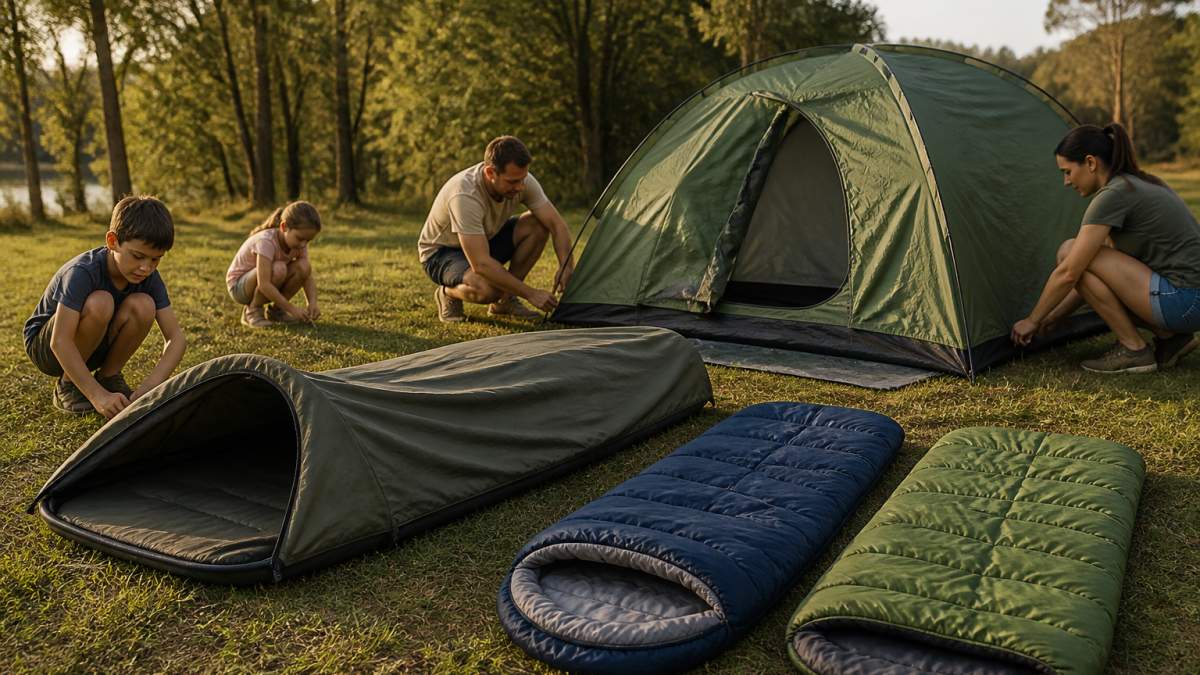
Budget camping gear holds up when the specifications are honest. These five options suit most families and casual campers, ranked by what they're good at rather than price.
| Product | Price (AUD) | Best For | Key Spec |
|---|---|---|---|
| Weisshorn Family Camping Tent 4 Person | $102.95 | Weekend trips on a tight budget | 190T polyester PU3000mm, fibreglass poles |
| Weisshorn Instant Up Pop-Up Tent 4-5 Person | $216.95 | Fast setup with kids in tow | Pops up in one second, steel frame |
| Weisshorn Camping Tent 6 Person Dome | $259.95 | Larger families and longer stays | 405cm x 310cm floor, shade awning |
| Weisshorn Swag King Single with 7cm Mattress | $383.95 | Solo or couple trips, quick camps | 380gsm ripstop canvas, 500gsm PVC floor |
| Weisshorn Sleeping Bag 5 Degree | $101.95 | Three-season comfort | 300g/m² hollow fibre, -10°C to +15°C range |
Tents and Shelters
Tents are where budget shopping pays off fastest. The Weisshorn Family Camping Tent 4 Person is the value pick at $102.95, with a 190T polyester rainfly rated PU3000mm, a cross-pole roof for headroom, and a sewn-in PE ground sheet with elevated seams.

If setup speed matters more than price, the Weisshorn Instant Up Pop-Up Tent at $216.95 pops up in about a second and sleeps four to five.

For bigger groups, the Weisshorn 6 Person Dome at $259.95 gives you a 405cm x 310cm floor and an entrance shade awning. That awning is the detail most budget tents skip.

Sleeping and Insulation
Sleeping gear is where cheap buys fail most often, so read the fill weight. The Weisshorn Sleeping Bag at $101.95 uses 300g/m² hollow fibre filling, and unzips into two singles or a blanket.
For swag camping, the Weisshorn Swag King Single at $383.95 is the standout. A 380gsm ripstop canvas cover, 500gsm PVC flooring and a 10cm raised floor edge handle dew and ground water.
Camping Gear for Beginners: Where to Start Without Overspending
Most beginner guides give you the same four-item list and stop, without telling you how to sequence spending, spot a false economy, or match kit to the camper you actually are.
Buy in the order that ruins a trip fastest
Shelter and sleep come first, because a wet or cold night ends the trip. Cooking and lighting come second; gadgets come last, and often never. A missing lantern is an inconvenience, a leaking tent is a drive home at 2am.
Start with these four items and stop there for your first few trips:
- A tent sized one person larger than your group. The extra berth is storage and breathing room, not luxury.
- A sleeping bag rated for the coldest night you expect, not the average night.
- A mat or swag with real insulation underneath. Ground cold defeats a thick bag every time.
- A simple stove and a basic light source.
The false-economy test
A cheap item is good value only if it survives the trips you actually take. Use this three-question test before buying:
- Does the specification match the job? A PU3000mm fly is a real rain rating; 'waterproof' on a box is marketing. Look for the number.
- Is the weak point replaceable? Pegs, poles and stuff sacks fail first. If spares are cheap and available, a budget tent can outlast its price. If the weak point is the floor or the fly, it cannot.
- Would a failure end the trip? If yes, buy one tier up. If no, buy the budget option with confidence.
Match the kit to the camper you are
Beginners are not one market. Segment by need before you spend:
- The casual family camper. Two or three trips a year, mostly fair weather, car-based. Prioritise floor area, headroom and setup speed over packed weight. A larger dome tent with a sewn-in PE ground sheet is the sensible core.
- The weekend solo or couple camper. Quick camps, often one night. A swag with an included mattress removes a separate purchase and sets up in minutes. Prioritise the floor rating and raised edges.
- The aspiring hiker. If you intend to carry the kit, packed weight and packed volume become the deciding specs. Fibreglass poles over steel, and check carry-bag dimensions before you buy, not after.
What not to buy first
The trap for new campers is buying a full kit at once. Buy the core four, use them twice, then fill gaps based on what actually annoyed you. A casual camper doesn't need mountaineering gear, and gadgets like a camp oven or solar shower are fine, after you know you'll keep camping.
A note on temperature ratings
A common beginner mistake is buying on the temperature printed on the box. Treat them as a guide, not a promise, and add a mat underneath before a thicker bag.
Winter Camping Gear: What Actually Keeps You Warm
Winter camping gear works through layers and ground insulation, not one expensive item.
Layer clothing in three parts: a moisture-wicking base, an insulating mid layer, and a wind and water shell. Then treat your sleep system as a unit, a bag rated to 5°C on a cold mat still leaves you shivering.
For snow camping and winter hiking, pay attention to these:
Weisshorn Instant Up Camping Tent 4-5 Person Pop up Tents Family Hiking Beach →
- Floor ratings. A 500gsm PVC floor resists ground cold and moisture far better than thin nylon.
- Raised floor edges. A 10cm edge stops dew and meltwater creeping in.
- Ventilation. Mesh panels reduce condensation, and condensation is what makes a bag feel damp and cold by morning.
The Weisshorn swag's 380gsm ripstop canvas and 500gsm PVC flooring are built for exactly this. It's the closest thing in the range to a proper cold-weather sleep setup.
Lightweight Camping Gear for Hiking and Backpacking
Lightweight camping gear for hiking means cutting weight where it doesn't cost you warmth or weather protection.
For backpacking, fibreglass poles save weight over steel, which is why the 4 Person Family Tent suits shorter carries better than the pop-up.
For bikepacking and dog-friendly hiking, packed size matters more than total weight. Check carry bag dimensions before you buy, not after.
A useful rule: if an item doesn't keep you warm, dry, fed or rested, it stays home.
Retailer Service, Delivery and Returns Compared
Most buying guides stop at the price tag, the wrong place to stop. When comparing a Snowys alternative for camping gear, the retailer's service model, stock accuracy, dispatch time, delivery coverage, returns handling and warranty path, decides whether a cheap price stays cheap after one bad experience.
This section compares retailers on service, separating what a retailer publishes (verifiable) from what customers report (indicative).
The five service questions that actually matter
- Stock status at the moment of ordering. Is the item physically in stock, or is it a pre-order or drop-ship line? A pre-order sold as in-stock is the single most common cause of a ruined trip.
- Dispatch window versus delivery window. These are different promises. A retailer can dispatch in 24 hours and still take a week to reach a regional postcode. Ask for both figures separately.
- Postcode exclusions and remote-area surcharges. Many value retailers publish a list of excluded or surcharged postcodes. Check yours before you commit to a trip date.
- Returns policy on used-but-faulty gear. A tent that leaks on its first night is faulty, not 'used'. Confirm in writing that a first-use fault is treated as a fault, not a change of mind.
- Warranty path and who pays freight. If a pole snaps in month three, does the retailer handle the claim, or push you to the manufacturer? Who covers return freight? Get this in writing before purchase.
How to verify a retailer's claims
A published policy is verifiable. A customer review is indicative. Use them in that order.
- Verifiable: the returns page, the delivery page, the warranty page, the terms of sale, and the product page's stated stock status. Screenshot these at the time of order, policies change.
- Indicative: customer reviews, forum threads and social posts about delivery times or warranty handling. Useful for spotting patterns, not for proving a policy.
- Test before you rely: place a small, low-risk order first (a set of pegs, a lantern, a dry bag) and observe dispatch time, packaging and tracking quality. That single test tells you more about a retailer's operation than any review page.
The honest trade-off with value retailers
Every retailer sits on a range-versus-price curve. A specialist store stocks more brands and premium lines and charges for that depth; a value-focused retailer stocks fewer lines at lower prices, trading range depth and sometimes brand choice.
That trade-off is the model, not a flaw. Match the retailer to the job: a specialist earns its margin on a specific premium brand or fit, while a value retailer is the rational choice for proven, simple gear at a fair price.
A practical pre-purchase checklist
Before you order from any retailer, including this one, confirm the following in writing:
- The item is in stock now, not on pre-order.
- Your postcode is not excluded or surcharged.
- The dispatch window and the delivery window are stated separately.
If a retailer cannot answer those five points clearly, that is your answer. Move on.
Which Option Fits Your Trip? A Decision Framework
Use this framework to pick in under a minute. Match the trip, not the marketing.
- Weekend family trip, tight budget: Weisshorn Family Camping Tent 4 Person, $102.95.
- Fast setup with kids: Weisshorn Instant Up Pop-Up Tent, $216.95.
- Larger group or long stay: Weisshorn 6 Person Dome, $259.95.
If you're weighing cheap camping gear against premium gear, remember what you're buying: weather protection, insulation and durability. Everything else is convenience.
Frequently Asked Questions
Which retailers are alternatives to Snowys for camping gear?
Beyond the big outdoor chains, Budget Roo stocks a focused range of Weisshorn tents, swags and sleeping bags at prices that suit casual campers and families. A four-person dome tent is $102.95, a five-person pop-up tent is $216.95, and a king single canvas swag with a 70mm mattress is $383.95. If you mainly need shelters and sleeping gear rather than a full catalogue of climbing hardware, a smaller specialist range usually means less choice paralysis and lower prices.
How can I tell whether cheap camping gear is good quality?
Check the specifications rather than the price tag. A tent's waterproof rating matters most: a PU3000mm coating on 190T polyester handles steady rain, while the pole material decides how the frame copes with wind. For sleeping bags, look at the filling weight and the stated temperature range, and remember the comfort rating is not the same as the extreme rating. For swags, canvas weight in grams per square metre and a thick PVC floor tell you more about durability than any marketing line.
What camping equipment should beginners buy first?
Start with shelter and sleep, because those two decide whether the trip is enjoyable. A four-person dome tent at $102.95 covers couples and small families, and a double sleeping bag at $101.95 converts into two singles when needed. Add a swag if you prefer sleeping under the stars with insect mesh. Cooking gear, lighting and chairs can wait until you know how often you will camp. Buying the core items well first stops you replacing cheap mistakes later.
What gear do I need for winter camping?
Insulation is the whole game. Layer clothing, then pair a sleeping bag with a proper mat underneath, because the ground pulls heat out faster than the air does. The Weisshorn double sleeping bag has 300g/m² hollow fibre filling, which covers most cold-weather trips when combined with a mat. A canvas swag with a 70mm high-density foam mattress is another option for winter camping gear, since the thick base blocks cold from below.
Is lightweight camping gear worth it for casual campers?
Only if you are carrying it. A pop-up tent that sets up in under a minute is convenient at a drive-in campsite but heavier to haul on a hike. If your trips involve walking in, prioritise pack size and weight; if you drive to the site, a larger dome tent with more headroom is the better trade. Match the gear to how you travel rather than buying ultralight equipment you never actually carry.
The hardest part of buying camping gear isn't finding options. It's knowing which specs actually matter and which are marketing. Budget Roo Pty Ltd stocks a focused range of camping, cooking, fishing and caravan gear built around that idea, including insulated sleeping bags, canvas swags and family tents with honest water-resistance ratings. If you want gear that keeps you warm and dry without the retail markup, browse the range and check delivery to your postcode before your next trip.