

Table of Contents
- Start with a Camping Gear Checklist for Beginners
- How to Choose a Camping Tent for Beginners
- Best Budget Camping Gear Australia 2026: What to Look For
- Sleeping Systems: Bags, Pads, and Temperature Ratings
- Cooking, Lighting, and Water: The Practical Essentials
- Rent, Buy, or Borrow? Making the Call for Your First Kit
- Gear Maintenance and Storage: Make It Last
- Frequently Asked Questions
Last Updated: September 16, 2026
Start with a Camping Gear Checklist for Beginners
Learning how to choose camping gear for beginners starts with one rule: buy camping gear for beginners for the trip you're actually taking, not the one you're imagining. First-time campers often overspend on specialist equipment they never use, then cut corners on the two items that decide whether they sleep well. Get the shelter and sleep system right first, and everything else is negotiable.
The Australian Camping Association and Tourism Australia's camping guidance both point new campers toward a short, practical kit list rather than a full outdoor store. Park authorities such as Parks Australia add one more essential: check fire restrictions and park rules before you pack a stove or axe.
The Non-Negotiables for Your First Trip
- Tent with a separate rainfly and a groundsheet or footprint
- Sleeping bag rated for the coldest night you expect
- Sleeping pad with an insulation rating, not just cushioning
- Headlamp plus spare batteries
- First aid kit and a basic multi-tool
- Water storage and a purification method
- Wet-weather layer and spare socks
Nice-to-Haves You Can Add Later
Camp chairs, a folding table, a second cooking pot, and a larger cooler all improve comfort. None of them will ruin your trip if they stay home. Buy these after your first or second outing, once you know how you actually camp.
How to Choose a Camping Tent for Beginners
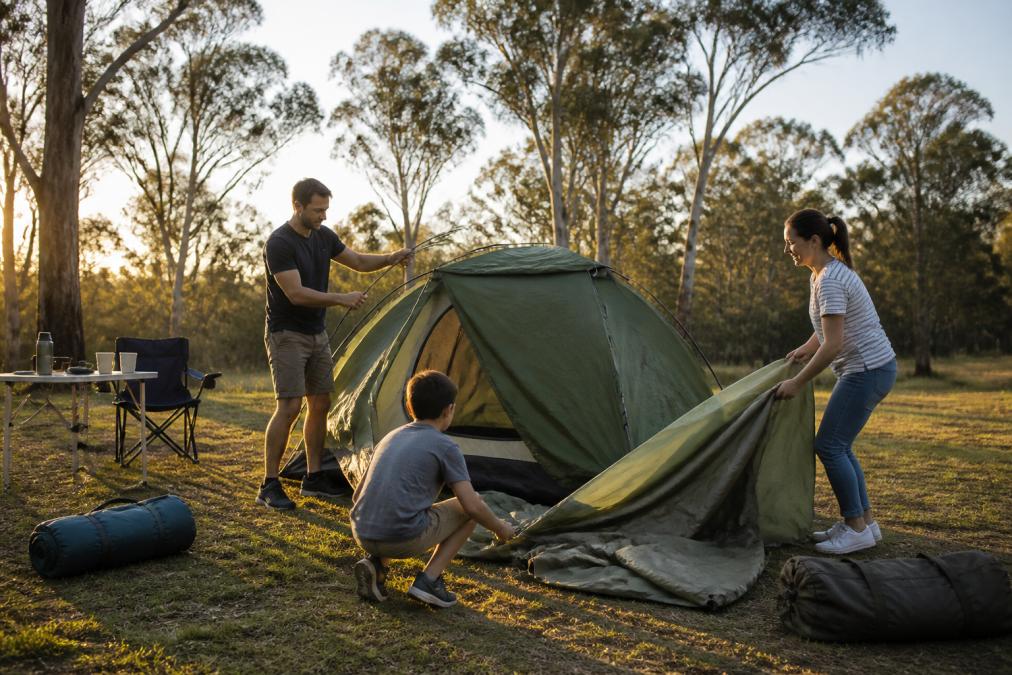
A beginner tent is judged on three things: how many people it sleeps comfortably, how it handles rain and wind, and how long it takes one person to pitch it. A "4-person" tent usually fits two adults plus gear in comfort. If you're camping as a family, size up rather than squeeze in.
Size, Season Rating, and Setup Time
Match tent capacity to bodies plus bags, not bodies alone. A common pattern among first-time buyers is to buy the exact body count and then discover there is no floor space left for packs, boots or a dog. As a rule of thumb, add one berth to your headcount for car camping, and two for hiking where you carry more bulk per person.
Weather Resistance and Ventilation
The hydrostatic head (HH) rating tells you how much water pressure a fabric can withstand before it leaks. As a working guide:
- 1,000-1,500mm, light showers, fair-weather camping only
- 2,000mm, the practical minimum for a beginner tent used in Australian conditions
- 3,000mm+, sustained heavy rain and exposed sites
Matching the Tent to How You'll Actually Camp
| Trip type | Priority | What to look for |
|---|---|---|
| Car camping, fair weather | Space and comfort | Large dome or cabin tent, tall ceiling, 2,000mm HH |
| Car camping, wet climate | Weatherproofing | 3,000mm+ HH, full-coverage fly, taped seams |
| Overnight hikes | Weight and pack size | Under 2.5kg per person, compact pole set |
| Family trips | Easy solo pitch | Instant-up frame, colour-coded poles, room divider |
| Hot, humid conditions | Airflow | Large mesh panels, fly that can be pitched open |
A Note on Climate
Where you camp shapes what you need. Coastal and tropical sites bring humidity and sudden downpours, so ventilation and a high HH rating matter most. Inland and alpine areas bring cold nights and strong winds, so a lower-profile design, stronger poles and a warmer sleep system matter more than mesh. If you camp in both, a three-season tent with a full-coverage fly and adjustable vents is the most versatile single purchase.
Best Budget Camping Gear Australia 2026: What to Look For
Value in camping gear comes from matching specification to use, not from the lowest sticker price. Focus on three specifications that separate gear that lasts from gear that fails on trip two: waterproof ratings on tents, temperature ratings on bags, and insulation ratings on sleeping pads.
| Gear Type | Spec That Matters | Beginner Target | Skip If |
|---|---|---|---|
| Tent | Hydrostatic head | 2000mm+ fly | Rating not stated |
| Sleeping bag | Comfort temperature | 5°C or lower | Only "extreme" rating listed |
| Sleeping pad | R-value | R2+ for three-season | No R-value given |
| Headlamp | Lumens and runtime | 100-300 lumens | No runtime spec |
| Stove | Burner output | 2 burners for families | No flame safety cut-off |
Sleeping Systems: Bags, Pads, and Temperature Ratings
Your sleeping system is the single biggest factor in whether you enjoy camping. A sleeping bag's comfort rating, not its "extreme" rating, is the number to trust. Buy for the coldest night of your trip, then add a liner for extra warmth on cold snaps.
Cooking, Lighting, and Water: The Practical Essentials
Cooking and water gear is where beginners either save money or waste it. You need one reliable heat source, one pot, one pan, and a way to make water safe. Everything past that is preference. The trick is choosing the right fuel and treatment method for how you camp, not buying the biggest kit on the shelf.
Camp Stoves and Cookware
Stoves fall into three broad families, and the right one depends on your trip type:
- Canister gas stoves, screw onto a pressurised butane/propane canister. Light, fast to light, easy to control. Best for hiking and short trips. Performance drops in cold weather.
- Liquid fuel stoves, run on shellite or white gas. Reliable in cold and at altitude, but require priming and more care. Rarely needed by beginners.
- LPG bottle stoves, run off a refillable or exchangeable gas bottle. Cheapest per hour of cooking and the standard for car camping and family trips.
Headlamps, Hydration, and Water Filtration
A headlamp beats a torch because it keeps your hands free for cooking and tent setup. Aim for 100-300 lumens with a stated runtime. Two specs matter more than raw brightness: runtime (how many hours at a usable output) and beam type (a flood beam lights your cooking area; a spot beam reaches into the dark). Many headlamps offer both.
- Filters (hollow-fibre or pump), remove bacteria and protozoa, and most remove microplastics. Fast, no taste change, but don't neutralise viruses.
- Purification tablets, cheap, light, effective against bacteria and viruses, but take 30 minutes to work and leave a slight taste.
- UV purifiers, fast and chemical-free, but rely on batteries and clear water.
Rent, Buy, or Borrow? Making the Call for Your First Kit
Buy the gear you'll use at least three times a year, and rent or borrow the rest. Tents, sleeping bags and stoves are worth owning because rental fees add up fast. Specialised items like large family tents, canoe gear or snow equipment are better rented until you know you'll keep camping.
Gear Maintenance and Storage: Make It Last
Proper storage doubles the life of most camping gear. Never store a sleeping bag compressed; hang it or keep it loose in a cotton sack so the fill keeps its loft. Dry your tent completely before packing it away, even if that means pitching it in the yard for an afternoon, because mildew destroys waterproof coatings.
Frequently Asked Questions
What is the best camping gear for a beginner?
Start with the essentials: a weather-resistant tent, a sleeping bag rated for the conditions, a sleeping pad, a camp stove, a headlamp, and a first aid kit. For budget-friendly options, look for brands that offer good value. For example, the Weisshorn 5-person pop-up tent at $216.95 is easy to set up and suits families. Add a sleeping bag like the Weisshorn 5-degree navy bag at $101.95 for comfort. Build from there as you learn what you actually use.
Should I rent or buy camping gear as a beginner?
If you camp once or twice a year, renting can save money and storage space. But if you plan to go regularly, buying budget gear pays off quickly. Basic items like a tent, sleeping bag, and stove can cost less than multiple rentals. Buying also lets you get familiar with your gear before a trip. Start with affordable options and upgrade only what you use most.
How do I balance quality and budget when buying camping gear?
Focus on the items that affect your comfort and safety: shelter, sleep system, and cooking. Spend a bit more on a tent with good waterproofing and a sleeping bag with a suitable temperature rating. For accessories like chairs, tables, and storage, budget options work fine. The KILIROO camping table at $98.95 is a solid example of affordable quality. Read reviews and check specifications like denier and PU coatings.
What is the most forgotten item when camping?
A mallet for tent stakes and a spare set of guy lines are commonly forgotten. Also, many beginners forget a headlamp or extra batteries. A simple checklist helps: tent, stakes, mallet, sleeping bag, pad, stove, fuel, lighter, cookware, water, food, first aid kit, and lighting. Print it and tick items off as you pack. It saves you from improvising at the campsite.
Choosing your first camping kit is less about buying the most gear and more about buying the right gear for how you actually camp. Budget Roo Pty Ltd stocks durable, budget-friendly tents, sleeping bags, camp tables and cooking equipment designed to keep beginners comfortable from the first trip onward. Browse the range and get set up for your next adventure without overspending.