

Table of Contents
- Camping Tarp vs Tent: Key Differences
- Weight, Packability, and Portability
- How to Set Up a Camping Tarp
- Weather Protection and Rain Coverage
- Disadvantages of Tarp Camping
- Tarp Camping for Beginners
- When a Tent Is the Better Choice
- Frequently Asked Questions
Last Updated: October 12, 2026
Camping Tarp vs Tent: Key Differences
When considering camping tarp vs tent, both solve the same basic problem, shelter from the elements, but they take fundamentally different approaches. Understanding those differences is essential before you commit to either option. At Budget Roo Pty Ltd, we work with campers of all experience levels, and the tarp-versus-tent question comes up constantly. The answer isn't that one is universally better. It's that each suits different situations, priorities, and skill levels.
A camping tarp is a lightweight fabric canopy stretched between anchor points using guylines and stakes. It provides overhead rain protection and shade but leaves the sides open to the elements. A tent, by contrast, is a fully enclosed shelter with walls, a floor, and a rainfly, a complete weatherproof system. The tarp camping approach requires you to engineer your own shelter using natural features or trekking poles as support. Tent camping gives you a ready-made, self-contained structure.
The core tension is this: tarps are simpler, lighter, and more versatile. Tents offer complete protection, privacy, and built-in convenience. Most experienced campers carry a tarp as a backup or use it for specific conditions. Beginners often find tents more forgiving because setup is standardised and the enclosed design handles mistakes better.
Weight, Packability, and Portability
This is where the tarp camping advantage becomes immediately obvious. A quality tarp typically weighs between 300 and 600 grams, depending on material and size. A comparable tent, one that sleeps the same number of people and offers similar weather protection, usually weighs 1.5 to 2.5 kilograms or more.

When you add the complete tarp system, guylines, stakes, groundsheet, and any poles you bring, you're still often ahead of a tent's weight. Many experienced tarp campers use trekking poles they already carry for hiking as ridgeline supports, eliminating the need for dedicated shelter poles entirely. This multiplies the weight savings.
Packability matters equally. A tarp rolls or folds into a compact bundle, often smaller than a tent's packed dimensions. If you're moving between campsites frequently or hiking to remote locations, that compactness translates to easier pack management and more room for other gear.
For casual weekend campers, this distinction feels academic. For those doing multi-week treks or moving camp daily, it becomes the deciding factor. Budget Roo Pty Ltd stocks lightweight tents designed for portability, like the Weisshorn Family Camping Tent 4 Person at just over 4 kilograms, but even these are heavier than an equivalent tarp setup.

How to Set Up a Camping Tarp
Setting up a camping tarp requires understanding a few core principles. Unlike a tent, where you follow a standardised sequence, tarp setup adapts to your location and the weather you're facing. This flexibility is powerful once you understand the mechanics. It's also where beginners often stumble.
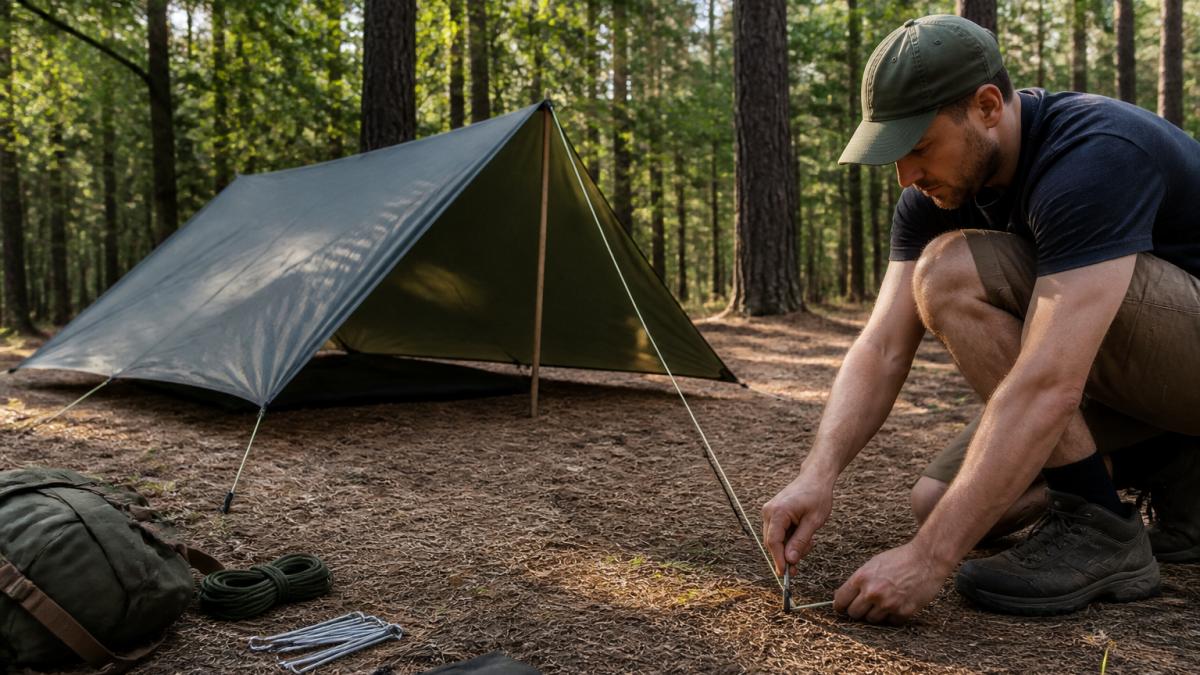
Basic A-Frame Configuration
The simplest tarp configuration is the A-frame, which offers basic rain protection while remaining quick to deploy. Start by identifying two anchor points, trees, rock outcrops, or even your vehicle, roughly 3 to 4 metres apart. Tie the tarp's ridgeline (the central edge or cord running lengthwise) between these points at a height of 1.2 to 1.5 metres. This creates the peak of your shelter.
Next, stake the four corners of the tarp to the ground at roughly 45-degree angles from the ridgeline. This tension distributes the load evenly and prevents the tarp from sagging or pooling water. Adjust the corner stakes until the fabric is taut but not overstretched. The goal is a smooth, drum-like surface that sheds water rather than collecting it.
In calm conditions, this setup takes 5 to 10 minutes once you've chosen your site. The trade-off is exposure: your sleeping area is open on two sides, so wind, insects, or heavy rain can still reach you. An A-frame works well for dry weather or when you're sheltering from sun rather than precipitation.
Ridge Line Setup for Wind Stability
When weather deteriorates or wind picks up, the ridge line setup becomes essential. This configuration involves running a taught line along the tarp's length and securing it at both ends. Use trekking poles, trees, or even a line between your backpack and a natural anchor to create height and tension.
The ridge line does two critical things: it creates a peaked roof that sheds water more effectively, and it stabilises the tarp against wind. Without a ridge line, gusts can catch the fabric and destabilise your entire shelter. With it, the tarp becomes far more resistant to lateral forces.
To set up a ridge line, position your primary anchor points (trees or poles) at the highest points you can safely reach, typically 1.5 to 2 metres high. Run a strong cord between them, then attach the tarp's ridgeline to this cord using carabiners or knots that allow adjustment.
This setup takes 15 to 20 minutes but handles serious weather far better than a basic A-frame. It's the configuration most experienced tarp campers use by default, especially in exposed or mountainous terrain.
Weather Protection and Rain Coverage
Here's where tarp camping reveals its limitations. A well-pitched tarp with a solid ridge line provides excellent overhead protection from rain. Water runs off the angled fabric efficiently, and the peak design prevents pooling. However, the open sides mean wind-driven rain can still reach you, and morning dew often collects on the inner fabric.
A tent's fully enclosed design eliminates these problems. Rain, wind, and moisture stay outside. The rainfly covers the entire structure, and the floor is sealed. In heavy rain or sustained wet weather, a tent offers peace of mind that a tarp cannot match. You're not managing water management or worrying about wind direction, you're simply dry.
That said, tarp camping works perfectly in many conditions. Gentle rain with little wind? A tarp handles it. Dry weather with intense sun? A tarp provides excellent shade and ventilation. The key is matching the shelter to the forecast. If you're camping in uncertain or severe weather, a tent is the safer choice.
Budget Roo Pty Ltd's Weisshorn tents feature double-layer fabric construction and PU-coated rainflies rated at 3000mm water pressure, which handles sustained rain effectively. If weather protection is your priority, a quality tent removes the guesswork.
Disadvantages of Tarp Camping
Tarp camping isn't a universally superior solution, despite its weight advantages. Several significant drawbacks deserve honest acknowledgement.
Insects and ground moisture. A tarp provides no barrier between you and the ground. Insects can crawl directly onto your sleeping bag, and ground moisture wicks into your gear.
Privacy and comfort. Sleeping under an open tarp means anyone walking past can see you. For solo campers in remote areas, this is fine. For families or those camping in populated areas, the lack of enclosure feels uncomfortable.
Setup skill and site dependence. A tent works anywhere with flat ground. A tarp requires suitable anchor points and understanding of pitch angles, guyline tension, and weather-specific configurations. Poor setup leads to leaks, sagging, or instability.
Weisshorn Instant Up Camping Tent 4-5 Person Pop up Tents Family Hiking Beach →
Condensation and ventilation. While a tarp's open sides allow excellent airflow, they also mean condensation forms on the inner fabric on cold nights. You wake up with damp gear.
Cooking and gear storage. A tent provides a sheltered space to cook in foul weather and to store gear out of sight and weather. A tarp offers neither.
These aren't minor trade-offs. For many camping scenarios, they make tarp camping impractical or uncomfortable.
Tarp Camping for Beginners
If you're new to camping and considering a tarp, approach it cautiously. Tarp camping has a steeper learning curve than tent camping, and mistakes have real consequences, a poorly pitched tarp in rain leaves you wet and uncomfortable.
Start with a tarp in good weather. Choose a dry forecast, set up in daylight, and practice the basic A-frame and ridge line configurations. Bring a tent or bivy bag as backup until you're confident in your setup skills.
Invest in quality guylines and stakes. Cheap stakes bend or pull out under tension, and weak guylines fail when you need them. Budget Roo Pty Ltd's Weisshorn products include quality pegs and ropes, and the same standard applies to tarp gear, don't skimp on these components.
Understand your local weather patterns. Tarp camping works best in regions with predictable, mild conditions. If you're camping in areas prone to sudden storms or heavy rain, a tent is more forgiving for beginners.
Consider a hybrid approach: use a lightweight tent for your first season, then experiment with a tarp for specific trips in good weather. This builds your skills gradually without the pressure of relying entirely on a shelter you're still learning to use.
When a Tent Is the Better Choice
Tarp camping isn't the right answer for most people, most of the time. A tent is the better choice in several clear scenarios.
Family camping. Tents provide privacy, enclosed storage for gear, and a defined sleeping space that families expect. Kids feel safer in an enclosed shelter.
Extended trips in uncertain weather. If you're camping for a week or more and the forecast is unpredictable, a tent's reliability and weather protection justify its weight.
Exposed or mountainous terrain. Tarp camping in high winds or on exposed ridges requires expert setup and site selection. Beginners and intermediate campers should use a tent in these conditions.
Insect-heavy regions. If you're camping where insects are aggressive or abundant, a tent's mesh walls and sealed floor are essential.
Casual or social camping. Car camping, campground camping, and group trips favour tents.
Budget Roo Pty Ltd offers several tent options designed for these scenarios. The Weisshorn Instant Up Camping Tent 4-5 Person ($216.95) sets up in seconds and provides complete weather protection for families.
Choosing between a camping tarp and a tent comes down to your priorities, experience level, and the conditions you'll face.
At Budget Roo Pty Ltd, we stock both options because we know different campers have different needs.
Get started with a quality tent from Budget Roo Pty Ltd and build your camping confidence.
Frequently Asked Questions
What are the main benefits of using a camping tarp over a tent?
Camping tarps offer significant weight savings, often 500-1000 grams lighter than traditional tents, making them ideal for backpackers. They provide excellent ventilation, reducing condensation buildup. Tarps offer versatility, you can configure them multiple ways depending on weather and terrain. They cost less than quality tents and pack down smaller. However, they require more setup skill and offer less privacy and insect protection than enclosed tents.
Is tarp camping suitable for beginners?
Tarp camping is achievable for beginners but requires practice and preparation. Start in mild weather with clear forecasts to build confidence in setup techniques. Learn basic configurations like the A-frame first. Beginners should invest time in understanding guyline tensioning, stake placement, and how to adjust the tarp for wind and rain. Consider practising in your garden before your first trip to reduce anxiety on site.
What are the disadvantages of tarp camping?
Tarps offer no insect protection, leaving you exposed to mosquitoes and other bugs. They provide no privacy or personal space. Ground moisture and dew can seep in unless you use a groundsheet. Tarps require more skill to pitch correctly and secure against wind. They don't provide the security or comfort of an enclosed shelter, and in heavy rain or extreme weather, condensation can still occur inside your sleeping area.
How do you set up a camping tarp safely in windy conditions?
In wind, use a ridge line configuration with the tarp's longest edge facing the wind direction. Secure all guylines taut and at low angles to the ground, steep angles catch more wind. Place stakes at 45-degree angles away from anchor points for maximum holding power. Use quality stakes designed for your soil type; sand and soft ground require wider stakes. Test your setup before sleeping and adjust tension if the tarp flaps or moves.