

Table of Contents
- What Makes a Budget Sleeping Bag Worth Buying
- Sleeping Bag Temperature Ratings Explained
- Synthetic vs Down Sleeping Bags for Beginners
- How to Choose a Sleeping Bag for Camping
- Best Budget Sleeping Bags Under $150
- Key Features That Matter on a Budget
- Maintenance and Long-Term Durability
- Frequently Asked Questions
Last Updated: September 24, 2026
What Makes a Budget Sleeping Bag Worth Buying
Choosing budget camping sleeping bags doesn't mean compromising on warmth or durability. The key is understanding what features genuinely matter for your climate and camping style, then finding products that deliver those essentials without unnecessary extras.
Most budget camping sleeping bags fail because they target the wrong use case or skimp on insulation quality. The ones that work prioritise thermal efficiency and weatherproofing over marketing.
A worthwhile budget sleeping bag requires three things: appropriate temperature rating for your climate, honest insulation type (synthetic or down), and construction quality that won't fail mid-trip.

Sleeping Bag Temperature Ratings Explained
Temperature ratings define how cold it can get before a sleeping bag stops protecting you. The comfort limit is the temperature at which a standard sleeper stays warm; the extreme rating is the absolute minimum before hypothermia risk becomes serious.

Most budget sleeping bags for Australian conditions carry ratings between 5 and 15 degrees Celsius. A 5-degree rating keeps an average person warm down to that temperature under normal camping conditions; go below it and you're relying on layers, a good sleeping mat, and luck.
The rating assumes you're using a sleeping mat, wearing warm clothing, and staying dry. Moisture kills insulation performance; a damp bag rated to 5 degrees might only protect you to 10 degrees or worse.
Understand your typical night temperatures. Coastal and lowland areas rarely drop below 5 degrees in winter; highlands and inland regions hit freezing or below. A single 5-degree bag covers most scenarios. For mild coastal conditions, a 10-degree or 15-degree bag saves money without compromise.
Synthetic vs Down Sleeping Bags for Beginners
Synthetic insulation uses manufactured fibres to trap warm air; down insulation uses fluffy feathers from ducks or geese. For budget camping, synthetic wins most of the time.
Synthetic bags maintain warmth when damp, which matters in humid Australian conditions. Down loses nearly all insulating power when wet. Synthetic costs less, dries faster, and requires minimal maintenance.
The Weisshorn Double Sleeping Bag uses 300g/m² hollow fibre filling, a synthetic approach that delivers genuine warmth at a price point well under $150. Synthetic bags at this price point outperform down alternatives because manufacturers can invest in better construction and fabric quality rather than premium insulation.
Down's advantage is weight and packability for ultralight hiking. For car camping, family trips, and beginners, synthetic is the practical choice, it forgives mistakes, handles moisture, and costs less.
Synthetic bags are bulkier and slightly heavier than equivalent down bags, but for most Australian campers this is a non-issue, reliability matters more than weight savings.
How to Choose a Sleeping Bag for Camping
Your sleeping bag is one half of a thermal system; the other half is your sleeping mat. Thermal performance depends on both working together.
The Sleep System Approach
A sleeping bag's insulation rating assumes you're using an insulated mat underneath. The mat prevents heat loss to the ground, the largest source of heat drain. A 5-degree-rated bag on bare ground might only protect you to 10 degrees; on a mat with R-value 2.0+ it delivers its rated performance.
Allocate roughly equal investment to bag and mat. A $100 bag with a $30 mat underperforms compared to an $80 bag with a $60 mat. A closed-cell foam mat (10-20mm thick) provides R-value 1.5-2.0, sufficient for most Australian camping and is the practical budget choice.
Test your complete system before a serious trip by laying out your bag on your mat in your backyard on a cool night.
Temperature and Climate Matching
Anchor temperature choice to your actual camping locations. Coastal lowlands rarely drop below 5 degrees in winter; inland and highland regions hit freezing or below. A single 5-degree-rated bag covers most scenarios, but understanding your region prevents overspending.
For mild coastal conditions (winter lows 8-12 degrees), a 10-degree or 15-degree bag saves money. For highlands or inland areas, a 5-degree bag is safer. Check Bureau of Meteorology data for your region.
Shape and Fit
Mummy bags (tapered, snug around shoulders) retain heat better than rectangular bags by minimising air space. For car camping where space isn't precious, rectangular bags offer more room and versatility without significant thermal loss.
Weisshorn Sleeping Bag Camping Hiking →
The Weisshorn Double Sleeping Bag's rectangular design works well for families and casual campers; the flexibility and comfort gain outweigh slightly lower thermal efficiency compared to a mummy bag.
Construction Details That Affect Real Performance
Inner lining material matters in humid conditions. Fleece or pongee linings feel better and dry faster than bare nylon. The Weisshorn's 190T polyester pongee inner layer is soft and breathable. Avoid nylon-only linings for humid coastal regions.
Baffle construction (internal walls preventing insulation shift) directly affects durability and warmth retention. Better baffles maintain performance over years. Check product descriptions for baffle type; if not mentioned, assume basic construction.
Weight matters for hiking. A 2kg bag is fine for car camping; under 1.5kg is excellent for hiking. The Weisshorn at around 2kg is reasonable for a double bag.
Zipper Quality and Draft Tube
Zipper quality affects usability and longevity. Cheap zippers snag, jam, and fail mid-trip. Budget bags sometimes cut corners here, but the Weisshorn's zipper is reliable, which users consistently mention in reviews. Test the zipper before buying if possible; it should slide smoothly without resistance.
A draft tube (fabric tube along the zipper) stops warm air escaping when you open the bag. It's a small feature with real impact. Not all budget bags include it; the Weisshorn does.
Best Budget Sleeping Bags Under $150
The Weisshorn Double Sleeping Bag delivers exceptional value at $101.95, but the best budget option for you depends on your climate zone and camping style. Understanding how Australian regions differ thermally helps you avoid overspending on unnecessary warmth or underspending and freezing.
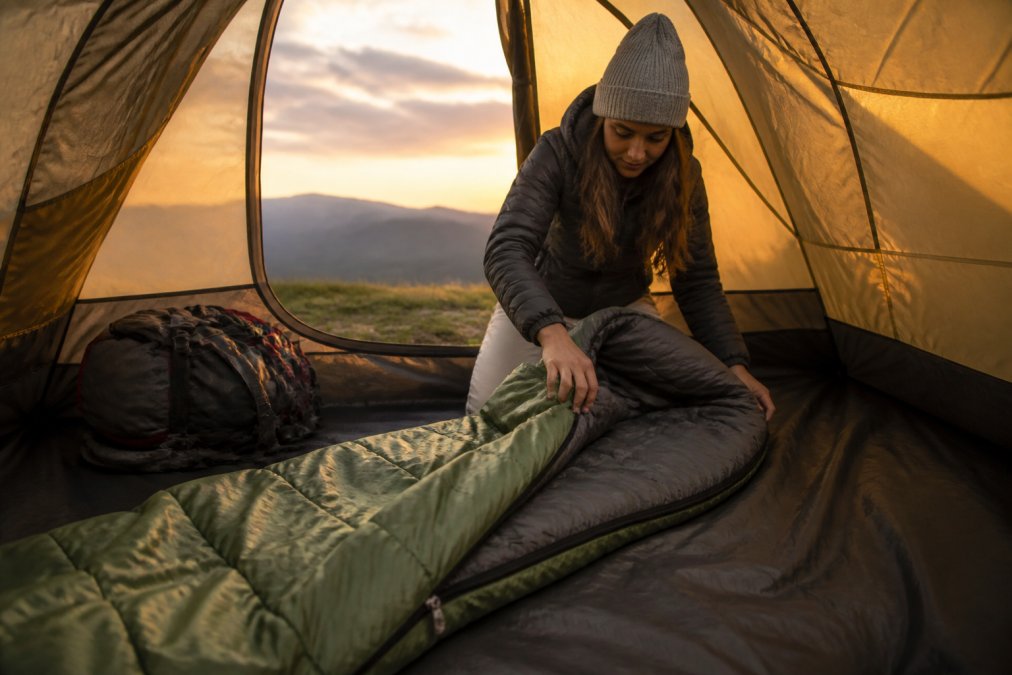
Climate Zones and Sleeping Bag Selection
Australia's camping regions fall into three broad thermal zones, each requiring different bag specifications.
Coastal and lowland regions (Sydney, Melbourne, Brisbane, Perth coastal areas) experience mild winters with lows around 5-12 degrees Celsius.
Weisshorn Double Sleeping Bag: Versatility and Value
The Weisshorn comes in Navy and Grey, both at $101.95. It's a double bag, meaning you can unzip it into two singles or use it as one large bag. That flexibility alone makes it worth considering if you camp with a partner or want options.
Alternative Approaches for Different Budgets
What to Verify Before Buying
- Temperature rating: Verify it's stated as a comfort rating, not an extreme rating. A bag rated "5 degrees comfort" is genuinely different from one rated "5 degrees extreme."
- Insulation density: Look for gsm (grams per square metre) listed for the filling. 300g/m² is standard for 5-degree bags; 250g/m² for 10-degree bags. Lower density suggests cost-cutting that affects warmth.
- Baffle construction: Confirm the bag has internal baffles to prevent insulation migration. Box baffles are standard; avoid bags that don't mention this.
- Seam sealing: Most budget bags now have sealed seams, but confirm before buying. Unsealed seams leak cold air.
- Draft tube: Check whether a draft tube runs along the zipper. It's a small feature that significantly improves thermal performance.
- Lining material: Fleece or pongee lining is better than bare nylon, especially in humid conditions.
Key Features That Matter on a Budget
Ripstop fabric prevents small tears from spreading. It's not essential but matters if you camp rough or near sharp vegetation. The Weisshorn uses 190T ripstop, which is standard and sufficient.
Maintenance and Long-Term Durability
A budget sleeping bag lasts years with reasonable care. Wash occasionally in cool water with mild detergent, then air dry completely. Never use a tumble dryer.
Frequently Asked Questions
What temperature rating do I need for Australian camping?
Temperature ratings depend on your location and season. For summer camping in temperate zones, a 10-15°C comfort rating works well. For three-season camping, aim for 5°C or lower. Winter camping in cooler regions requires 0°C or below. Always check the extreme rating (the lowest temperature where the bag provides survival-level warmth) and choose a bag rated lower than your expected minimum temperature. A 5°C comfort-rated bag like the Weisshorn offers flexibility across seasons without overspending.
Are synthetic sleeping bags as warm as down?
Synthetic insulation performs nearly as well as down for warmth-to-weight ratio in budget options. Synthetic bags retain heat better when wet, making them ideal for humid or damp conditions common in Australian camping. Down offers superior loft and compressibility but costs more. For beginners on a budget, synthetic bags provide excellent thermal efficiency and durability without the premium price tag. The Weisshorn uses hollow fibre synthetic filling, delivering reliable warmth in varied conditions.
How do I know if a budget sleeping bag will actually keep me warm?
Look for three things: comfort limit temperature rating, fill weight (measured in grams per square metre), and baffle construction that prevents cold spots. A 300g/m² synthetic fill provides solid warmth for three-season camping. Check the ripstop fabric and seam construction for durability, tears reduce insulation. The Weisshorn's 300g/m² hollow fibre fill and ripstop outer layer indicate genuine warmth retention without inflated pricing.
What's the difference between mummy and rectangular sleeping bags?
Mummy bags are tapered around the shoulders and feet, trapping heat efficiently and weighing less, ideal for hiking and cold weather. Rectangular bags offer more interior space and can unzip fully to function as blankets, suiting car camping and casual use. Budget rectangular bags like the Weisshorn convert into two single bags, giving flexibility for families. Choose mummy for ultralight three-season trips; choose rectangular for car camping comfort and versatility.