

Table of Contents
- Understanding Sleeping Bag Temperature Ratings Explained
- Down vs Synthetic Sleeping Bag Insulation
- Sleeping Bag Shapes and Seasonality
- How to Test Sleeping Bag Warmth Properly
- Sizing, Fit and Sleep System Integration
- Weight, Packability and Shell Materials
- How to Choose a Sleeping Bag for Your Needs
- Frequently Asked Questions
Last Updated: September 2, 2026
Understanding Sleeping Bag Temperature Ratings Explained
Temperature ratings follow strict international standards designed to protect you from hypothermia, not guarantee comfort. The difference between a 5-degree bag and a 0-degree bag involves completely different construction, fill weight, and insulation strategy.
EN 13537 and ISO 23537 Standards
The EN 13537 standard is the European testing protocol that defines sleeping bag warmth ratings. It measures four temperature thresholds: comfort limit, lower limit, extreme, and maximum. EN 13537 testing uses a standardised thermal manikin placed inside the bag under controlled laboratory conditions, wearing a base layer on a standard sleeping pad. Technicians measure the exact temperature at which the manikin maintains a core body temperature of 37°C (comfort) or 35°C (survival) (en.wikipedia.org).
ISO 23537 is the international equivalent, nearly identical in methodology. When you see a sleeping bag rated to 5 degrees, that's almost always an EN 13537 or ISO 23537 measurement. The critical insight: these standards test bags in ideal conditions with a sleeping pad, base layer, and zero wind or moisture. Your actual warmth depends heavily on what you bring to the system.
Comfort, Limit and Extreme Ratings
The comfort limit is the temperature at which a standard adult sleeper will feel comfortable without shivering. This is the number most people should use when choosing a bag. The lower limit (or survival limit) is where you'll maintain core body temperature without hypothermia risk, though you'll be cold and uncomfortable, roughly 3-5 degrees colder than the comfort rating. The extreme rating is the absolute floor where the bag theoretically prevents death from hypothermia. Never plan a trip based on this rating. If you're camping in temperatures that regularly drop to 5 degrees, you want a bag rated to 10 degrees, so you're sleeping in the comfort zone, not at the survival threshold.
Down vs Synthetic Sleeping Bag Insulation
The choice between down and synthetic insulation is the most consequential decision when selecting a sleeping bag. Down is the fluffy cluster beneath a bird's outer feathers, trapping air in three-dimensional pockets for exceptional insulation per gram. Synthetic insulation uses manufactured fibres arranged similarly. The performance gap has narrowed significantly, but practical differences remain substantial.
Fill Power and Loft in Down Bags
Fill power measures the volume (in cubic inches) that one ounce of down occupies. Higher fill power means better insulation with less weight. A 700-fill bag is roughly 8-10% warmer than a 600-fill bag, though the law of diminishing returns applies: jumping from 750 to 850 fill power costs significantly more for marginal improvement (peer-reviewed research).
Loft is the insulation layer thickness when fully expanded. A bag with 5 centimetres of loft will generally be warmer than one with 3 centimetres, assuming the same fill power. However, loft compresses under body weight, you lose roughly 30-40% where your body contacts the sleeping pad. This is why sleeping pad R-value (insulation rating) matters critically; the pad prevents heat loss through compression.
Down's critical weakness: it loses almost all insulating properties when wet. A damp down bag is useless until completely dry. Synthetic insulation retains 60-80% of warmth even when saturated, making it safer for wet climates (peer-reviewed research).
Synthetic Alternatives and Moisture Management
Modern synthetic insulation has closed much of the performance gap with down. Synthetic bags excel in wet environments, budget-conscious purchases, and situations where durability trumps weight. A synthetic bag rated to 5 degrees will pack noticeably larger than a down equivalent. Hydrophobic down is a hybrid approach: down treated with water-resistant coating that maintains roughly 80% of insulation when damp. It costs more than standard down but less than premium synthetic, making it sensible for Australian conditions where humidity and unexpected rain are common.
Sleeping Bag Shapes and Seasonality
The shape of your sleeping bag determines how efficiently it traps heat and your comfort in different positions.
Mummy, Rectangular and Semi-Rectangular Designs
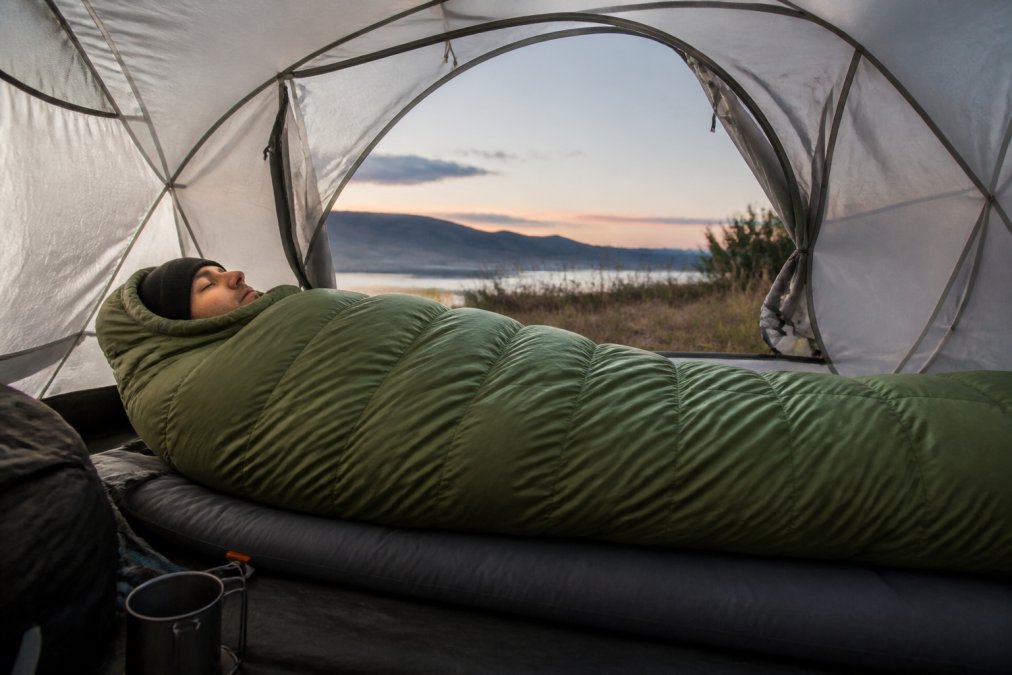
A mummy bag tapers from shoulder to foot, hugging your body closely and minimising dead air space, making it the most thermally efficient. Rectangular bags are wider at the shoulders and maintain consistent width to the feet, offering freedom of movement but less thermal efficiency. Semi-rectangular (or tapered rectangular) bags split the difference.
The footbox deserves special attention. A properly designed footbox accommodates your feet without excess space. A loose footbox forces your body to heat wasted volume; a tight footbox can restrict circulation and reduce warmth.
Matching Bags to Season and Climate
A 1-season (summer) bag is rated to roughly 10-15 degrees. 2-season bags are rated to 5-10 degrees and handle spring, autumn, and mild winter conditions. 3-season bags are rated to 0-5 degrees and handle serious winter camping. 4-season bags are expedition-grade, rated to -10 degrees or colder.
A 3-season bag rated to 0 degrees will keep you warm in a dry 0-degree night but might fail in a wet, humid 5-degree night. A 2-season bag rated to 10 degrees might suffice for winter coastal camping where temperatures rarely drop below 5 degrees. packing light for hiking.
How to Test Sleeping Bag Warmth Properly
Temperature ratings tell you the theory. Field testing tells you the reality.
Field Testing and Real-World Conditions
The most reliable way to test a sleeping bag is to actually sleep in it under conditions similar to where you'll use it. When field testing, pay attention to the sleeping pad, your base layer, and ambient conditions. A bag that feels warm on a thick foam mat might feel cold on a thin inflatable pad. Give yourself at least two nights in similar conditions before concluding a bag isn't warm enough.
Identifying Cold Spots and Draft Collar Performance
Cold spots develop where insulation is compressed or where design gaps allow heat to escape. The shoulders are the most common problem area. The draft collar is the insulation-filled tube surrounding your neck opening, preventing warm air from escaping. A well-designed draft collar can add 5-10 degrees of effective warmth. Check the footbox design carefully, it should let your feet nestle naturally without excess space. Zipper snags are another common cold spot; some bags include a baffle (a strip of insulation along the zipper) to prevent this.
Sizing, Fit and Sleep System Integration
A sleeping bag that's too large will never keep you warm. A bag that's too tight will restrict circulation and leave you uncomfortable.
Shoulder Girth, Hip Width and Footbox Design
Shoulder girth is the circumference at your shoulders. Too wide, and you're heating dead air; too narrow, and you're compressing insulation. Hip width follows the same principle. The bag should fit snugly around your hips without compressing insulation or restricting movement. Women-specific bags now offer narrower shoulders and wider hips, improving fit and thermal efficiency. The footbox should accommodate your feet in their natural sleeping position without restricting blood flow.
Pairing with Sleeping Pads and Base Layers
Your sleeping bag is only half of your sleep system. The sleeping pad underneath is equally important. A high-quality sleeping pad with an R-value of 4-5 is essential for cold-weather camping. A merino wool or synthetic base layer will trap body heat more effectively than cotton. A sleeping bag liner, a thin fabric insert, can add 5-10 degrees of effective warmth by creating an additional insulating layer.
Weight, Packability and Shell Materials
For backpackers, every gram matters. For car campers, packability is less critical but still relevant.
Ultralight Options and Compression Sacks
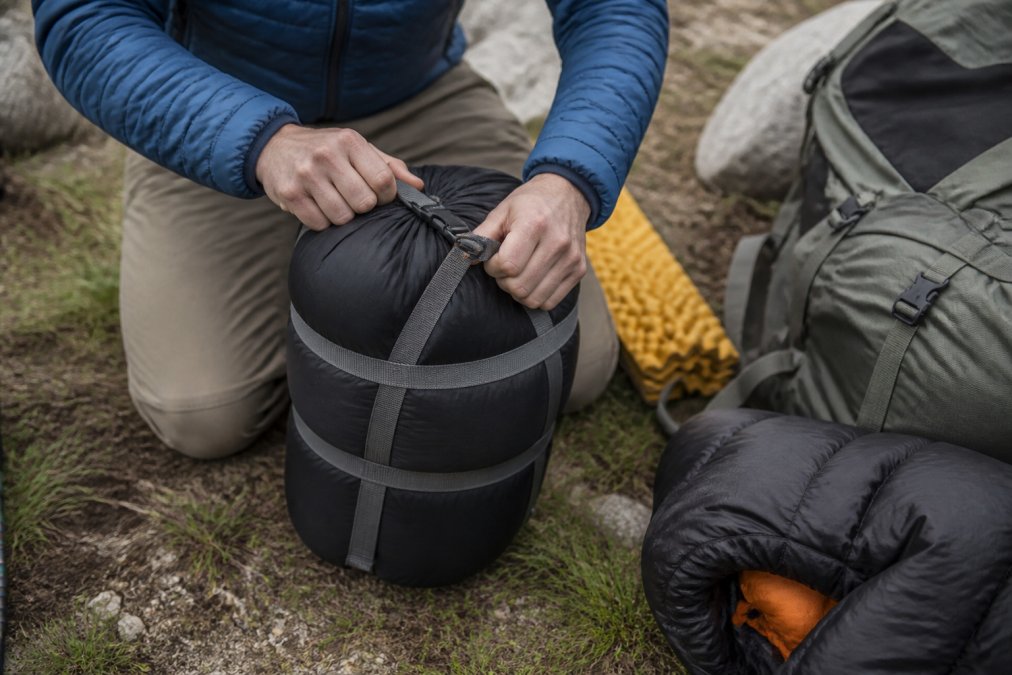
Ultralight sleeping bags typically weigh under 1 kilogram and are designed for weight-conscious backpackers. They achieve this through premium materials and minimal construction. The trade-off is durability and cost. Compression sacks reduce a bag's packed volume by roughly 40-50%. However, compressing a bag for extended periods can degrade insulation, particularly down. Store bags uncompressed and only compress them for transport.

The shell material affects both weight and durability. Lightweight nylon (20 denier or less) saves weight but tears more easily. Standard nylon (30-40 denier) offers better balance.
DWR Coating and Water Resistance
DWR (durable water repellent) coating is a treatment applied to the outer shell that causes water to bead up and roll off rather than soaking in. However, DWR coating degrades with use and washing. After a season or two of regular camping, you may need to reapply DWR treatment. For serious wet-weather camping, some bags include a partial waterproof layer on the bottom of the shell, protecting insulation from ground moisture.
How to Choose a Sleeping Bag for Your Needs
Different campers have different priorities, and the best bag for one person might be wrong for another.
Casual Campers vs Serious Backpackers
A casual camper who drives to a campsite and sleeps one night a month has very different needs than someone hiking 20 kilometres with a loaded pack. For casual camping, weight and packability matter far less than comfort and durability. A rectangular or semi-rectangular bag rated to 5 degrees, weighing 2-2.5 kilograms, will serve you well for years. A serious backpacker prioritises weight and packability. A mummy bag rated to 0 degrees, weighing under 1.2 kilograms, might cost twice as much but will save you kilograms on every trip. Most Australian campers fall somewhere in between.
Gender-Specific Physiological Considerations
Women typically have different thermoregulation patterns than men. On average, women generate less metabolic heat and tend to feel cold more quickly in the extremities. Women-specific bags address this by offering more insulation in the footbox and torso and less in the shoulders and arms. They also typically feature narrower shoulders and wider hips for better fit.
Sleeping Bag Liners and Maintenance
A sleeping bag liner is a thin fabric pouch that fits inside your bag. It adds warmth (typically 5-10 degrees), reduces the need to wash the bag frequently, and extends the bag's lifespan by protecting insulation from body oils and dirt. Proper maintenance extends a bag's life significantly. Store your bag uncompressed in a cool, dry place. Wash it only when necessary, typically once a year or less, using gentle detergent designed for down or synthetic insulation. Air dry completely before storing.
For Budget Roo Pty Ltd customers, the Weisshorn sleeping bags offer practical value for casual to moderate camping. The Weisshorn Sleeping Bag Camping Hiking Tent Outdoor Comfort 5 Degree comes in both Navy and Grey options, rated to 5 degrees with 300g/m² hollow fibre filling. At $101.95, it's positioned for budget-conscious campers who want genuine warmth without premium pricing. The bag pairs well with a sleeping pad and liner if you're planning winter or alpine camping, extending its effective temperature range.

Choosing a camping sleeping bag requires balancing temperature rating, insulation type, shape, fit, and your actual camping style. Understand the technical fundamentals, temperature standards, insulation properties, and design features, then match them to your real-world needs. At Budget Roo Pty Ltd, we stock sleeping bags designed for Australian campers across all experience levels. Explore our range and find the bag that keeps you warm, comfortable, and ready for your next trip. Shop Now
| Feature | Casual Campers | Serious Backpackers |
|---|---|---|
| Ideal Weight | 1.8-2.5 kg | Under 1.2 kg |
| Preferred Shape | Rectangular or semi-rectangular | Mummy |
| Temperature Rating | 5-10 degrees | 0-5 degrees |
| Insulation Type | Synthetic (durability) | Down (weight) |
| Packability Priority | Low | High |
| Budget Consideration | Moderate ($80-$150) | Premium ($200-$500+) |
Frequently Asked Questions
What temperature rating should I use for a sleeping bag in Australia?
Temperature ratings follow EN 13537 standards, which measure comfort, limit and extreme ratings. For Australian camping, choose a bag rated 5-10°C for summer trips, 0-5°C for autumn and spring, and -5°C or lower for winter mountaineering. Your actual comfort depends on the sleeping pad R-value, base layer quality and personal metabolism. Always select a bag rated at least 5°C colder than the lowest temperature you expect.
What is the difference between down and synthetic sleeping bag insulation?
Down offers superior warmth-to-weight ratio and higher fill power, compressing smaller for backpacking. Synthetic insulation performs better when wet, requires less maintenance and costs less upfront. Down bags typically last longer and compress more efficiently, while synthetic excels in humid conditions and provides better moisture management. Choose down for dry, cold expeditions; synthetic for wet climates or budget-conscious campers.
How do I know if a sleeping bag will actually keep me warm?
Test sleeping bag warmth by using it in conditions slightly warmer than its rated temperature first, then gradually colder. Look for a draft collar sealing around your neck, a footbox that prevents toe cold spots and baffles that prevent insulation shifting. Check for zipper snags and condensation inside. Field testing over multiple nights reveals performance better than lab ratings alone. Pair your bag with an appropriate sleeping pad, the R-value matters as much as the bag's loft.
What sleeping bag shape is best for side sleepers?
Semi-rectangular and rectangular bags suit side sleepers because they offer more shoulder girth and hip width than mummy designs. Mummy bags restrict movement and can feel claustrophobic. Semi-rectangular provides a compromise: better thermal efficiency than rectangular but more comfort than a full mummy. Check the shoulder girth specification, aim for at least 150cm if you sleep on your side. Avoid bags that compress your shoulders, as this creates cold spots.
How do I repair a sleeping bag in the field?
Carry a repair kit with adhesive patches for small tears in the shell and seam sealer for leaks. For zipper snags, gently wiggle the slider back and forth rather than forcing it. If the footbox develops a hole, patch it from inside using fabric glue and a patch. For down leakage, apply patches immediately and avoid vigorous shaking. After returning home, have major repairs done professionally. Store your bag loosely in a mesh sack to preserve loft and extend its lifespan.
Should I use a sleeping bag liner?
Liners add 5-10°C of warmth, extend your bag's lifespan by reducing skin oils on the interior, and simplify cleaning. They're lightweight (100-200g) and pack small. Silk liners offer the best warmth-to-weight ratio; cotton liners are cheaper but heavier. Liners are essential for hostels and shared accommodation. For solo camping, they're optional unless you want to reduce washing frequency or boost warmth without buying a new bag.
What is the best sleeping bag for casual camping in Australia?
For casual camping, the Weisshorn Sleeping Bag with a 5°C comfort rating suits most Australian conditions from autumn to spring. It features 300g/m² hollow fibre synthetic insulation for reliable warmth when wet, a ripstop outer shell for durability and costs just $101.95. The double design lets you wrap it as a blanket or unzip it flat. It's ideal for families and car campers who prioritise comfort and value over ultralight weight. Pair it with a basic sleeping pad for complete thermal protection.
This article was written using GrandRanker