

Table of Contents
- Why Durability Matters in Durable Fishing Lures for Beginners
- Hard-Body vs Soft-Plastic Lures: Which Lasts Longer
- How to Choose Fishing Lures for Beginners
- Fishing Lure Maintenance Tips for Long-Term Use
- Top Durable Lure Types That Beginners Should Stock
- Common Mistakes That Damage Lures Prematurely
- Building Your Beginner Tackle Box on a Budget
- Conclusion
Last Updated: August 22, 2026
Why Durability Matters in Durable Fishing Lures for Beginners
Cheap lures fall apart after one or two casts, the hook bends, paint chips, and you're replacing gear mid-session. For beginners already learning casting technique and water reading, equipment failure is demoralising.
Durable fishing lures for beginners last through dozens of trips instead of one or two. When a lure survives repeated use, you learn its action better and build confidence with gear you can trust. Durability isn't just about saving money on replacements; it's about building skills with reliable equipment.
At Budget Roo Pty Ltd, we stock fishing lures designed to handle both saltwater and freshwater environments without corroding or breaking down prematurely. The difference comes down to construction materials, hook quality, and maintenance between trips.
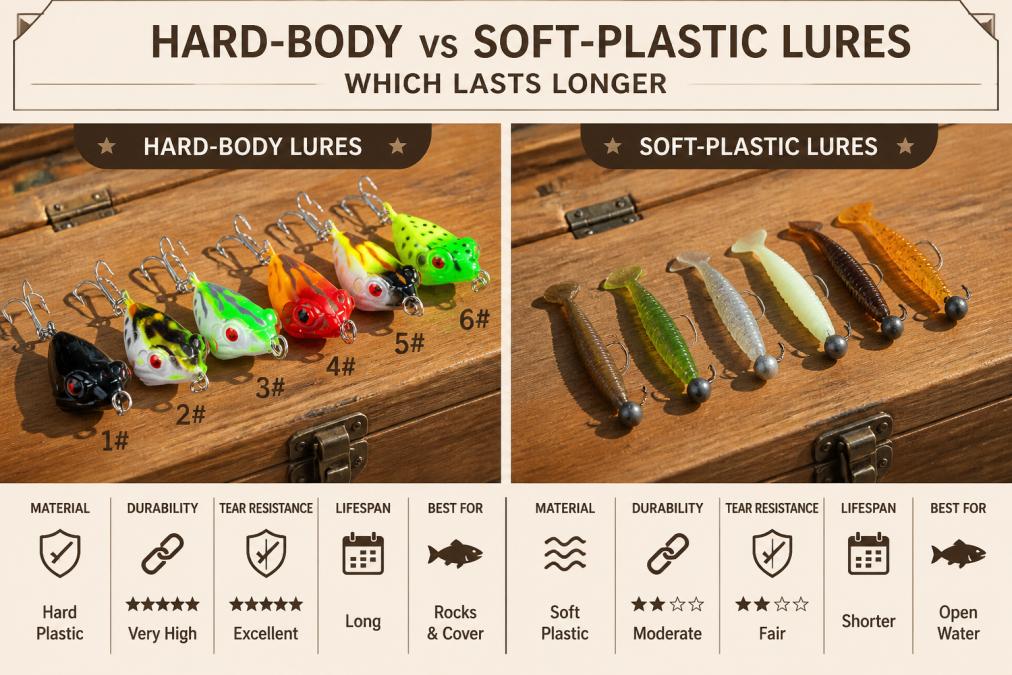
Hard-Body vs Soft-Plastic Lures: Which Lasts Longer
Hard-body lures generally outlast soft plastics by a significant margin. ABS hard plastic resists UV damage, saltwater corrosion, and physical impact far better than rubber or PVC compounds.
Hard-Body Lures: Construction and Longevity
Hard-body lures feature a rigid plastic shell with treble hooks and internal steel balls for weight distribution. Quality finishes protect the plastic from UV exposure and salt spray. Budget Roo Pty Ltd's hard-body poppers and metal spoons use durable ABS construction with sharp metal hooks that flow during the cast for greater distance.
Hard-body lures resist snags better than soft plastics. If you catch debris, the rigid shell bounces off rather than tearing. Over a season, this difference compounds, a soft plastic might fail after 15 trips; a hard-body lure might last 50 or more (peer-reviewed research).
The trade-off: hard-body lures cost more upfront, around $35-$50 per pack. But because they last longer, the cost per use drops significantly. You're investing in gear that serves you across multiple seasons.
Soft-Plastic Lures: When They Make Sense
Soft plastics offer versatility, a single body can be rigged multiple ways on different jig heads or as trailers. For beginners, they make sense only if you're willing to replace them regularly. UV exposure degrades rubber compounds quickly, especially in bright sunlight. Saltwater accelerates this process. After 10-15 trips, soft plastics often become brittle or discoloured.
If you fish freshwater lakes occasionally and store gear indoors away from direct sunlight, soft plastics last longer. In harsh conditions, intense sun, saltwater spray, rocky environments, they fail faster than hard bodies.
How to Choose Fishing Lures for Beginners
Choosing the right lure depends on two factors: what you're fishing for and where you're fishing.
Matching Lure Size and Weight to Your Target Species
Fish size determines lure size. Targeting small bream? Use 3-5 cm lures. Chasing larger species like barramundi or flathead? Step up to 7-10 cm. Weight matters for casting distance and sinking speed. Lighter lures (3-6 grams) work for shallow water and shorter distances. Heavier lures (10+ grams) reach deeper water and cast further into wind (peer-reviewed research). Budget Roo Pty Ltd stocks metal spoons in both 6g and 10g weights.

For beginners, start with mid-range weight around 7-10 grams. This weight casts reasonably far, sinks at a manageable speed, and works across a range of water depths.
Selecting the Right Retrieve Speed and Action
Lure action refers to how the lure moves through water. Poppers create splashing disturbance. Pencil minnows dart side-to-side. Spoons flutter and wobble. Each action triggers different feeding responses.
Retrieve speed is how fast you wind. Fast retrieves work when fish are aggressive or when searching new water. Slow retrieves work better in clear water where fish have time to inspect the lure.
For beginners, start with medium retrieve speed, steady, rhythmic winding without rushing. This lets you focus on casting accuracy rather than complex retrieval patterns.
Fishing Lure Maintenance Tips for Long-Term Use
Maintenance determines whether a quality lure lasts 20 trips or 100 trips. A quality lure neglected after use will fail faster than a cheaper lure that's properly cared for.
Cleaning and Drying After Each Trip
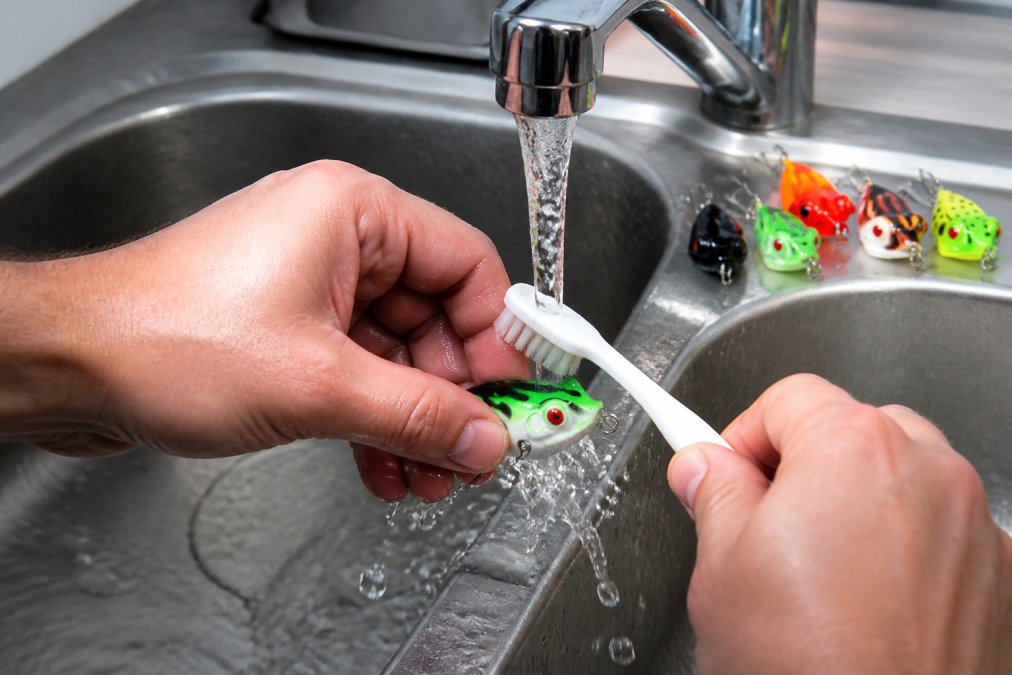
Saltwater is corrosive. Even freshwater fishing leaves algae and sediment on lures. Clean every lure immediately after use with fresh water and a soft brush, paying attention to treble hooks and split rings where corrosion happens fastest. Dry completely with a cloth before storing. Water left on the surface accelerates corrosion.

For saltwater fishing, this step is non-negotiable. Neglecting it will halve your lure's lifespan.
Storage Solutions to Prevent Corrosion and Damage
Store lures in a cool, dry tackle box away from direct sunlight. Use compartments or sealed bags to keep lures separated. Soft plastics should be stored separately from hard-body lures. If you live in a humid climate, use silica gel packets inside your tackle box to absorb moisture.
Avoid leaving lures in a car boot where temperatures fluctuate. A garage or indoor storage space is far better. A quality tackle box with compartments pays for itself in lure longevity.
Hook and Split Ring Inspection
Inspect every lure before each fishing session. Check treble hooks for bent points or dull edges. A hook that doesn't stick your thumbnail when dragged across it needs sharpening or replacement.
Split rings connect hooks to the lure body. Corrosion weakens these rings, and repeated flexing from fish strikes fatigues the metal. If a split ring looks discoloured or feels loose, replace it. Replacement split rings cost pennies and take two minutes to swap. A sharp, intact hook catches fish; a dull or corroded hook misses strikes.
Top Durable Lure Types That Beginners Should Stock
Build a beginner's collection with three core lure types that cover most freshwater and saltwater scenarios.
Poppers for Surface Fishing
Poppers create a splashing action on the water surface, triggering aggressive strikes from fish feeding near the top. They're visually exciting, you see the action and the strike, which helps beginners learn.
Budget Roo Pty Ltd's popper range includes sizes from 4 cm to 12.3 cm. Start with 6.5 cm or 7 cm sizes; they cast well, create good disturbance, and work across most species. The durable ABS body with sharp treble hooks handles repeated strikes without degrading.
Popper technique is straightforward: cast, let it sit for a second, then twitch your rod tip sharply to create a splash. Pause and repeat. This rhythmic action attracts fish and triggers feeding responses.
Metal Spoons and Spinners
Spoons are flat, curved pieces of metal that flutter and wobble as they sink and rise, mimicking injured baitfish. They're effective across many depths and retrieve speeds.
Budget Roo Pty Ltd stocks metal spoons in 6g and 10g weights. The 6g version works for shallow to medium depths; the 10g reaches deeper water and casts further in wind. Both feature sharp treble hooks and durable metal construction that resists corrosion far better than painted lures.
Spoon technique is simple: cast, let it sink to your target depth, then retrieve with steady, rhythmic winding. The spoon does the work; you maintain consistent retrieve speed. This simplicity makes spoons ideal for beginners.
Pencil Minnows and Diving Lures
Pencil minnows are thin, elongated lures that dart side-to-side when retrieved, mimicking small baitfish. Budget Roo Pty Ltd's 4.8 cm pencil minnows come in a pack of eight colours, letting you experiment with different patterns.
Pencil minnows require a more active retrieve than spoons. You twitch the rod tip regularly to create the darting action. This technique teaches beginners how lure action translates to rod movement, a fundamental skill that transfers to other lure types.
Common Mistakes That Damage Lures Prematurely
Most lure damage comes from how you use and store them, not from poor manufacturing.
Leaving lures wet. Moisture accelerates corrosion. Dry every lure completely before storing.
Storing in extreme conditions. A hot car boot or damp shed shortens lure life. UV exposure fades paint and degrades plastic. Store in a cool, dry, dark place.
Forcing bent hooks straight. Replace bent treble hooks rather than straightening them. Straightening work-hardens the metal, making it brittle.
Using the wrong lure for conditions. A light 3-gram lure won't cast in wind. Match lure weight to your casting setup and conditions.
Neglecting split rings. A corroded or weak split ring fails silently. Inspect and replace split rings regularly.
Mixing materials in storage. Soft plastics stored against hard-body lures can leach, causing discolouration and degradation. Use separate compartments.
Building Your Beginner Tackle Box on a Budget
You don't need dozens of lures to start. A focused collection of durable options teaches you more than a sprawling collection of cheap ones.
Start with three core types: poppers, metal spoons, and pencil minnows. This combination covers shallow water, mid-depth, and various retrieve techniques. Budget Roo Pty Ltd's starter packs offer good value.
A basic collection might look like:
- 6 popper lures in mixed sizes: $35-$45
- 4 metal spoons in 6g and 10g: $35-$50
- 8 pencil minnows in assorted colours: $99.95
Total investment: roughly $170-$195 for a functional beginner's collection. Add to this collection only after you've used these lures extensively. You'll learn what works for your local waters and what gaps exist in your arsenal.

A quality tackle box with compartments costs $30-$50 and protects your lures while keeping them organised.
Durability in fishing lures isn't about finding the most expensive option; it's about understanding materials, matching gear to conditions, and maintaining what you own. Budget Roo Pty Ltd's range of hard-body poppers, metal spoons, and pencil minnows provides exactly what beginners need: affordable, durable lures that last through dozens of trips. Start with a focused collection, learn each lure's action thoroughly, and expand only when you understand what you're adding. Shop Now and build a tackle box that grows with your skills.
Frequently Asked Questions
What are the most durable materials for fishing lures?
Hard-body lures made from ABS plastic offer superior durability for beginners. These lures resist cracking and maintain their shape through repeated casting and strikes. Metal components like treble hooks and split rings should be stainless steel or nickel-plated to resist corrosion, especially in saltwater. Lures with exquisite coating finishes provide both protection and UV-reactive appeal that attracts fish.
How do I maintain my fishing lures to make them last longer?
Rinse your lures with fresh water immediately after each fishing trip, particularly in saltwater. Use a soft brush to remove debris and salt residue. Dry them completely before storing in a cool, dry place. Inspect treble hooks and split rings regularly for rust or damage, replacing them if needed. Store lures separately in a tackle box with dividers to prevent hooks from tangling and damaging coating.
What is the difference between hard-body and soft-plastic lures for beginners?
Hard-body lures, typically made from ABS plastic, are more durable and require minimal maintenance, making them ideal for beginners. They maintain consistent lure action and diving depth over time. Soft-plastic lures offer flexibility and realistic feel but wear faster and degrade in sunlight. For beginners focused on durability and reliability, hard-body lures deliver better value and longer lifespan with proper care.
Do beginners need expensive lures to catch fish?
No. Effective fishing depends on lure action, presentation, and retrieve technique rather than price. Budget-friendly hard-body lures with quality construction, sharp treble hooks, and realistic colour patterns work well for most freshwater and saltwater species. Beginners should invest in a variety of sizes and types to learn what works in different conditions, rather than spending heavily on a few premium options.
This article was written using GrandRanker