

Table of Contents
- Step 1: Choose Your Campsite and Location
- Step 2: Plan Your Campsite Layout Ideas for Family Groups
- Step 3: How to Set Up a Campsite on Arrival Day
- Step 4: Create Your Family Camping Checklist
- Step 5: Camping with Kids Checklist and Child Safety
- Step 6: Organise Meals and Shared Food Responsibilities
- Step 7: Pack Down and Leave No Trace
- Frequently Asked Questions
Last Updated: October 12, 2026
Step 1: Choose Your Campsite and Location
Picking the right campsite is the foundation for how to organise campsite families on a well-organised camping trip. The location determines everything else: how much space you have, water access, weather exposure, and how safe your children will be.
When scouting a campsite, look for flat, well-drained ground away from dead trees or overhanging branches. Avoid low-lying areas where water pools after rain.
Distance from water is important but not critical. A nearby stream or tap is convenient for washing and cooking, but you can haul water if the spot is otherwise ideal.
Consider shade and sun exposure. Morning sun warms the campsite and dries moisture; afternoon shade keeps everyone cool. A site with mixed sunlight and shelter trees gives you flexibility. If you're camping in hot months, prioritise shade.
Step 2: Plan Your Campsite Layout Ideas for Family Groups
A good campsite layout helps you organise campsite families to keep everyone safe, organised, and comfortable. The key is creating clear zones: sleeping, cooking, and activity areas.
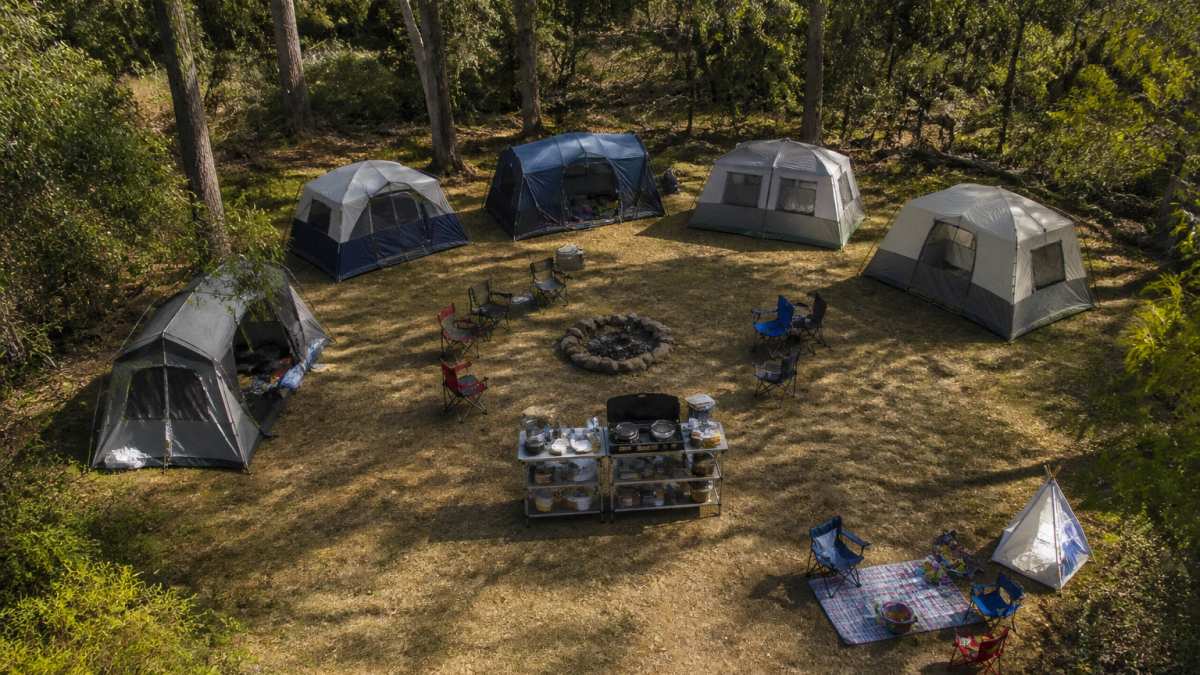
Position your main family tent at the highest point of the campsite where water won't pool.
The cooking and eating zone should be 10-15 metres from sleeping tents, away from where children sleep. This reduces smoke and cooking odours near bedding and keeps food-related activity separate from rest areas.
Create a designated play and activity zone between the sleeping and cooking areas. This central space becomes the heart of camp life, where children play games, do crafts, and gather for meals.
Store gear in a central location, a weatherproof storage bin or tarp-covered pile near the cooking area but away from sleeping tents. This keeps equipment accessible and prevents clutter spreading across camp.
Step 3: How to Set Up a Campsite on Arrival Day
Your arrival sequence matters. Setting up in the right order saves time, reduces stress, and gets your family settled before dark. Most families rush and end up with a chaotic camp. A structured approach changes everything.
Pitch the main family tent first
Before unpacking anything else, pitch your primary family tent. This gives you a secure base and shelter if weather turns bad. Choose a tent that's quick to assemble, the Weisshorn Instant Up Camping Tent is designed for families and pops up in under a minute, which means you're not wrestling with poles and pegs while children get restless.

Clear the ground of stones, sticks, and debris. Lay out a ground sheet or tarp if you have one. Assemble the tent according to instructions, peg it firmly, and position the entrance facing away from prevailing wind. Once it's up, place sleeping bags and pillows inside so it feels like home immediately.
Set up sleeping areas and gear storage
After the main tent is pitched, set up additional family tents or sleeping shelters. Ensure each tent is secure and has a clear path to the main tent, children should never feel isolated at night.
Arrange sleeping bags and mats inside tents before dark. Let children help, it gives them ownership and keeps them occupied. Store gear in waterproof bags or containers near the cooking area, not scattered around camp. A simple system: one bin for cooking equipment, one for first-aid and toiletries, one for spare clothing and entertainment items.
Arrange the cooking and eating zone
Set up your camping table and cooking equipment on level ground. Arrange camp chairs in a semi-circle facing the table so everyone can gather comfortably. If you're using a gas cooker or stove, position it on a stable, flat surface away from tent fabric and overhanging branches.
Place your food supplies in a secure location, either in a bear-proof container or hung from a tree branch if wildlife is a concern. Keep drinking water in a clearly marked container near the cooking area. Arrange plates, utensils, and cups on the table so meals can be prepared and served smoothly.
Set up a washing station with a bucket of water, soap, and towels. This keeps hygiene simple and teaches children to wash hands before eating.
Step 4: Create Your Family Camping Checklist
A comprehensive camping checklist prevents last-minute panics and forgotten essentials. Organise it by category so you can tick off items as you pack.
Essential shelter and sleeping gear
- Main family tent (4-6 person capacity depending on family size)
- Sleeping bags rated for expected temperatures
- Sleeping mats or air mattresses for insulation and comfort
- Pillows or pillow cases
- Spare blankets or quilts
- Ground sheet or tarp for under the tent
- Rope and pegs (extras always help)
- Headlamp or torch for each family member
For families, a quality tent makes the difference. The Weisshorn Family Camping Tent 4 Person offers solid weather protection and easy setup, or if you need more space, the Weisshorn 6-Person Camping Tent gives room for larger families or groups.


Cooking equipment and food supplies
- Portable camping stove or gas cooker
- Cooking pots, pans, and utensils
- Camping table and chairs
- Plates, bowls, cups, and cutlery
- Cutting board and knife
- Food storage containers and bags
- Cooler or insulated box for perishables
- Matches or lighter
- Washing-up liquid and sponge
- Drinking water (at least 2 litres per person per day)
- Non-perishable food for planned meals
- Snacks and emergency food supplies
A practical option for families is the Plate Sets Wheat Straw Ramen Bowl Tableware, which is lightweight, stackable, and easy to clean in camp conditions.
Clothing, personal items, and entertainment
- Extra clothing layers for each family member
- Waterproof jackets and trousers
- Warm jumpers or fleece
- Hat and gloves for cold weather
- Sturdy walking shoes and camp shoes
- Socks (bring more than you think you'll need)
- Underwear and sleepwear
- Toiletries: toothbrush, toothpaste, soap, shampoo
- Sunscreen and insect repellent
- First-aid kit with blister treatment
- Medications (prescription and over-the-counter)
- Torch and spare batteries
- Entertainment: cards, board games, books, colouring supplies
- Camera or phone for memories
| Item Category | Priority | Notes |
|---|---|---|
| Shelter & sleep gear | Critical | Without this, the trip fails |
| Cooking equipment | Critical | You need to prepare meals |
| Clothing layers | High | Unexpected weather happens |
| First-aid kit | High | Accidents are common with kids |
| Entertainment | Medium | Keeps children happy and occupied |
| Extras (cards, books) | Low | Nice to have but not essential |
Step 5: Camping with Kids Checklist and Child Safety
Children need specific attention at a campsite. Safety comes first, but keeping them engaged prevents boredom and behaviour problems.
Child-specific safety measures at the campsite
Establish clear boundaries. Show children exactly where they can play and where they cannot go. Mark danger zones, near water, near the cooking area, near the fire, and explain why those areas are off-limits.
Assign each child a buddy system. Older children watch younger ones; parents rotate supervision. Never assume children will stay put. They wander.
Keep a first-aid kit stocked and accessible. Include plasters, antiseptic cream, pain relief for children, antihistamine for insect bites, and any prescription medications.
Dress children in bright colours so they're easy to spot. Pack a whistle for each child, if they get lost or scared, they blow the whistle and you locate them by sound.
Weisshorn Instant Up Camping Tent 4-5 Person Pop up Tents Family Hiking Beach →
Check the campsite daily for hazards: sharp objects, holes, loose rocks, or dead branches overhead. Remove or mark anything dangerous. After rain, inspect the ground again, new hazards appear.
Keeping children entertained and supervised
Boredom leads to trouble. Pack activities that don't require electricity: card games, board games, colouring books, craft supplies, books, and nature exploration kits.
Create a daily routine. Breakfast at a set time, morning activity, lunch, quiet time (nap or reading), afternoon activity, dinner, evening game or story. Routine reduces conflict and gives children something to look forward to.
Involve children in camp tasks. Let them gather firewood (with supervision), set the table, help with cooking, or maintain the activity zone. Responsibility keeps them engaged and teaches self-reliance.
Plan group activities: nature walks, scavenger hunts, campfire songs, stargazing, or skill-building games. These create memories and tire children out so they sleep better.
Step 6: Organise Meals and Shared Food Responsibilities
Meal planning prevents stress and ensures everyone eats well. Organised meals are the glue that holds a family camping trip together.
Plan menus in advance. Write down breakfast, lunch, dinner, and snacks for each day.
Create a shopping list based on your menu. Buy everything before you leave home.
Assign meal responsibilities. One parent cooks, one supervises children, one sets up and clears. Rotate roles daily so no one gets exhausted.
Store food safely. Keep perishables in a cooler with ice packs. Non-perishable items go in waterproof containers away from wildlife. Label containers clearly so everyone knows what's available.
Establish a water system. Bring enough drinking water for cooking and drinking, at least 2 litres per person per day.
Clean up immediately after meals. Wash dishes, wipe the table, and store food. Leaving food out attracts insects and wildlife and makes the next meal harder to prepare.
Step 7: Pack Down and Leave No Trace
Packing down properly is as important as setting up.
Before you leave, do a full site inspection. Walk the entire campsite and surrounding area. Pick up every piece of litter, yours and anyone else's.
Dismantle tents carefully and pack them in their carry bags. Shake out sleeping bags and mats. Wipe down the camping table and pack cooking equipment.
Restore the site to its natural state. If you've cleared vegetation or created paths, let them recover.
Dispose of waste responsibly. Take all rubbish with you, nothing stays behind. Separate recyclables if facilities allow.
If you've used water from a stream or tap, leave it cleaner than you found it.
Teach children that leaving no trace is a sign of respect. They'll carry this habit into every outdoor space they visit.
Organising a campsite for families takes planning, but the payoff is a smooth, safe, and enjoyable trip.
Frequently Asked Questions
What should you set up first when you arrive at a campsite?
Pitch the main family tent first, as it becomes your base and shelter. Once the tent is secure, set up sleeping areas inside, then establish the cooking and eating zone away from the tent. This sequence ensures everyone has shelter before darkness falls and keeps your campsite organised from the start. On arrival day, prioritise shelter, then sleeping comfort, then food preparation.
What should be in a family camping checklist?
A family camping checklist must include shelter (tent, sleeping bags, mats), cooking gear (stove, pots, utensils, plates), food and water supplies, clothing for expected weather, first-aid kit, lighting (lantern, torches), insect repellent, and entertainment for children. Don't forget ropes, pegs, and a carry bag for your tent. Check your weather forecast before packing to ensure you have appropriate clothing and backup plans for rain or cold.
How do you keep children safe at a campsite?
Establish clear boundaries for where children can play, keep them away from the fire and cooking area, and ensure constant supervision. Pack a well-stocked first-aid kit and know the location of the nearest medical facility. Teach children basic campsite rules, use insect repellent to prevent bites, and keep them hydrated. Assign older siblings or adults to supervise younger children during activities, and always have a backup plan if weather turns dangerous.
What is the best way to arrange tents at a family campsite?
Arrange the main family tent centrally so adults can supervise children's tents nearby. Position sleeping tents in a semi-circle or cluster facing the central cooking area, ensuring clear sightlines for supervision. Keep the fire and cooking equipment at least 3 metres away from all tents. Store gear in a designated zone separate from sleeping and eating areas. This layout maximises safety, supervision, and efficient use of space, especially for multi-family camping trips.