

Table of Contents
- Quick Comparison: Easy Setup Family Tents
- 1. Weisshorn Instant Up Camping Tent: One-Second Pop-Up Dome
- 2. Weisshorn 6-Person Cabin Tent: Spacious Family Comfort
- 3. Weisshorn 4-Person Family Tent: Versatile Weekend Getaway
- How to Choose a Family Tent for Beginners
- Waterproof Rating for Camping Tents: What You Need to Know
- Tent Setup Tips for Beginners
- Frequently Asked Questions
Last Updated: September 28, 2026
Quick Comparison: Easy Setup Family Tents
| Tent | Capacity | Setup Time | Price | Best For |
|---|---|---|---|---|
| Weisshorn Instant Up (4-5 Person) | 4-5 people | Less than 1 minute | $216.95 | Families wanting instant pop-up convenience |
| Weisshorn 6-Person Cabin | 6 people | 10-15 minutes | $259.95 | Larger families needing space and headroom |
| Weisshorn 4-Person Family | 4 people | 10-15 minutes | $102.95 | Budget-conscious weekend getaways |
The right easy setup family tent transforms camping from stressful to enjoyable. Tent choice makes all the difference.

This guide covers the best easy setup family tents available, selection criteria, waterproofing standards, and practical setup tips to help you choose confidently.
1. Weisshorn Instant Up Camping Tent: One-Second Pop-Up Dome
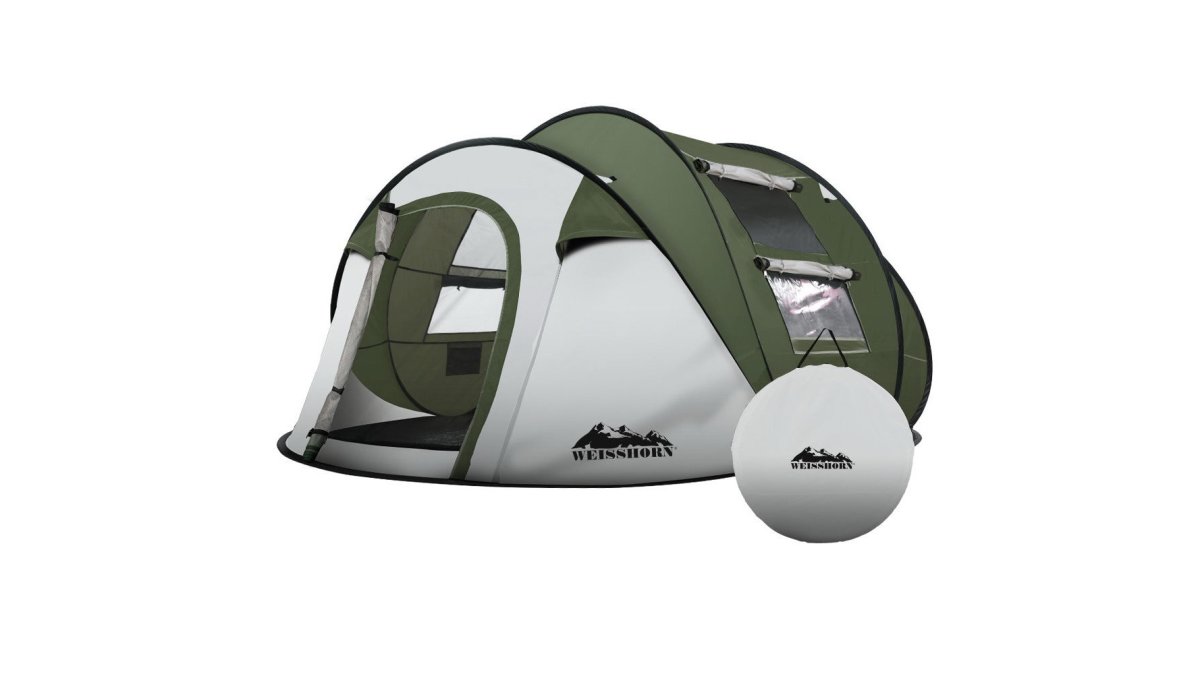
The Weisshorn Instant Up Camping Tent sets up in less than a minute, throw it into an open area and watch it pop up. This is the fastest easy setup family tent option available, ideal for families with young children or anyone prioritising convenience.

The tent sleeps 4-5 people and features 190T polyester with 3000mm PU coating for weather protection. Steel poles provide durability, mesh windows offer ventilation, and oversized zipper doors prevent cramping during rainy days.
What works: One-second setup after a long drive is genuinely life-changing. The PU coating handles rain efficiently, the dome design sheds water naturally, and mesh windows prevent stuffiness.
What doesn't: At $216.95, it's pricier than alternatives. The dome shape offers less headroom than cabin tents, so tall adults may feel confined. Pack-down requires careful folding to fit the carry bag.
2. Weisshorn 6-Person Cabin Tent: Spacious Family Comfort
The Weisshorn 6-Person Cabin Tent delivers genuine comfort with 405cm x 310cm x 200cm dimensions. The cross-pole design creates exceptional headroom and shoulder space, critical on multi-day trips.

Double-layer 190T polyester with 3000mm PU coating offers excellent weather protection. The entrance shade awning creates covered outdoor space. Steel and fibreglass poles handle wind and moderate weather. Mesh doors provide ventilation without sacrificing privacy.
What works: The cabin design creates a genuine "room" feel. The entrance awning is brilliant for Australian conditions, sit outside during light rain or intense sun without packing up. Setup takes 10-15 minutes with two people. Double-layer fabric reduces condensation.
What doesn't: At $259.95, it's the most expensive option. The larger footprint requires more campsite space, which matters in busy caravan parks. Pack-down size is substantial.
3. Weisshorn 4-Person Family Tent: Versatile Weekend Getaway
The Weisshorn 4-Person Family Tent hits the sweet spot between price, setup time, and functionality at $102.95. It works perfectly for families of 3-4 people wanting comfortable sleeping space without premium pricing.
Double-layer 190T polyester with 3000mm PU coating provides solid weather resistance. Fibreglass poles create a cross-pole roof design with extra headroom. The sewn-in PE groundsheet with elevated seams keeps the interior dry. Setup takes 10-15 minutes with intuitive cross-pole design.
What works: The price-to-quality ratio is exceptional. You get waterproofing, ventilation, and headroom at a budget-friendly price. The sewn-in groundsheet eliminates a common failure point in cheaper tents. Mesh windows provide natural light and airflow.
What doesn't: At 4-person capacity, it's tight for a family of four with gear. Headroom at the edges may feel snug for tall adults.
How to Choose a Family Tent for Beginners
Choosing the right easy setup family tent balances five factors: sleeping capacity, setup time, weather protection, headroom, and budget. Most beginners overlook setup time and weather features, mistakes that turn trips miserable.
Start with realistic capacity needs. A 4-person tent fits 4 sleeping people, not 4 people plus gear. For a family of 4, consider a 6-person tent if budget allows.
Setup time matters more than beginners realise. Instant pop-up tents solve this entirely. Traditional cross-pole tents take 10-15 minutes with two people.
Weather protection depends on PU coating rating. Look for 3000mm PU or higher for genuine rain protection. The floor should be sealed with elevated seams to prevent water seeping from damp ground.
Headroom and interior space affect comfort significantly on rainy days. Cabin-style tents offer 200cm+ height, while dome tents max out at 140cm.
Weisshorn Instant Up Camping Tent 4-5 →
The $102.95 option offers solid value for weekend trips. The $216.95 instant pop-up justifies its cost if convenience is your priority. The $259.95 cabin tent suits regular campers.
Waterproof Rating for Camping Tents: What You Need to Know
A tent's waterproof rating measures how much water pressure the fabric withstands before leaking, in millimetres (mm) of water column height. A 3000mm rating resists water pressure equivalent to a 3-metre column.
For Australian camping, aim for 3000mm PU coating on the tent body and 5000mm+ on the floor, as ground moisture creates more pressure than rainfall.
Intense UV exposure degrades fabric and coating faster than in cooler climates. Look for UV-stabilised polyester to prevent the PU coating from becoming brittle after 2-3 seasons.
Heat dissipation matters in Australian summer. Mesh windows and dual-layer fabric allow heat to escape. Single-layer budget tents become ovens in direct sun.
Sand and insect ingress is a practical problem in coastal and arid regions. Sealed seams with taped joints prevent sand from working into fabric layers.
Lower ratings fail faster under sustained heavy rain or pooling water. A 1000-2000mm tent works for beach or summer camping in dry regions, but fails during unpredictable spring storms.
Seam sealing matters as much as fabric rating. Water finds the weakest point, usually seams where fabric meets. Quality tents have sealed seams with tape applied during manufacturing.
For Australian conditions, prioritise tents with: (1) 3000mm+ PU coating on walls and 5000mm+ on floor; (2) UV-stabilised polyester; (3) sealed seams with taped joints; (4) fine-mesh windows; (5) ventilation features. This combination handles rain, sun, heat, and insects.
Tent Setup Tips for Beginners
Most tent setup failures come from rushing or skipping preparation. Family camping introduces variables: managing children during setup, keeping gear organised, and realistic time expectations with actual family involvement. Establishing a calm routine early in the trip helps maintain morale, much like refining your morning ritual by consulting this camping coffee guide to ensure that your first cup is as reliable as your shelter.
Choose your ground carefully. Level ground drains water naturally. Avoid areas under trees where dripping continues after rain. Remove rocks, sticks, and sharp objects. A thin groundsheet extends fabric life. With children, check for ant nests, spider webs, or roots that could trip running kids.
Assign child-friendly roles during setup. Rather than trying to set up while children run unsupervised, give them specific tasks: holding pegs in a pile, laying out guylines in straight lines, or handing pole sections to adults. This keeps them engaged, makes setup faster, and prevents the frustration of kids wandering into traffic or getting bored.
Lay out all parts before assembly. Spread the tent body, poles, pegs, and guylines on the ground. This prevents the frustration of discovering a missing pole halfway through setup. Check that all pole sections connect properly; a bent or damaged pole section ruins the entire structure. With children present, lay everything out in a designated "assembly zone" away from where kids are playing, preventing them from tripping over poles or stepping on fabric.
Assemble poles in the correct order. Cross-pole designs require specific assembly sequences. The instruction manual shows the exact order. Forcing poles together in the wrong sequence bends them and creates stress points that fail during wind or rain. For the Weisshorn 4-Person and 6-Person cabin tents, the cross-pole design takes 10-15 minutes with two adults working together. With one adult and children helping with handed tasks, expect 15-20 minutes. The Weisshorn Instant Up eliminates this step entirely, deploying in under 60 seconds with no assembly required.
Secure guylines and pegs properly. Guylines prevent the tent from collapsing in wind and keep walls taut. Drive pegs at 45-degree angles away from the tent, not straight down. Tight guylines reduce flapping and noise during windy nights. Loose guylines defeat the purpose of having them. With children in camp, properly secured guylines also prevent kids from tripping over slack lines in the dark.
Plan gear storage before kids enter the tent. This is a critical step most guides skip. Decide where sleeping bags, clothing, and day packs will go before anyone enters.
Frequently Asked Questions
What are the easiest tents to set up for families?
Pop-up dome tents and instant setup models are the easiest for families. The Weisshorn Instant Up Camping Tent sets up in under a minute without tools or assembly. Cabin-style tents with cross-pole designs also offer straightforward setup, though they take slightly longer. Both styles eliminate complex pole threading and reduce frustration, making them ideal for beginners and families with children.
How do I choose a family tent for beginners?
Start by counting your family size and adding one extra person's worth of space for comfort. Check the tent's capacity rating and floor dimensions. For beginners, prioritise instant or pop-up setup mechanisms and clear assembly instructions. Look for mesh windows for ventilation, a sturdy frame (steel or fibreglass poles), and weatherproof fabric. Consider portability: lighter tents with compact carry bags are easier to transport and store.
What waterproof rating should a camping tent have?
Tent waterproof ratings are measured in millimetres (mm) of water column pressure. Look for a minimum of 3000mm PU coating on the fabric and 3000mm on the floor for reliable weather protection. Many family camping tents, including the Weisshorn models, feature 3000mm ratings, which handle moderate to heavy rain. Higher ratings (5000mm+) provide extra durability in prolonged wet conditions, though they're less common in budget-friendly options.
Are pop-up tents durable enough for regular family camping trips?
Yes, quality pop-up tents are durable for regular camping. The Weisshorn Instant Up Tent uses heavy-duty 190T polyester with PU coating and steel poles designed to withstand repeated setup and pack-down cycles. Durability depends on fabric weight, pole material, and seam construction. Steel frames last longer than fibreglass, and thicker polyester (190T) resists UV damage and wear better than lighter materials. Proper storage in a carry bag extends lifespan significantly.