

Table of Contents
- Sleeping Bag Temperature Ratings Explained
- Why Rated Warmth and Real-World Performance Differ
- How to Test Sleeping Bag Warmth at Home
- How to Do a Sleeping Bag Loft Test
- How to Increase Sleeping Bag Warmth Without Buying a New Bag
- Choosing the Right Bag for Your Conditions
- Conclusion
Last Updated: August 18, 2026
Sleeping Bag Temperature Ratings Explained
Most campers glance at the temperature rating on their sleeping bag and assume it tells the whole story. It doesn't. Understanding how to test sleeping bag warmth properly means understanding what that number actually represents, and where it falls short.
This guide breaks down the rating system, explains why lab numbers and real-world performance diverge, and gives you practical field methods to verify your gear before a cold night catches you unprepared.
Sleeping bag temperature ratings are standardised performance benchmarks that indicate the lowest ambient temperature at which a bag is designed to keep a sleeper comfortable. These ratings are derived from controlled laboratory testing, not personal experience, which is why they serve as a starting point rather than a guarantee.
Comfort, Lower Limit, and Extreme: What Each Rating Means
The ISO 23537 sleeping bag standard defines three distinct ratings that appear on any bag sold to the international standard:
- Comfort rating: The temperature at which a "standard woman" sleeping in a relaxed position will feel comfortable through the night. This is the most conservative of the three figures.
- Lower limit (also called Limit rating): The temperature at which a "standard man" sleeping in a curled position to conserve heat will remain comfortable without waking from cold.
- Extreme rating: The survival threshold. At this temperature, a standard woman is at risk of hypothermia. This figure is not a sleeping temperature, it is a danger marker.
The practical takeaway: if you run cold, target the Comfort rating for your expected overnight low. If you run warm, the Lower Limit gives you more room to move.
How ISO 23537 Lab Testing Actually Works
ISO 23537 replaced the older EN 13537 standard and uses a thermal test dummy, a heated mannequin instrumented with sensors, placed inside the bag in a climate-controlled chamber. The dummy simulates metabolic rate and heat output at a standardised level, and technicians measure how much energy is required to maintain a stable core temperature at progressively colder ambient conditions.
The test captures thermal efficiency across the full bag: footbox, baffle construction, draft collar, and hood. What it cannot capture is wind, moisture, ground contact, or individual human physiology. Those gaps are exactly where real-world performance diverges.
Why Rated Warmth and Real-World Performance Differ
The lab is a sealed, windless, dry room. A campsite is not.
Understanding this gap is the most important thing a camper can do before trusting a temperature rating with their safety.
The Role of Humidity, Altitude, and Wind
Windchill is the most immediate factor. A bag rated to -5°C offers that performance only when air is still. Even a light breeze passing through a tent's mesh panels can strip heat from the bag's shell, reducing effective warmth by several degrees. Pitching with the door facing away from prevailing wind is a basic mitigation most guides skip.
Humidity degrades insulation differently depending on fill type. Down fill power, the measure of down's loft per unit weight, collapses when wet. A 700-fill-power down bag that has absorbed moisture from humid coastal air or condensation inside a tent can lose a significant portion of its insulative properties overnight. Synthetic insulation manages moisture better, retaining more thermal efficiency when damp, which makes it the more reliable choice in wet or coastal conditions.
Altitude compounds cold in two ways: temperatures drop and air becomes thinner, which affects how the body regulates heat. Campers heading into alpine terrain should treat their bag's Comfort rating as the minimum, not the target.
Cold Sleepers vs. Warm Sleepers and Human Physiology
The ISO 23537 test dummy represents an average metabolic rate. Human physiology varies considerably. Women, people with lower body mass, and those who are fatigued or dehydrated tend to sleep colder than the standard assumes. If you consistently wake cold at home, apply the same logic outdoors: choose a bag rated several degrees below your expected overnight temperature.
Eating a warm meal before sleep, staying hydrated, and going to bed warm rather than cold all affect how your body generates heat through the night. These are not peripheral tips, they directly influence how effectively your bag performs.
How to Test Sleeping Bag Warmth at Home
Testing sleeping bag warmth does not require a climate-controlled lab. A structured field approach gives you reliable, repeatable data about your specific bag under your specific conditions.
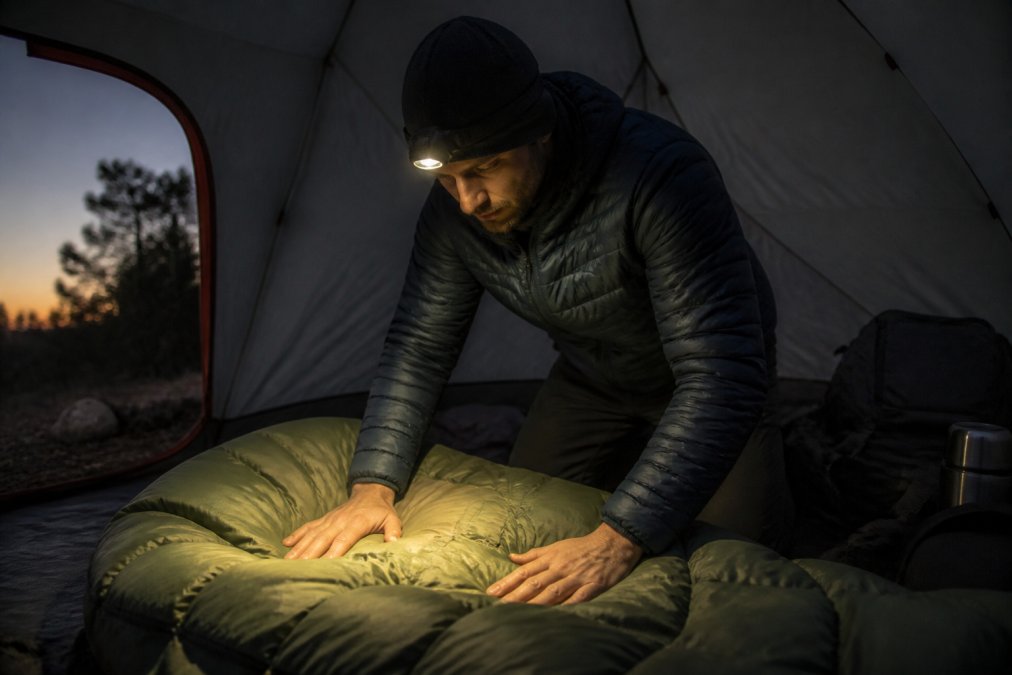
Start with a simple sequence before any overnight trip:
- Check the loft before packing. Unroll the bag and let it expand for 30 minutes. A well-lofted bag should fill visibly, flat spots indicate compressed or degraded insulation.
- Note the ambient temperature on the night you plan to test. Use a thermometer at ground level, not a weather app reading.
- Record your sleep quality in the morning. Note whether you woke from cold, which part of your body was coldest, and whether you used the hood.
The Sleeping Pad R-Value Check
A sleeping bag's temperature rating assumes you are not losing heat through the ground. Ground contact is one of the most significant sources of heat loss in a camp sleep system, and the bag's insulation is compressed flat beneath your body weight, meaning it provides almost no thermal protection from below.
Sleeping pad R-value is the measure of a pad's resistance to heat flow. According to the Outdoor Industry Association's gear standards guidance, a pad with an R-value of 2 suits mild conditions, while alpine use typically demands R-4 or higher. If your overnight temperatures are pushing the lower end of your bag's rated range, upgrading your pad is often more effective than upgrading your bag.
A quick field check: lie on your pad on cold ground for five minutes. If you feel cold spots through the pad, the R-value is insufficient for your conditions.
The Overnight Field Test Method
Choose a night when conditions match your target camping scenario. Set up your tent in the garden or a local campsite, use your standard sleep system, and sleep as you normally would. This is the most honest test available.
Track three variables: overnight low temperature, your layering setup, and how you slept. After two or three test nights across different conditions, you will have a reliable personal baseline, what temperature your specific bag actually handles for your physiology.
How to Do a Sleeping Bag Loft Test
A sleeping bag loft test is the fastest way to assess whether your bag's insulation is still performing as designed. Loft refers to how high the bag rises when fully expanded, and it is a direct indicator of insulative capacity.
To perform a loft test:
- Remove the bag from its stuff sack and lay it flat on a clean, dry surface.
- Allow it to expand for at least 30 minutes at room temperature.
- Place a ruler vertically at the thickest point of the bag, typically across the chest area.
- Measure the height of the loft from the floor to the top of the bag.
A bag in good condition should loft to a height consistent with its fill weight and fill power specification. A bag that lofts noticeably less than when it was new, or shows flat, matted patches, has lost insulative capacity. This can result from compressed storage, moisture damage, or the natural breakdown of fill material over time.
Cold spots are a related problem. Run your hand across the surface of a lofted bag. Areas that feel thin or where you can feel through to the other side have compromised baffle construction or fill migration. These spots will translate directly to cold waking points on a real night.
How to Increase Sleeping Bag Warmth Without Buying a New Bag
The most common mistake campers make when they feel cold overnight is assuming they need a warmer bag. Often, the fix is cheaper and faster than that.
Layering Base Layers and Liners
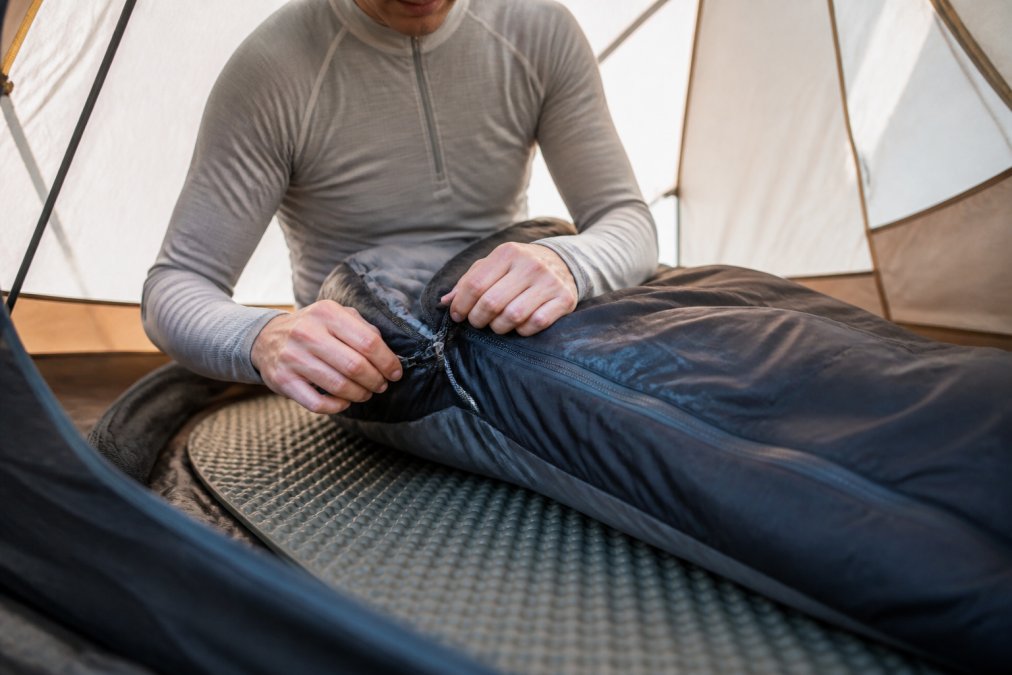
Base layers worn inside a sleeping bag add measurable warmth by trapping an additional layer of still air against the body. Merino wool and synthetic thermal base layers both work well. Merino offers the additional benefit of moisture management, it wicks sweat away from skin and dries more quickly than cotton, which matters because moisture against skin accelerates heat loss.
A sleeping bag liner is a separate inner layer that sits inside the bag and adds a rated temperature buffer, typically between 5°C and 15°C depending on material. Silk liners are lightweight and add a few degrees; fleece liners add significantly more. Liners also protect the bag's interior from body oils and dirt, extending its usable life.
Maintenance and Loft Restoration
A dirty sleeping bag is a colder sleeping bag. Body oils, sweat, and dirt coat the individual down clusters or synthetic fibres, reducing their ability to trap air. Regular cleaning restores loft and, with it, thermal efficiency.
For down bags, use a specialist down wash, standard detergents strip the natural oils from down and accelerate degradation. Dry the bag in a large-capacity dryer on low heat with clean tennis balls to break up clumps and restore loft. This process can take several hours; patience matters here.
Synthetic bags are more tolerant of standard washing but follow the manufacturer's care instructions regardless. According to the Australian Competition and Consumer Commission's product care guidance, following manufacturer care instructions is also relevant to warranty claims, improper washing can void coverage.
For bags that have lost loft despite cleaning, some specialist outdoor gear repairers offer re-lofting or re-filling services. This is worth exploring before replacing a bag outright.
Choosing the Right Bag for Your Conditions
Choosing the right sleeping bag means matching the bag's rated system to your actual sleep conditions, not just the headline temperature number.
| Condition | Recommended Comfort Rating | Pad R-Value | Liner Needed? |
|---|---|---|---|
| Summer camping (above 10°C) | +5°C to +10°C | R-1 to R-2 | No |
| Shoulder season (0°C to 10°C) | -5°C to 0°C | R-2 to R-3 | Optional |
| Winter camping (-5°C to 0°C) | -10°C to -15°C | R-4 to R-5 | Recommended |
| Alpine / sub-zero | -15°C or lower | R-5+ | Yes |
Down bags offer the best warmth-to-weight ratio and compress well for backpacking, but require careful moisture management. Synthetic insulation costs less, handles wet conditions better, and dries faster, a practical choice for coastal camping or unpredictable weather.
Draft collars and hoods make a measurable difference in cold conditions. A bag without a draft collar loses a significant amount of heat through the neck opening. If your current bag lacks one, a liner with a collar can partially compensate.
For cold sleepers, the rule is simple: choose a bag rated at least 5°C below your expected overnight low. For warm sleepers with good layering habits, the Lower Limit rating is a workable target.
Budget Roo stocks a range of sleeping bags and camping gear suited to conditions from mild summer nights through to serious cold-weather use. The right system is always a combination of bag, pad, and layering, not just the bag alone. Browse the full range at Budget Roo to find gear matched to your next trip.
For further guidance on sleeping bag standards and testing methodology, the Standards Australia consumer product information provides background on how international standards apply to gear sold locally.
Frequently Asked Questions
What is the difference between comfort and limit temperature ratings?
The comfort rating is the temperature at which a cold sleeper, typically a woman in the ISO 23537 standard, can sleep comfortably in a relaxed position. The lower limit rating applies to a warm sleeper, typically a man, who can sleep curled up without waking from cold. The extreme rating marks the survival threshold only, not comfortable sleep. When choosing a bag, cold sleepers should buy to the comfort rating, not the lower limit.
How do I know if my sleeping bag has lost its loft?
Lay the bag flat on a hard surface after airing it for 30 minutes. A well-maintained bag should puff up noticeably; a down bag with good fill power will rise 10 cm or more. If it lies flat or has cold spots where the baffles feel thin, the insulation has compressed or clumped. For down bags, washing with a specialist cleaner and tumble-drying with tennis balls usually restores loft. Synthetic insulation degrades more permanently over time.
How can I increase the warmth of my sleeping bag?
The fastest way to increase sleeping bag warmth is to add a fleece or silk liner, which can add 3-8°C of effective warmth. Wearing moisture-wicking base layers also reduces heat loss significantly. Upgrading your sleeping pad matters just as much, a pad with a higher R-value stops heat escaping into the ground. Eating a warm meal before bed raises your metabolic rate, and ensuring the draft collar and footbox are sealed properly eliminates common cold spots.
Does sleeping bag storage affect its warmth over time?
Yes. Storing a sleeping bag compressed in its stuff sack long-term permanently damages the loft of both down and synthetic insulation. Always store a bag loosely in a large cotton or mesh storage sack. Down bags are more resilient to compression in short-term use but suffer the same long-term damage. Moisture during storage also causes down to clump, reducing thermal efficiency. Air the bag fully before storing and keep it in a dry location.
Understanding how to test sleeping bag warmth is the difference between a good night's sleep and a miserable one. Ratings give you a starting point, but field testing, loft checks, and proper maintenance tell you what your specific bag actually delivers for your physiology and conditions. Budget Roo carries sleeping bags, sleeping pads, and layering gear designed to work together as a complete sleep system. Shop Now to find the right combination for your next adventure.
This article was written using GrandRanker