

Table of Contents
- What Is Essential Camping Gear?
- Shelter: Tents, Tarps, and Ground Protection
- Sleep System: Sleeping Bags, Pads, and Mattresses
- Cooking Equipment and Food Storage
- Essential Camping Checklist for Beginners
- Budget Camping Gear for Families
- Camping Gear You Can Skip to Save Money
- Building Your Essential Camping Equipment List
- Frequently Asked Questions
Last Updated: October 13, 2026
What Is Essential Camping Gear?
Essential camping gear refers to the core equipment needed to sleep safely, cook meals, stay protected from weather, and navigate outdoors. This isn't about having everything, it's about identifying what actually keeps you alive and comfortable versus what's nice to have.
The difference between a successful camping trip and a miserable one often comes down to five core categories: shelter, sleep systems, cooking equipment, lighting, and safety supplies.
A tent protects you from rain, wind, and insects. A sleeping bag and pad keep you warm through the night. A camp stove lets you cook hot meals and boil water safely. A headlamp means you can move around camp after dark.

The mistake most beginners make is thinking they need every product in a camping catalogue. They don't. What they need is to understand which items solve real problems and which ones are convenience upgrades.
Shelter: Tents, Tarps, and Ground Protection
A tent is your primary defence against weather, insects, and temperature swings. The right shelter depends on how many people you're camping with, what season you're camping in, and how much weight you're willing to carry.
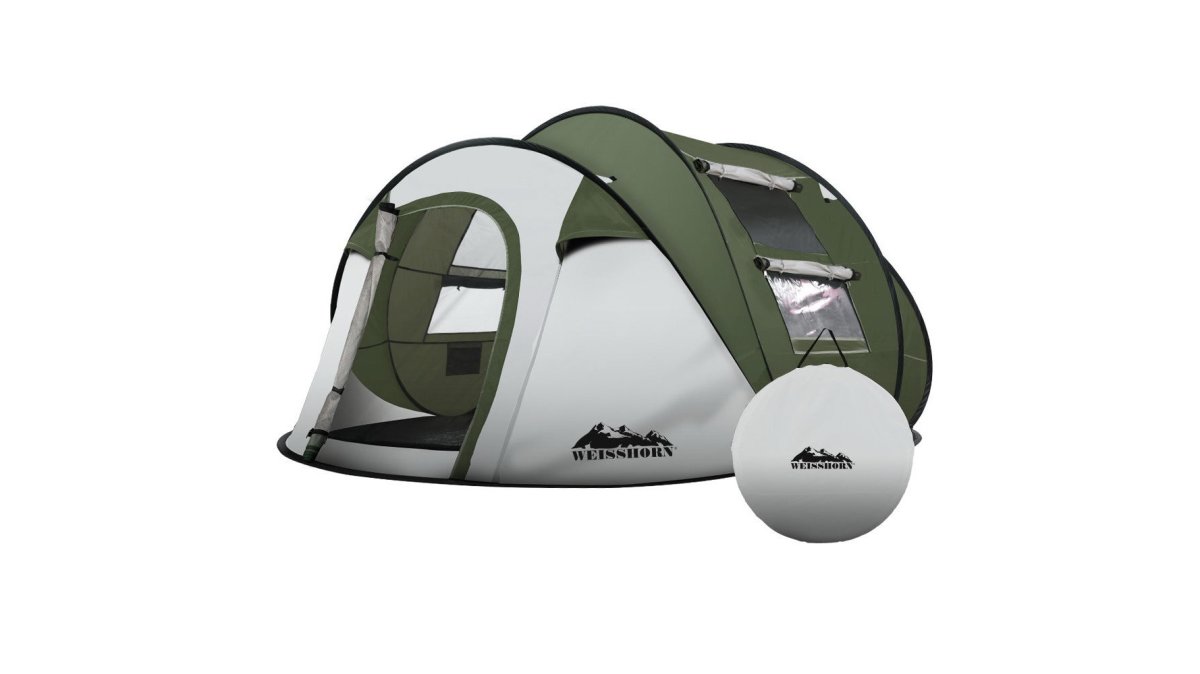
Dome tents are the standard choice for beginners and families. The Weisshorn Instant Up Camping Tent is a practical example: it sets up in under a minute, fits 4-5 people, and costs $216.95.

For smaller groups or solo camping, a swag (canvas sleeping tent) is lightweight and durable. The Weisshorn Swag King Single at $383.95 includes a 70mm foam mattress, water-repellent canvas, and mesh panels to keep insects out.

Ground tarps prevent moisture from seeping up through the tent floor. A basic tarp under your tent extends its life and keeps the interior dry.
Choosing the Right Tent for Your Needs
Tent selection hinges on three factors: capacity, weight, and season rating.
Capacity should match your group size plus 20 percent extra. A 4-person tent sleeps four people uncomfortably. A 5-person tent sleeps four people with room to store gear inside during rain. The Weisshorn Family Camping Tent 4 Person at $102.95 gives families an affordable entry point with double-layer fabric and cross-pole design for stability.
Weight matters if you're hiking to your campsite. Car camping means weight is irrelevant. Backpacking means every kilogram counts. Know your transport method before buying.
Season rating tells you the tent's insulation level. Three-season tents handle spring, summer, and autumn. Four-season tents add snow load capacity and better insulation for winter. Most casual campers never need four-season gear. A three-season tent handles 90 percent of Australian camping conditions.
| Tent Type | Best For | Setup Time | Weight | Price Range |
|---|---|---|---|---|
| Dome tent | Families, groups | 10-15 minutes | 2-4 kg | $100-$300 |
| Swag | Solo, couples | 2-5 minutes | 8-12 kg | $150-$400 |
| Pop-up tent | Quick trips | Under 1 minute | 1.5-2.5 kg | $80-$200 |
| Bell tent | Base camp, glamping | 30+ minutes | 20+ kg | $500+ |
Sleep System: Sleeping Bags, Pads, and Mattresses
A sleeping bag and pad work together. The bag traps your body heat; the pad insulates you from cold ground and adds comfort. Without a pad, you'll lose heat to the earth below you even if your bag is warm.
Sleeping bags come in three temperature ratings: summer (10°C+), three-season (0°C to 10°C), and winter (below 0°C). Most Australian campers need a three-season bag. The Weisshorn Sleeping Bag at $101.95 has a 5°C comfort rating, hollow fibre filling, and unzips to become a blanket.
Sleeping pads come in three types:
- Closed-cell foam pads: Cheap ($20-40), durable, don't need inflating, but bulky to carry
- Self-inflating pads: Mid-range ($50-100), lighter than foam, inflate themselves partially
- Air mattresses: Lightest ($40-150), most comfortable, but need a pump and can puncture
For car camping, weight doesn't matter, use an air mattress or self-inflating pad. For backpacking, a lightweight self-inflating pad is the best trade-off between comfort and weight.
The Weisshorn Swag King comes with a 70mm foam mattress built in, so you don't need to buy a separate pad, that's a genuine convenience for solo campers.
Cooking Equipment and Food Storage
You need three things to cook safely outdoors: a heat source, cookware, and a way to store food away from animals and insects.
A camp stove is safer and more reliable than a campfire. Open fires are often banned in fire-danger season, and they're unpredictable for cooking.
The THERMOMATE 2 Burner Gas Portable Camping Oven Stove Combo at $899.00 is a more advanced option for families who want oven capacity. It has dual burners (5,300 BTU each) and a 3,500 BTU oven with two racks.
Cookware means a pot, pan, and utensils. Lightweight camping cookware sets include everything. Cast iron is heavier but lasts forever and distributes heat evenly. Aluminium is lighter but dents easily.
Food storage prevents spoilage and keeps animals away from your campsite. A cooler keeps perishables cold. For dry goods, use airtight containers to keep insects out.
Essential Camping Checklist for Beginners
Starting out, you need:
- Tent (dome or swag)
- Sleeping bag (three-season minimum)
- Sleeping pad or mattress
- Camp stove and fuel
- Cookware (pot, pan, utensils)
- Cooler or food storage
- Headlamp or lantern
- First-aid kit
- Water bottles and water treatment (tablets or filter)
- Matches or lighter
- Multi-tool or pocket knife
- Rope or paracord
- Torch or headlamp (backup)
- Warm layers (fleece, jacket)
- Rain jacket
That's 15 items. Everything else is optional. A camp chair is nice but not essential. A portable shower is luxury. A tent fan helps in summer but you can open the tent instead. The checklist above keeps you safe, fed, warm, and able to see at night.
Budget Camping Gear for Families
Families need larger tents and more strong gear because kids are harder on equipment and you're often camping for longer stretches.
Weisshorn Swag King Single Camping Swags Canvas Free Standing Dome Tent Dark →
The Weisshorn Instant Up Camping Tent 4-5 Person at $216.95 is a solid family starting point. It pops up in seconds, fits a family of four comfortably, and the one-second setup matters when kids are tired and hungry. A family-size cooler stores food for four people. Budget for sleeping bags for each child, not shared bags, kids move around at night and shared bags mean nobody sleeps well.
The real budget saver for families is buying once and using for years. A $300 tent used 20 times costs $15 per trip. A $100 tent used twice costs $50 per trip. Investing upfront in quality gear can save money because it lasts longer and encourages more frequent use.
Camping Gear You Can Skip to Save Money
Not everything in a camping store is essential. Here's what to skip:
Expensive sleeping pads ($200+): A basic self-inflating pad ($50-80) works as well as premium brands. The difference is weight and packability, which matter only for backpacking.
Camping pillows: Bring a regular pillow from home or use your backpack stuffed with clothes. Camping pillows cost $30-50 and do the same job.
Portable camping showers: You can wash in a river or use wet wipes. A shower system costs $50-100 and takes up space.
Tent fans: Open the tent for ventilation. Fans cost $40-80 and run on batteries you have to replace.
Fancy camp chairs: A basic fold-up chair costs $15-30. Premium camp chairs cost $100+. Both do the same job.
Camping mattress toppers: If your sleeping pad is uncomfortable, buy a better pad, not a topper.
Portable coffee makers: Instant coffee or tea bags work fine. A camp coffee maker costs $30-60 and adds weight.
The rule is simple: buy it only if it solves a real problem. If you're comfortable without it, skip it.
Building Your Essential Camping Equipment List
Start with shelter, sleep, and cooking. Add lighting and safety. Everything else is optional until you've actually used your gear and know what you're missing.
Week 1 purchases:
- Tent
- Sleeping bag
- Sleeping pad
- Camp stove
- Cookware set
Week 2 purchases:
- Headlamp
- First-aid kit
- Water bottles
- Cooler
After your first trip: Add what you actually needed but didn't have. Maybe that's a warmer jacket. Maybe it's a better pillow. Maybe it's rope or a multi-tool. Real experience beats guessing.
According to Australian Bureau of Statistics camping participation data, camping and caravanning is one of the most popular outdoor activities, with families citing gear reliability and comfort as top priorities.
Budget Roo Pty Ltd stocks all the core items you need to start camping without overspending. The Weisshorn Swag King, sleeping bags, and tent options give you proven shelter systems at fair prices. The THERMOMATE cooking system handles everything from weekend trips to extended family camping.
Research from Outdoor Industry Association participation trends shows that families who invest in reliable gear camp more frequently and report higher satisfaction.
Frequently Asked Questions
What are the most essential items for a first camping trip?
Start with a reliable tent, sleeping bag rated for the season, insulated sleeping pad, camp stove or portable cooker, food storage container, headlamp, first-aid kit, and water bottles. These cover shelter, warmth, cooking, safety, and hydration. A tent like the Weisshorn Instant Up 4-5 Person Pop-up Tent ($216.95) sets up in seconds, ideal for beginners. Add a Weisshorn Sleeping Bag ($101.95) for warmth, and you have the core essentials covered without overwhelming yourself with unnecessary gear.
What camping gear should beginners buy first?
Prioritise shelter and sleep system first: a tent and sleeping bag are non-negotiable. Then add a sleeping pad for insulation and comfort, a headlamp for visibility, and basic cooking equipment. Water bottles and a first-aid kit follow. This staged approach lets you build gradually rather than buying everything at once. Budget Roo offers complete starter bundles with tents from $102.95 and sleeping bags from $101.95, giving beginners affordable entry points without compromising quality.
What camping gear can you skip to save money?
Skip luxury items like battery-powered tent fans, premium camping pillows, and multi-tool knife sets initially. Avoid over-buying cooking gear if you plan simple meals. Skip expensive lanterns if a headlamp works. Don't buy specialty items like portable sinks or camp chairs until you've camped several times and know what you actually need. Focus spending on shelter, sleep system, and safety first. Many beginners waste money on novelty items they never use.
How do I choose the right tent and sleeping bag for camping?
Select a tent based on capacity (add one extra person's worth of space for comfort), season, and setup time. Three-season tents suit most trips; four-season tents handle snow and extreme wind. For sleeping bags, match the temperature rating to your expected conditions: a 5-degree bag works for cooler months, while 10-15 degree bags suit milder seasons. The Weisshorn Swag King Single ($383.95) offers integrated mattress and shelter in one, while the Weisshorn Sleeping Bag ($101.95) provides 5-degree comfort separately. Test both options to see what suits your camping style.
What safety items should I take camping?
Pack a comprehensive first-aid kit, a headlamp or torch with spare batteries, a fire starter or matches in a waterproof container, a whistle for emergencies, and a pocket knife for camp tasks. Include a water treatment method (tablets or filter) to ensure safe drinking water. Wear weather-appropriate clothing and bring extra layers. Tell someone where you're going and when you'll return. These essentials prevent injury, enable emergency signalling, and ensure you can stay warm and hydrated in unexpected situations.
What should I bring when camping with my family?
Beyond individual essentials, bring extra food and water for the group, a larger tent with headroom (the Weisshorn Instant Up 4-5 Person fits families well at $216.95), camp chairs for comfort, a portable stove or oven for proper meals, and entertainment options for downtime. Pack child-specific items: extra clothing layers, sunscreen, insect repellent, and comfort items like a familiar blanket. A cooler keeps perishables safe. Bring more first-aid supplies and consider a portable camping oven like the Thermomate 2-Burner ($899.00) if you plan multi-day trips where proper meals matter.
How much should I spend on essential camping gear as a beginner?
Budget Roo's starter options keep costs low: a Weisshorn 4-Person Tent ($102.95), Sleeping Bag ($101.95), and basic cooking setup total under $400. Avoid cheap, low-quality gear that fails mid-trip; mid-range options offer better durability and comfort without luxury pricing.
What is the difference between a swag and a tent for camping?
A swag (like the Weisshorn Swag King Single at $383.95) combines shelter, mattress, and sleeping system in one compact unit, ideal for solo or couple camping. It sets up faster and weighs less than a tent-plus-mattress combination. A tent offers more space, ventilation, and flexibility for families or groups. Swags suit minimalist campers and travellers; tents suit families and those who want separate sleeping areas. Choose based on group size, trip duration, and whether you value speed of setup or spaciousness.