

Table of Contents
- What Makes Durable Fishing Lures Work in Saltwater
- Best Saltwater Lure Materials for Long-Lasting Performance
- Topwater Lures and Poppers for Surface Action
- Soft Plastic Paddletails and Grubs in Saltwater
- Metal Slugs and Chromies: Durability for Surf and Reef
- Corrosion-Resistant Fishing Hooks and Terminal Tackle
- How to Maintain Fishing Lures After Saltwater Use
- Choosing the Right Lure for Your Target Species
- Frequently Asked Questions
Last Updated: September 19, 2026
What Makes Durable Fishing Lures Work in Saltwater
Durable fishing lures saltwater must withstand salt corrosion, UV exposure, aggressive fish species, and casting stress that freshwater lures cannot handle. Budget Roo Pty Ltd provides gear built to last through repeated saltwater sessions.
Longevity depends on three factors: material composition, hook quality, and protective coatings. Salt water accelerates oxidation on metal components, UV rays break down plastic polymers, and casting friction wears through inferior finishes. Quality durable fishing lures saltwater use materials engineered to resist these forces.
Quality saltwater lures feature corrosion-resistant hardware, UV-enhanced plastic bodies, and protective coatings that seal vulnerable connection points. Anglers who maintain their gear properly report significantly longer service life from quality lures.
Best Saltwater Lure Materials for Long-Lasting Performance
ABS hard plastic is the industry standard for durable fishing lures saltwater. This thermoplastic resists salt water penetration, maintains structural integrity under UV exposure, and provides rigidity for consistent action. Quality manufacturers coat ABS bodies with protective finishes that seal the plastic and prevent salt corrosion.
Stainless steel hooks represent the gold standard for saltwater fishing. High-carbon stainless steel resists rust formation and maintains sharp points through extended use. Budget Roo Pty Ltd stocks lures featuring sharp metal hooks that resist salt water corrosion.
Protective coatings make a measurable difference in lure longevity. UV-enhanced finishes prevent plastic brittleness and cracking. Epoxy coatings seal metal components and prevent salt corrosion. Lures lacking these layers show visible degradation within one to two seasons.
Topwater Lures and Poppers for Surface Action
Topwater lures trigger aggressive strikes from predatory saltwater species. Poppers feature a concave face that creates distinctive popping sounds and draw fish from deeper water. Pencil-style lures produce side-to-side swimming motion that mimics injured baitfish.
Topwater lure durability depends on plastic body integrity and hook connections. Constant popping action stresses plastic joints. Quality lures feature reinforced bodies and secure eye loops that distribute stress across a wider area.
The 2X 9.5cm Popper Poppers Fishing Lure Lures Surface Tackle Saltwater features durable ABS plastic with sharp metal hooks and internal steel balls that extend casting distance and ensure consistent action.

The 5X Popper Poppers 12.3cm Fishing Lure Lures Surface Tackle Fresh Saltwater delivers larger profile action for bigger species.

Soft Plastic Paddletails and Grubs in Saltwater
Soft plastic lures provide realistic baitfish profiles and subtle action. Paddletails wobble during retrieval to mimic natural prey. Grubs produce vibration with minimal water resistance, effective in clear water where fish scrutinise prey closely.
Soft plastic lures stored in direct sunlight degrade rapidly, even when not in use. Store your soft plastics in a cool, dark location away from UV exposure. Lures exposed to constant sunlight become brittle within weeks and fail during casting or when fish strike.
Metal Slugs and Chromies: Durability for Surf and Reef
The trade-off with metal lures is that they sacrifice the subtle action and realistic profiles that soft plastics and some hard plastic lures provide. Metal lures work best for aggressive species that respond to flash and vibration rather than detailed baitfish imitation. Pelagic species like mackerel, trevally, and kingfish readily strike metal lures, but species like bream and flathead often ignore them in favour of more naturalistic presentations.
Corrosion-Resistant Fishing Hooks and Terminal Tackle
The hooks attached to your lure determine whether you land fish or watch them escape. Corrosion-resistant hooks maintain their sharpness and structural integrity through extended saltwater use, while corroded hooks lose their bite and bend or break under pressure. Stainless steel hooks represent a good choice for saltwater fishing because the material resists rust formation and maintains hardness.
2X 9.5cm Popper Poppers Fishing Lure →
How to Maintain Fishing Lures After Saltwater Use
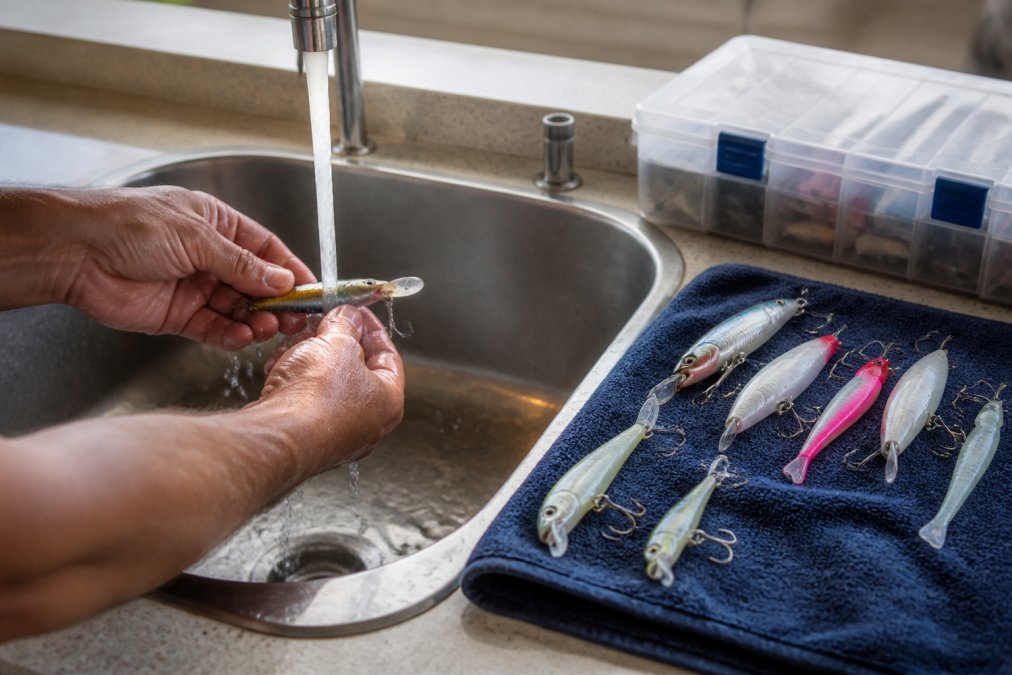
Immediate rinsing represents the single most important maintenance step for extending lure life. Rinse each lure under fresh running water immediately after your fishing session, paying special attention to the connection points where the lure attaches to the split ring and where the treble hooks connect to the lure body. Salt crystals left on the surface accelerate corrosion of metal components and weaken plastic joints.
Dry your lures completely before storing them. Moisture trapped between components promotes corrosion even after rinsing because salt residue remains active in damp conditions. Use a clean cloth to dry each lure thoroughly, then allow them to air dry in a shaded location before placing them in storage. Never store damp lures in closed containers where moisture cannot evaporate.
Inspect your lures regularly for signs of corrosion or damage. White oxidation on metal components indicates the beginning stages of corrosion. Light surface corrosion can be removed with a soft brush or cloth, but deep corrosion that has pitted the metal surface cannot be reversed. Hook points should be tested regularly, run your thumbnail across the point, and it should catch and hold without sliding. Dull hooks should be replaced or sharpened.
Store lures in a cool, dry location away from direct sunlight. UV exposure degrades plastic and protective coatings even when lures are not in use. A tackle box or storage container kept in a shaded area extends lure life significantly compared to lures stored in direct sunlight. Some anglers use silica gel packets in storage containers to absorb moisture and prevent corrosion in humid conditions.
Choosing the Right Lure for Your Target Species
Different saltwater species respond to different lure types based on their feeding behaviour and visual acuity. Understanding these preferences helps you select lures that will actually catch fish rather than simply looking impressive in your tackle box. Species-specific durability requirements also vary, fish that inhabit rocky reefs demand different lure materials than fish that hunt in open water.
Reef and estuary species like bream and flathead prefer soft plastic paddletails and grubs that mimic natural baitfish. These fish scrutinise their prey more carefully and often ignore flashy metal lures. Topwater lures also work well in estuary environments where fish hunt near the surface. The durability requirements shift toward UV-resistant soft plastics and hard plastic topwater lures rather than metal slugs.
Surf fishing for species like salmon and barramundi demands lures that survive constant impact with rocks and wave action. Large hard plastic poppers provide the durability needed for these high-energy environments.
Budget Roo Pty Ltd's range of durable fishing lures covers all these applications. The 8X 9.5cm Popper Poppers Fishing Lure Lures Surface Tackle Fresh Saltwater provides topwater action for estuary species, while the 4X 6.8cm Popper Poppers Fishing Lure Lures Surface Tackle Saltwater delivers smaller profiles for species that prefer subtle presentations.

| Lure Type | Best Species | Durability Focus | Maintenance Frequency |
|---|---|---|---|
| Metal Slugs | Mackerel, Trevally, Kingfish | Chrome plating integrity | Weekly inspection |
| Topwater Poppers | Bream, Flathead, Barramundi | Plastic body cracks, hook security | After each session |
| Soft Plastic Paddletails | Bream, Flathead, Estuary species | UV degradation, material brittleness | Monthly replacement |
| Hard Plastic Cranks | Mixed saltwater species | Plastic integrity, hook durability | Bi-weekly inspection |
Selecting durable fishing lures for saltwater fishing means understanding both the environmental stresses your gear will face and the feeding preferences of your target species. Quality materials, protective coatings, and proper maintenance transform lures from consumable items into reliable tools that perform season after season. Budget Roo Pty Ltd stocks durable fishing lures engineered to withstand saltwater conditions while delivering the action and presentation that catches fish. Shop Now and build a tackle box of lures that will last through countless fishing adventures.
Frequently Asked Questions
What makes a fishing lure durable for saltwater environments?
Durable saltwater lures combine corrosion-resistant materials with quality construction. ABS hard plastic bodies with exquisite coating and sharp metal hooks resist rust and salt degradation. The coating protects the base material, whilst sharp, properly-set hooks maintain hook-up ratio through repeated use.
How do I prevent saltwater corrosion on my fishing lures?
Rinse lures thoroughly with fresh water immediately after each saltwater session. Use a soft cloth to dry them completely, paying attention to split rings, treble hooks, and any metal components. Store lures in a dry location away from direct sunlight to prevent UV damage and oxidation. Replace split rings and hooks if you notice rust spots forming. Regular maintenance extends lure life significantly and maintains casting distance and retrieval performance.
Are hard-body or soft-plastic lures more durable in saltwater?
Hard-body lures like ABS plastic poppers generally offer superior saltwater durability when properly coated. They resist corrosion and maintain their hydrodynamic shape through extended use. Your choice depends on target species and fishing conditions. Topwater poppers excel for surface action.
Which lure materials are most resistant to saltwater damage?
ABS hard plastic bodies with quality exquisite coating protect against salt penetration and UV damage. Look for lures featuring sharp metal hooks. Budget Roo's popper range features durable ABS bodies with sharp metal hooks specifically designed for saltwater durability.