

Table of Contents
- Types of Budget Camping Stoves
- How to Choose a Budget Camping Stove
- DIY Camping Stove Ideas
- How to Maintain a Camping Stove
- Safe Camping Stove Practices
- Long-Term Cost of Ownership
- Conclusion
Last Updated: August 23, 2026
Types of Budget Camping Stoves
When shopping for a budget camping stove, you're choosing between four distinct fuel systems, each with different trade-offs in weight, efficiency, and ease of use. The cheapest option upfront often costs more over time through fuel consumption and replacement.
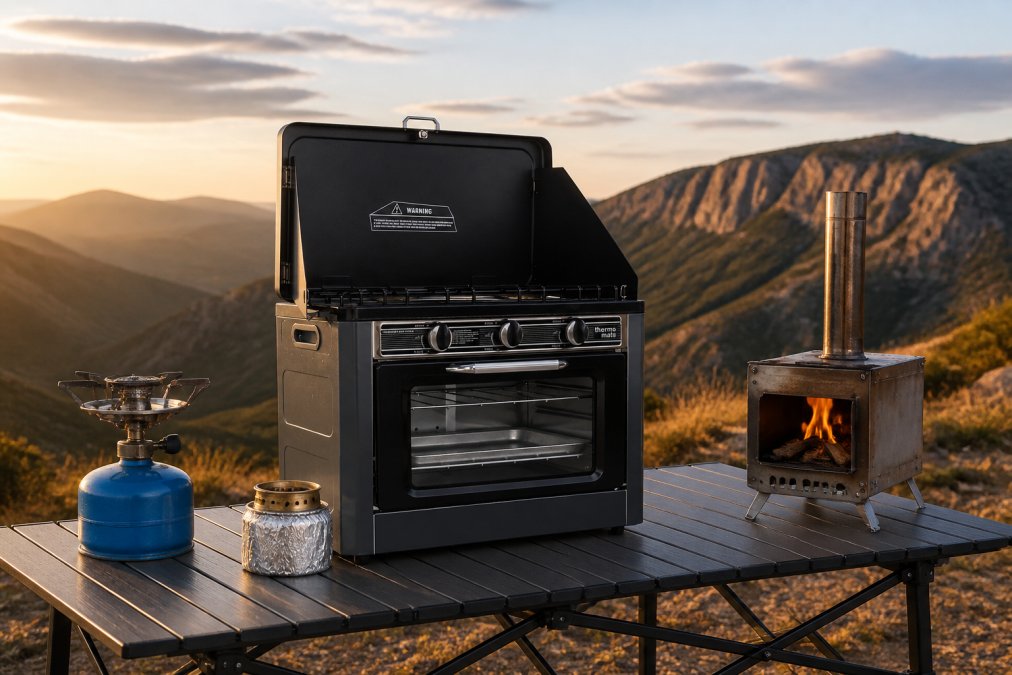
Canister Stoves
A canister stove screws directly onto a pressurised fuel cartridge with a burner head that ignites instantly. Most weigh 50-150 grams, ideal for backpackers counting every gram. A single cartridge typically lasts 2-4 hours of cooking (peer-reviewed research).
The catch is fuel cost. Isobutane-propane blend cartridges cost more per litre than liquid fuels and can't be refilled. Wind resistance is poor with basic models, and budget versions often lack simmer control. Budget Roo Pty Ltd stocks reliable canister stove options, though the Thermomate portable camping stove systems offer superior stability and wind protection for basecamp cooking.

Liquid Fuel Stoves
Liquid fuel stoves (burning white gas, kerosene, or multi-fuel blends) are heavier at 200-400 grams but deliver consistent heat regardless of temperature and cost less per litre. Setup takes longer, you prime the stove by heating the fuel line to create pressure, but once running, they simmer better and handle wind effectively.
The real advantage emerges on long trips. A single fuel bottle costs half the price per hour of burn time compared to canisters, and you can carry as much fuel as your pack allows. Maintenance is higher; you'll need to clean the fuel jet regularly. For budget-conscious campers planning multiple trips per year, this trade-off favours liquid fuel.
Alcohol Stoves
Alcohol stoves represent the ultralight extreme of budget camping. A DIY version costs under $10 from two aluminium cans. Commercial ultralight models run $20-$50 and burn denatured alcohol, which is cheap and widely available.
The downside is real: alcohol produces less heat, so boil times are 8-12 minutes versus 4-6 minutes for other fuels. There's no ignition system; you light it with a match. Wind kills the flame instantly, requiring a windscreen. Simmer control is nearly impossible.
For ultralight backpacking where weight matters more than speed, alcohol stoves shine. For family camping or cooking multiple meals, they're frustratingly slow.
Wood-Burning Stoves
A wood-burning stove uses twigs and branches as fuel. Designs range from simple titanium boxes to steel models, weighing 200-600 grams and costing $30-$150. Fuel is free and abundant at most campsites, but wet wood won't burn, and fire management requires constant attention.
Wood stoves excel in established campsites where you're not moving daily and fire regulations allow open flames. They're poor for hiking and many wilderness areas ban them. For car camping with a group, they eliminate fuel costs entirely.
How to Choose a Budget Camping Stove
Choosing the right stove depends on three factors: how much weight you'll carry, how quickly you need to cook, and how much you'll use it annually.
Weight and Portability
If backpacking 10+ kilometres daily, weight dominates. Canister stoves at 50-150 grams plus fuel cartridge (200 grams) total under 400 grams. Alcohol stoves edge slightly lighter at 30-100 grams plus fuel.
For car camping or established campsites, weight becomes irrelevant. Many campers prefer heavier stoves because they're more stable and produce better results. Canister stoves pack compactly into any corner. Liquid fuel stoves require a separate fuel bottle and are bulkier. Alcohol stoves collapse flat and take almost no space.
Boil Time and Fuel Efficiency
Canister and liquid fuel stoves boil water in 4-6 minutes. Alcohol stoves take 10-15 minutes. Fuel efficiency reveals long-term costs: a canister cartridge costs $5-$8 and lasts 2-3 hours ($2-$4 per hour). Liquid fuel costs $1-$2 per hour. Alcohol costs $0.50-$1 per hour. Wood is free but requires time investment.
For occasional campers (5-10 trips yearly), fuel cost differences are minor. For regular campers (30+ trips), liquid fuel or alcohol stoves save money despite higher upfront costs. Budget Roo Pty Ltd's Thermomate camping oven systems offer excellent fuel efficiency for basecamp cooking where you're preparing multiple meals daily.
Stability and Wind Resistance
Canister stoves are inherently unstable; the burner sits above a narrow cartridge. You must use a wide, stable pot or add a pot support ring. Liquid fuel stoves are more stable because the fuel tank sits separately and the burner is lower.
Wind resistance matters in exposed campsites. Canister stoves offer almost none. Liquid fuel stoves handle wind better with a windscreen. Wood stoves are naturally sheltered by design. For beach camping or high-altitude trips, liquid fuel or wood stoves outperform canister options.
DIY Camping Stove Ideas
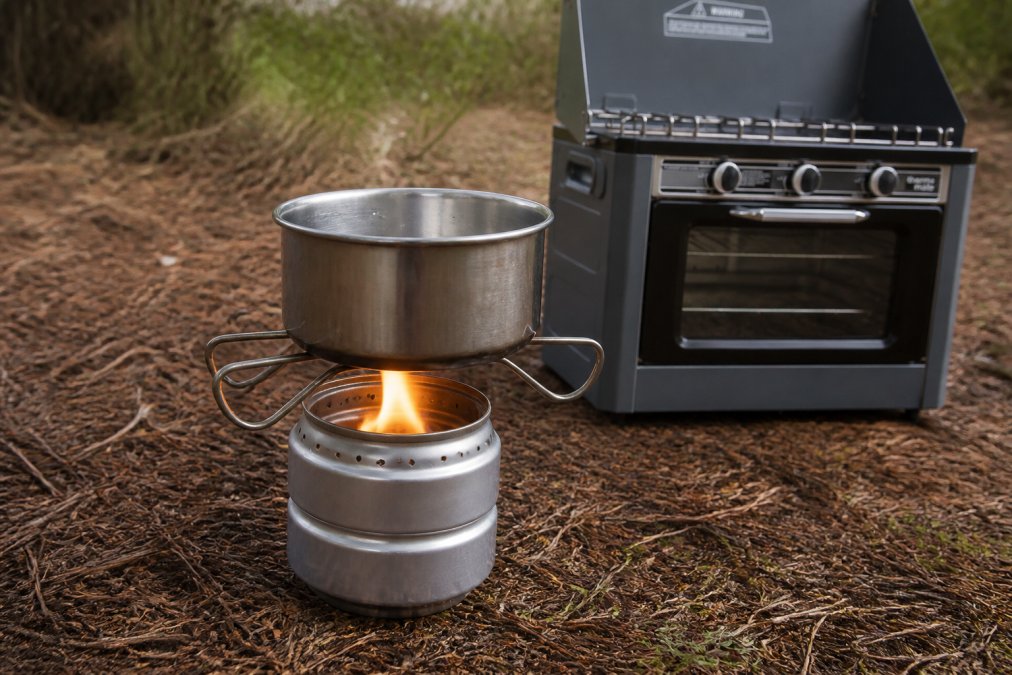
Building your own stove costs $5-$30 and teaches how stoves work. The most popular design is the alcohol stove: cut one aluminium can to create a fuel chamber, punch a ring of holes around the rim, invert a second can as a lid. Total cost: under $5. Total weight: 30 grams.
A cat-food-can stove offers slightly more durability and better heat output for under $10. For liquid fuel DIY stoves, complexity increases significantly and safety risks aren't worth the savings.
Windscreens and pot supports showcase DIY creativity. Make windscreens from aluminium foil or titanium sheet. Pot supports can be made from wire coat hangers. These additions cost nothing and take 10 minutes to fabricate.
How to Maintain a Camping Stove
Maintenance determines whether your stove lasts five trips or fifty.
Canister stoves are lowest-maintenance. After each use, wipe the burner head clean with a dry cloth. Check the cartridge connection for leaks by applying soapy water. Store cartridges in a cool place away from direct sunlight.
Liquid fuel stoves need regular attention. After every 5-10 uses, soak the fuel jet in white spirit or acetone to dissolve carbon buildup. Inspect the fuel line for cracks or leaks and replace every 2-3 years. Store with the fuel tank empty to prevent rust.
Alcohol stoves require almost no maintenance. Wipe the burner clean after each use and check for dents or damage. Store in a dry place.
Wood stoves need cleaning to remove ash and soot. After each use, brush out ash with a small brush. Inspect the grill for warping and check air vents for clogs. Apply a light coat of oil to prevent rust.
Safe Camping Stove Practices
Never use a camping stove indoors or in enclosed spaces like tents or caravans. All stoves produce carbon monoxide, which is odourless and deadly ([EXTERNAL_LINK: Centers for Disease Control and Prevention | cdc.gov]). Set up your stove on level ground away from tent fabric, dry grass, or anything flammable, with minimum one-metre clearance in all directions.
Never leave a burning stove unattended. Allow the stove to cool completely before packing it; wait at least 10 minutes after extinguishing.
For liquid fuel stoves, prime carefully and understand the process before your first trip. Keep a small water bottle or bucket nearby while cooking. Never use water on an alcohol stove fire; instead, use a metal lid or plate to smother the flame.
Inspect your stove before every trip for fuel leaks, loose connections, cracks, or damage.
Long-Term Cost of Ownership
A canister stove costs $30-$80 upfront. Fuel cartridges at $5-$8 each last 2-3 hours. For 20 camping trips yearly with 2 hours cooking per trip, you'll need 13-20 cartridges annually ($65-$160). Over five years: $355-$960 total.
A liquid fuel stove costs $60-$150 upfront. Fuel costs $1-$2 per hour. Same camping schedule yields $40-$80 annual fuel costs. Over five years with maintenance supplies: $280-$590 total.
An alcohol stove costs $20-$50 upfront. Methylated spirits cost $0.50-$1 per hour. Annual fuel costs are $20-$40. Over five years: $120-$250 total.
A wood stove costs $40-$150 upfront. Fuel is free. Over five years with minimal maintenance supplies: $60-$190 total.
Budget Roo Pty Ltd's Thermomate portable camping oven at $899.00 is designed for basecamp cooking where you're preparing multiple meals daily. The LPG fuel efficiency and dual-burner design mean lower per-meal costs for group camping compared to multiple individual stoves.
| Stove Type | Upfront Cost | Annual Fuel (20 trips/year) | 5-Year Total | Best For |
|---|---|---|---|---|
| Canister | $30-$80 | $65-$160 | $355-$960 | Casual backpackers |
| Liquid Fuel | $60-$150 | $40-$80 | $280-$590 | Regular campers |
| Alcohol | $20-$50 | $20-$40 | $120-$250 | Ultralight backpackers |
| Wood | $40-$150 | Free | $60-$190 | Car camping groups |
Selecting a budget camping stove comes down to matching your camping style to the stove's strengths. Canister stoves suit weekend backpackers who value simplicity. Liquid fuel stoves reward regular campers with lower long-term costs and better cooking control. Alcohol stoves appeal to ultralight enthusiasts willing to trade speed for weight savings. Wood stoves transform car camping into a fuel-free experience when conditions allow.
The best budget camping stove isn't the cheapest one you can buy, it's the one you'll actually use without frustration. Test different options on short trips before committing to regular camping. At Budget Roo Pty Ltd, we understand that outdoor cooking should be reliable and affordable. Explore our range of camping stoves and cooking systems designed to keep your meals simple and your costs low, whether you're hiking solo or cooking for a group at basecamp. Shop Now
Frequently Asked Questions
What is the cheapest way to cook while camping?
Alcohol stoves offer the lowest upfront cost, often under AUD 20 for a basic DIY version made from recycled materials. Spirit burners are equally affordable and use denatured alcohol, which is inexpensive and widely available. Canister stoves cost slightly more (AUD 30-80) but offer better simmer control and faster boil times. Over time, fuel costs vary: alcohol and spirit fuel are cheapest per litre, whilst isobutane canisters cost more per unit. For families or basecamp cooking, a portable camping oven like the Thermomate (AUD 899) spreads the cost across multiple meals and offers oven capabilities unavailable in lightweight stoves.
What are the best budget alternatives to gas canister stoves?
Alcohol stoves and spirit burners are the primary budget alternatives to isobutane canister stoves. Alcohol stoves offer no ignition system to fail, weigh less than 100 grams, and cost AUD 15-40 for quality models. Liquid fuel stoves (white gas) are heavier but more fuel-efficient and perform better in cold conditions. Wood-burning stoves require no fuel purchase but demand more setup time and produce more ash. Charcoal grills like the Grillz foldable option (AUD 67.95) suit group camping and cooking variety, though they're heavier and take longer to heat. DIY canister stove modifications using pot supports and windscreens can improve performance without upgrading.
How do I know which budget camping stove will actually work for my trip?
Match the stove to your trip duration, group size, and cooking style. Solo backpackers prioritise weight and packability: canister or alcohol stoves weigh under 500 grams and boil 1 litre in 4-6 minutes. Small groups (2-4 people) benefit from liquid fuel stoves, which offer better simmer control and handle cold conditions. Basecamp trips with families suit portable camping ovens or charcoal grills, which enable varied cooking (frying, baking, grilling). Check fuel availability at your destination: canister fuel is available at most outdoor retailers, whilst white gas is less common and alcohol requires hardware stores. Test your chosen stove at home first to understand ignition, heat adjustment, and fuel consumption before relying on it in the field.
Are DIY camping stoves safe to use in national parks?
DIY alcohol stoves are generally permitted in national parks across Australia, but regulations vary by location and fire danger season. Check your specific park's fire restrictions before travel, as some parks ban all open flames during high-risk periods regardless of stove type. Alcohol stoves produce a clean, flameless burn (blue flame) that many parks accept where canister stoves are prohibited. Never use homemade stoves in areas with active fire bans. Wood-burning stoves are typically banned except in designated fire rings. Portable camping ovens and canister stoves are usually allowed in low-risk seasons. Always carry proof that your stove complies with park rules, and inform rangers of your setup. When in doubt, contact the park authority before your trip.
This article was written using GrandRanker