

Table of Contents
- Why Even Cooking Outdoors Is Harder Than It Looks
- What You'll Need Before You Start
- How to Manage Campfire Heat Zones for Even Results
- Outdoor Cooking Temperature Control Tips That Actually Work
- Maintaining Consistent Heat in Windy Conditions
- Meal Preparation and Planning for Outdoor Cooking Success
- Cleaning, Maintenance, and Fire Safety After Cooking
- Conclusion
Last Updated: August 21, 2026
Why Even Cooking Outdoors Is Harder Than It Looks
Cooking outdoors evenly is genuinely tricky because outdoor cooking strips away every convenience your kitchen relies on. No thermostat, no enclosed oven, no stable burner. Instead, you're working with variable fuel, shifting wind, ambient temperature swings, and a cooking surface that behaves differently every session.
Most guides treat outdoor cooking as a simplified version of indoor cooking. It isn't. It's a different discipline entirely, where understanding heat behaviour matters more than following a recipe. Master heat zone management, fuel selection, thermal mass, and wind mitigation, and you'll cook consistently regardless of conditions.
What You'll Need Before You Start
Getting your gear right before the fire is lit saves more frustration than any in-the-moment adjustment can fix.
Essential Cookware and Equipment
Cast iron is the single most important material for cooking outdoors evenly. It holds heat exceptionally well, distributes it across the cooking surface, and recovers quickly when cold food hits the pan. The Pre Seasoned Cast Iron Skillet Fry Pan Set 3 Pcs from Budget Roo covers three sizes at $103.95, giving you the flexibility to match pan size to portion size.

Beyond cast iron, pack long-handled tongs and spatula, a probe thermometer (the only reliable way to check internal food temperature), a grill grate with adjustable height, a lid or foil for trapping heat, and oven mitts rated for high temperatures.
Fuel Selection: Charcoal Briquettes, Lump Charcoal, LPG, and Firewood
Each fuel type produces a different heat profile, and choosing the wrong one for your cooking style leads to uneven results.
Charcoal briquettes burn at a consistent, moderate temperature for a long time, making them excellent for slow roasting and indirect heat cooking. Lump charcoal burns hotter and faster with fewer additives, better for searing but requiring more active management. LPG (liquid petroleum gas) via a propane cooktop gives you the most controllable heat. The Thermomate 2 Burner Portable Camping Oven LPG Gas Stove at $899.00 delivers consistent, adjustable heat across two burners. Firewood is the most variable fuel; heat output depends on wood species, moisture content, and fire structure. Always use dry, seasoned hardwoods like ironbark and red gum.

| Fuel Type | Heat Consistency | Best For | Heat Control |
|---|---|---|---|
| Charcoal briquettes | High | Slow roast, indirect heat | Moderate |
| Lump charcoal | Moderate | Sear, high-heat grilling | Active management needed |
| LPG / propane cooktop | Very high | All cooking styles | Precise |
| Firewood | Low | Campfire cooking, dutch oven | Skill-dependent |
How to Manage Campfire Heat Zones for Even Results
Heat zone management is the single technique that separates consistently good outdoor cooking from the frustrating kind. Never cook everything over the same flame.
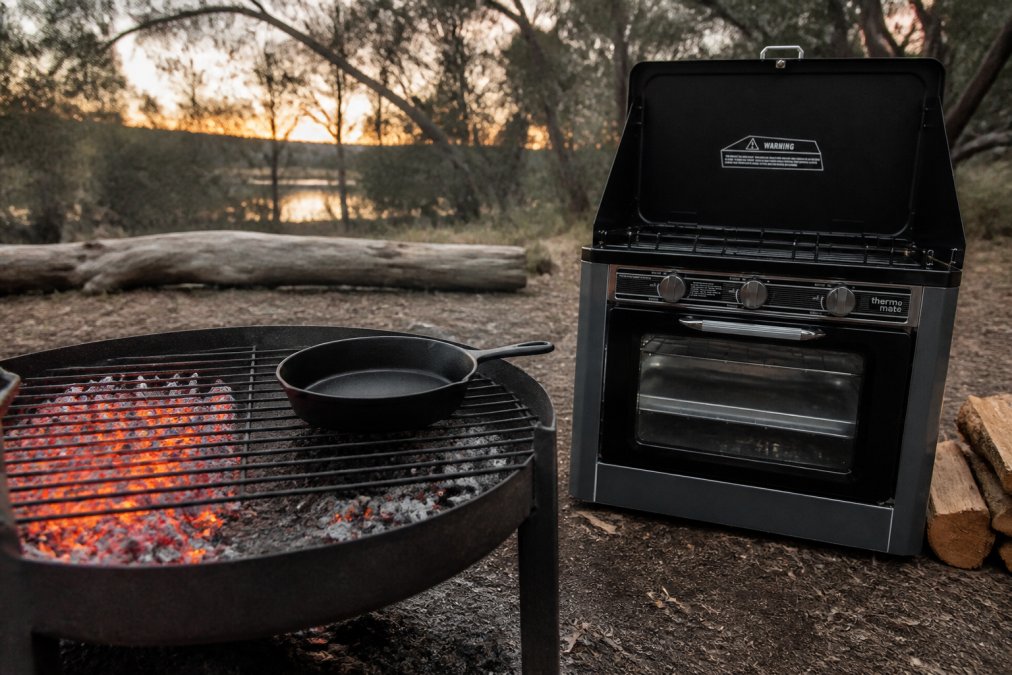
Setting Up Direct and Indirect Heat Zones
Direct heat is the zone directly above your heat source, used for searing and quick cooking. Indirect heat is the zone beside or away from the heat source, used for thicker cuts and anything needing time to cook through without burning the exterior.
To set up heat zones with charcoal:
- Light your charcoal in a chimney starter until fully ashed over (around 15-20 minutes)
- Pour the lit coals to one side of the firebox, leaving the other side empty
- Place your grill grate over both zones
- Sear proteins on the direct side, then move them to the indirect side to finish cooking through
For firewood, push burning logs to one side and let a bed of coals form on the other. Cooking over coals gives far more even heat distribution than cooking directly over flame.
Troubleshooting Hot Spots and Uneven Cooking
Hot spots are areas on your cooking surface that run significantly hotter than surrounding areas. To identify them before cooking, place pieces of white bread across your grill grate and watch which ones brown first.
Common fixes include redistributing fuel to balance heat, rotating food regularly, adjusting grill height to reduce intensity, or using a cast iron plate as a thermal buffer. On an LPG stove, uneven cooking often traces back to a partially blocked burner jet; clean jets with a fine needle before each trip.
Outdoor Cooking Temperature Control Tips That Actually Work
Most outdoor cooking problems are temperature problems. The tips that actually make a difference come down to preheating and thermal mass.
Preheating and Thermal Mass: The Physics Behind Even Cooking
Thermal mass is the capacity of a material to absorb and hold heat. Cast iron has high thermal mass and produces even browning; thin stainless steel has low thermal mass and produces hot spots.
Before placing any food on your cooking surface, preheat it properly:
- Place your cast iron over the heat source
- Wait until the pan is uniformly hot across the entire surface (3-5 minutes for cast iron over medium heat) (peer-reviewed research)
- Test by flicking a few drops of water onto the surface. They should bead and evaporate immediately
- Add oil, then food
Skipping preheating is the most common cause of food sticking and uneven searing. According to food science guidance from CSIRO, heat transfer into food depends on both the temperature differential and contact quality between the food surface and the cooking material.
Using a Dutch Oven for Consistent Heat Retention
A dutch oven is a thick-walled, lidded cast iron pot that creates a self-contained cooking environment. It's the most effective tool for achieving even cooking over an open fire because it traps heat and moisture, creating consistent internal temperature even as the fire fluctuates outside.
To use a dutch oven for even cooking over coals:
- Preheat the dutch oven with the lid on for 10 minutes before adding food
- Place a bed of coals underneath the dutch oven
- Add coals to the lid as well (roughly twice as many on the lid as underneath for even top-and-bottom heat)
- Avoid lifting the lid unnecessarily
- Rotate the dutch oven 90 degrees every 15-20 minutes to avoid hot spots
Maintaining Consistent Heat in Windy Conditions
Wind is the most underestimated factor in outdoor cooking. Even a moderate breeze dramatically affects fuel consumption, heat distribution, and cooking time.
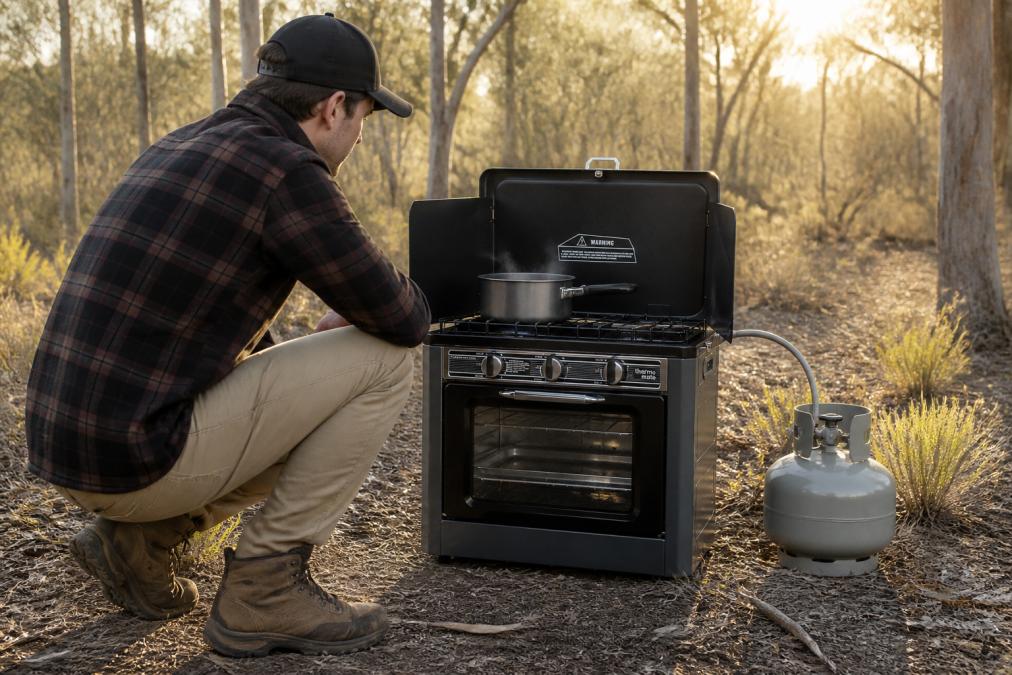
Wind accelerates combustion on the windward side of your fire or burner, creating asymmetric heat. Food on the windward side overcooks while the leeward side barely colours.
Practical solutions include using a windshield positioned on the side the wind comes from (not around the entire stove, which traps heat), orienting your setup so wind runs parallel to your cooking surface, lowering your grill grate closer to the heat source, and increasing fuel slightly to maintain cooking temperature. For charcoal cooking in wind, partially close the ventilation vents on your firebox to slow airflow and reduce asymmetric heat.
Meal Preparation and Planning for Outdoor Cooking Success
The biggest mistake in outdoor meal prep is treating it like indoor meal prep. Outdoors, you have limited heat sources, no reheating options, and a group of hungry people.
Meal planning starts before you leave. Group foods by cooking method and time: fast-cooking items (thin sausages, eggs, vegetables) for direct heat; medium items (chicken thighs, fish fillets, burgers) for direct sear and indirect finish; slow items (whole cuts, stews, damper) for indirect heat or dutch oven.
Prep ingredients at home: pre-marinate proteins, pre-chop vegetables, pre-mix dry ingredients. Sequence your cooking by starting with the longest-cooking items first, moving them to indirect heat while you sear faster-cooking items on direct heat. This way, everything finishes close to the same time.
| Cooking Stage | Action | Timing |
|---|---|---|
| Fire/fuel prep | Light coals, set up zones | 20-30 min before cooking |
| Slow items | Dutch oven or indirect heat | 45-90 min |
| Medium items | Direct sear, indirect finish | 15-25 min |
| Fast items | Direct heat | 5-10 min |
| Rest time | Off heat, foil-tented | 5 min before serving |
Cleaning, Maintenance, and Fire Safety After Cooking
Proper post-cooking care directly affects how well your equipment performs next time, and poor fire management after cooking is a genuine safety risk.
Cleaning cast iron and dutch ovens: Never use soap on seasoned cast iron. Instead, scrub with a stiff brush and hot water while warm, dry thoroughly over residual heat, apply a thin layer of cooking oil while still warm, and store in a dry location. For the Grillz Foldable Charcoal BBQ Grill, rinse the grate after each use and dry completely before folding.

Fire safety after cooking: Extinguishing your campfire properly is a legal requirement in many situations. Allow fuel to burn down to ash, pour water over the coals slowly while stirring, continue until no steam or smoke rises, and check temperature with the back of your hand held 30cm above. Never bury coals. According to fire safety guidelines from the NSW Rural Fire Service, a campfire that appears extinguished can reignite hours later if not properly doused.
Equipment calibration for next time: After each trip, note what worked and what didn't. A quick log of fuel quantity, cooking times, and any hot spot issues gives you a practical reference for your next outing.
Tips for cooking outdoors evenly come down to preparation, heat management, and the right equipment for the job. Budget Roo stocks the cookware and camping stoves that make even cooking achievable, from the pre-seasoned cast iron skillet set to the Thermomate LPG camping stove with dual burner control. Shop the full range at Budget Roo and cook better on your next trip out.
Frequently Asked Questions
How do I maintain consistent heat when cooking over a campfire?
Build your fire well before cooking and let it burn down to glowing coals rather than cooking over open flame. Coals produce steady, radiant heat without flare-ups. Arrange them into two zones: a thick coal bed for direct heat and a thinner layer for indirect heat. Rotate food between zones as needed, and add fresh coals from the edge of your fire to maintain temperature without smothering the existing bed. Cast iron cookware helps retain heat between adjustments.
What is the best way to arrange coals for even cooking outdoors?
For cooking outdoors evenly, use a two-zone coal arrangement. Pile charcoal briquettes or lump charcoal deeper on one side of your firebox or grill to create a hot direct-heat zone for searing, and spread a single layer on the other side for slower indirect heat. This setup lets you sear meat over direct heat, then move it to the indirect side to finish cooking through without burning the outside. Avoid mounding coals in the centre, which creates unpredictable hot spots.
How does wind affect even heat distribution in outdoor cooking?
Wind disrupts airflow management around your cooking surface, pulling heat away from one side and creating uneven temperature across the grill grate or burner. On a gas stove, wind can blow out individual burners or cause one side to run hotter than the other. On a campfire, wind accelerates combustion on the windward side, producing hot spots. Position your setup behind a natural windbreak, use a purpose-built windshield, and rotate your cookware regularly to compensate for directional heat loss.
How can I prevent hot spots on my portable camping stove?
Hot spots on a portable camping stove usually come from uneven burner output or cookware that doesn't sit flat on the grate. Preheat your pan for two to three minutes before adding food so heat spreads across the cooking surface. Use cast iron or thick-based stainless steel cookware, which distributes heat more evenly than thin aluminium. If one burner runs hotter, adjust its valve slightly and rotate your pan a quarter turn every few minutes. A two-burner unit like the Thermomate camping oven stove gives you more control over heat distribution.
This article was written using GrandRanker