

Table of Contents
- Why Heated Motorcycle Gear Makes Winter Riding Practical
- 12V Power Supply vs Battery-Operated Heated Gear
- Best Heated Motorcycle Gloves for Cold Weather Riding
- How to Stay Warm on a Motorcycle in Winter
- Installation and Wiring Heated Gear Safely
- Choosing the Right Size and Fit for Heated Apparel
- Conclusion
Last Updated: August 25, 2026
Why Heated Motorcycle Gear Makes Winter Riding Practical
Heated motorcycle gear transforms winter riding from an endurance test into a comfortable commute. When temperatures drop, most riders face a choice: layer up with bulky clothing that restricts movement, or stay home. Heated apparel solves this by delivering warmth directly to your core and extremities without the bulk. At Budget Roo Pty Ltd, the right heated gear can extend the riding season by months, turning what would otherwise be off-season months into usable riding time.
The practical benefit is immediate. A rider wearing heated gloves maintains dexterity and grip strength that unheated gloves simply cannot match when temperatures fall below freezing. Your hands stay warm enough to operate brake levers and throttle smoothly, which directly impacts safety. Similarly, a heated jacket prevents the fatigue that comes from shivering, your body isn't burning energy fighting the cold, so you arrive at your destination less exhausted.
Beyond comfort, heated motorcycle gear addresses a real safety gap. Cold muscles respond more slowly. Cold hands lose sensitivity. A rider wearing proper heated apparel stays alert and responsive, which matters most when conditions are worst. This is why many serious commuters and touring riders have switched to heated systems rather than accepting seasonal downtime.
12V Power Supply vs Battery-Operated Heated Gear
The power source you choose determines how your heated motorcycle gear performs and how much installation work you'll face. Understanding the difference between 12V direct-to-battery systems and portable battery-operated gear is essential before buying.
12V Power Supply Systems draw power directly from your motorcycle's electrical system. These systems connect to your bike's battery through a dedicated circuit, typically with a fused connection to protect your motorcycle's wiring. Once installed, they're permanent, you don't need to charge anything or swap batteries. The heating elements receive consistent power whenever the bike is running, and most 12V systems include a controller that lets you adjust heat levels on the fly.
The main advantage is reliability. Your motorcycle's battery is always available, and the electrical load is manageable on any modern bike. Installation requires running wiring through your fairings or under seat panels, which takes time but is a one-time effort. Once done, you forget about it. The downside is that installation demands basic electrical knowledge or a mechanic's help, routing wires safely and ensuring proper fusing takes care.
Battery-Operated Heated Gear uses a portable lithium or rechargeable battery pack, usually worn in a pocket or attached to a belt. These systems are simpler to install, no permanent wiring required. You charge the battery at home, strap it on, and ride. When the battery depletes, you swap it for a charged one or head home to recharge. This flexibility appeals to casual riders who want heated gear without committing to permanent installation.
The trade-off is runtime. Most portable batteries last 4-8 hours depending on heat setting and battery capacity (peer-reviewed research). If your commute is short, this works fine. For longer rides or touring, you'll need multiple charged batteries or access to charging during the day. Portable systems also add weight and bulk, though modern packs are relatively compact.
For most riders, 12V direct-to-battery systems make more sense if you ride regularly in cold weather. The initial installation effort pays off through consistent performance and no battery management. Battery-operated gear suits occasional cold-weather riders or those who want to test heated gear before committing to installation.
Best Heated Motorcycle Gloves for Cold Weather Riding
Heated motorcycle gloves are often the first heated gear riders buy, and for good reason, cold hands are the quickest path to ending a ride early. Your hands are exposed to wind and cold air for the entire ride, and unheated gloves lose their insulation value once the temperature drops below a certain point.
Effective heated gloves combine heating elements in the palm and back of the hand with quality insulation around the wrist and fingers. The heating elements should cover the areas where you need it most: the thumb, index finger, and palm. Some gloves include heating elements in all five fingers, though this consumes more power and may be overkill for most riders.
Look for gloves with adjustable heat settings. A single heat level forces you to choose between too warm and too cold. Multiple settings let you dial in comfort based on outside temperature and wind speed. Three or four heat levels is the practical sweet spot, enough flexibility without overwhelming the control interface.
Material matters for durability and comfort. The outer shell should be windproof to prevent cold air from penetrating, and the inner lining should be breathable enough to avoid sweat buildup during longer rides. Leather or synthetic leather on the palm and fingers provides grip on the throttle and brake lever, while textile on the back of the hand allows better heat distribution from the heating elements.
Fit is critical with heated gloves. They need to be snug enough to keep your hands warm but not so tight that they restrict blood circulation, ironically, overly tight gloves can make your hands colder by cutting off blood flow. Try them on before buying, or check the return policy if ordering online. Your hands should feel secure on the controls with minimal extra fabric bunching at the wrists.
How to Stay Warm on a Motorcycle in Winter
Staying warm on a motorcycle in winter requires a layering strategy combined with heated gear. Most riders underestimate how much heat they lose through their extremities and core, even when wearing what feels like adequate clothing.
The foundation is a base layer that wicks moisture away from your skin. Cotton holds sweat and makes you colder; merino wool or synthetic base layers keep moisture off your skin. Over that, add an insulating mid-layer, fleece or wool works well, followed by a windproof outer layer. This combination traps warm air close to your body while blocking wind penetration.
Heated motorcycle gear fits into this layering system as an active heat source. A heated jacket or vest goes over your base and mid-layers, adding warmth without adding bulk. The heating elements warm your core, which your body then distributes to your extremities. Pair a heated jacket with heated gloves, and you've covered the two areas where riders lose the most heat.

Wind speed matters more than ambient temperature. A 5-degree morning at 60 kilometres per hour feels colder than a 0-degree morning at 20 kilometres per hour because wind strips away the insulating air layer around your body. Heated gear compensates for this wind chill effect by actively warming your skin, which is why even casual winter riders notice an immediate difference.
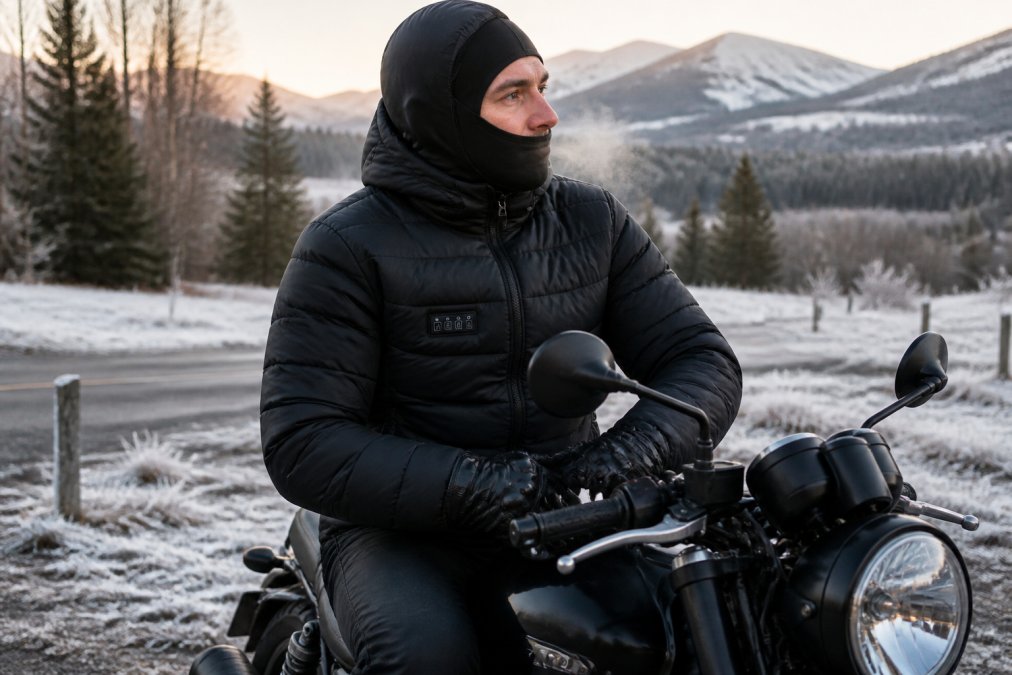
Don't neglect your legs and feet. Many riders focus on upper body warmth and forget that cold legs sap energy and distract you from riding. Heated motorcycle pants or chaps combined with insulated boots keep your lower body comfortable. If you can't afford a full heated system, prioritise your core and hands first, those are where cold affects riding safety most.
Take breaks on longer rides. Even with heated gear, sitting still while cold air flows over you will eventually chill you down. A 10-minute stop in a café or service station lets your body recover, and you'll ride more comfortably for the next leg of your journey.
Installation and Wiring Heated Gear Safely
Installing a 12V heated motorcycle gear system requires careful attention to electrical safety. A poorly installed system can damage your motorcycle's electrical system, create fire hazards, or leave you stranded if the wiring fails.
Start by understanding your motorcycle's electrical capacity. Most modern motorcycles have a 12V battery with 200-400 amps of capacity (sae.org). Check your bike's manual for the exact specifications. Heated gear typically draws 5-15 amps depending on the number of heating elements and heat setting (peer-reviewed research). This is manageable on any modern bike, but you need to ensure your alternator can supply this extra load without draining the battery.
The safe way to connect heated gear is through a dedicated circuit with its own fuse. Never tap directly into an existing circuit, heated gear needs its own protected line. Run the positive wire from the battery through an appropriately sized fuse (usually 15-20 amps for heated gear) to a switch, then to the heated gear connector. Run the negative wire directly to a clean ground point on the frame or engine.
Routing the wiring requires removing fairings or seat panels to access the space under your bike's bodywork. This varies dramatically between motorcycle models. Some bikes have easily accessible routing paths; others require removing multiple components. If you're not comfortable with this level of disassembly, a motorcycle electrician can do it correctly in 1-2 hours.
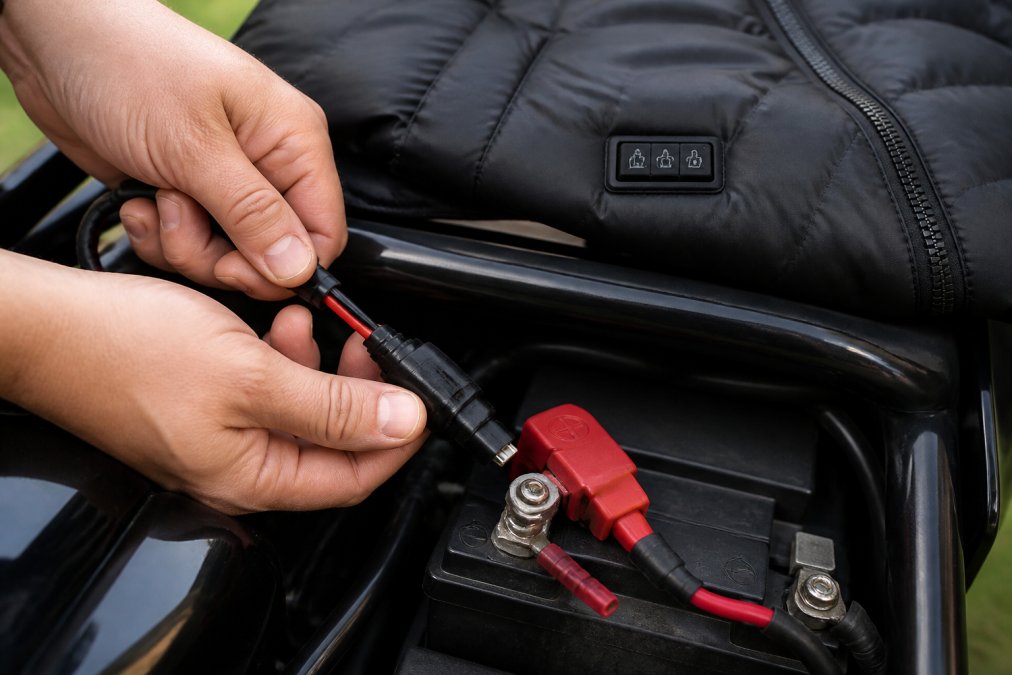
Use quality connectors designed for automotive or motorcycle use. Cheap connectors corrode and create resistance, which generates heat and can cause fires. Quick-disconnect connectors make sense if you plan to remove your heated gear occasionally, they let you unplug from the main circuit without disturbing the permanent wiring.
Waterproofing is essential. Any exposed connections or wire splices should be sealed with heat shrink tubing and marine-grade silicone sealant. Moisture corrodes connections and creates electrical faults. Test your installation before riding in wet conditions by checking that all connections are secure and there are no loose wires.
Once installed, inspect your wiring regularly. Look for fraying, corrosion, or loose connections every few weeks. Test the system before each cold-weather ride to confirm all heating elements activate and respond to the controller. A small preventative check takes five minutes and can prevent a breakdown mid-ride.
Choosing the Right Size and Fit for Heated Apparel
Heated motorcycle gear must fit correctly to work effectively and stay comfortable. Sizing mistakes are one of the most common reasons riders return or stop using heated apparel.
Heated jackets should fit snugly enough that you feel the heating elements against your skin but not so tight that they restrict arm movement or cut off blood circulation. A jacket that's too loose creates air gaps where cold air circulates, defeating the purpose of the heating elements. A jacket that's too tight becomes uncomfortable after an hour of riding and can reduce blood flow, which ironically makes you colder.
Measure your chest, waist, and sleeve length according to the brand's sizing chart. Different manufacturers size differently, a medium from one brand might be a large from another. Always check the specific sizing guide rather than assuming standard sizes. Most online retailers have generous return policies for heated gear, so ordering multiple sizes to try on is reasonable if you're buying online.
Heated gloves are particularly sensitive to fit. Gloves that are too large bunch at the wrists and create pressure points. Gloves that are too small restrict blood flow and make your hands colder. The fit should feel like a firm handshake, snug but not squeezing. Make sure your fingers reach to the end of each glove compartment without curling or extending.
Layering affects fit. If you plan to wear a heated jacket over thick mid-layers, size up slightly to accommodate the extra bulk. A jacket that fits perfectly over a thin base layer might be uncomfortably tight over a fleece mid-layer. Consider your typical winter layering when choosing your size.
Check the placement of heating elements relative to your body. Heating pads should align with your core, shoulders, and hands, the areas where cold affects you most. A jacket where the heating elements sit too high or too low won't warm you effectively. Try the gear on if possible, or check customer reviews that mention element placement.
Conclusion
Winter riding doesn't have to mean months of discomfort or seasonal downtime. Heated motorcycle gear delivers practical warmth that keeps you safe and extends your riding season significantly. Whether you choose a 12V direct-to-battery system or portable battery-operated gear, the key is matching the system to your riding style and ensuring proper installation for safety and reliability.
Budget Roo Pty Ltd's 21 Areas Electric Winter Heated Jacket offers comprehensive coverage with smart heating technology at an accessible price point. The jacket delivers warmth across your core and shoulders while maintaining the flexibility you need for precise throttle and brake control. With multiple heat settings and durable textile construction, it's built for serious winter commuting.
Start with heated gloves and a heated jacket, these two items make the biggest difference in cold-weather comfort and safety. Once you experience how much more enjoyable winter riding becomes with proper heated gear, you'll wonder how you ever managed without it. Shop Now at Budget Roo Pty Ltd and ride comfortably through the coldest months.
Frequently Asked Questions
Q: Is heated motorcycle gear worth the investment?
A: Yes, heated motorcycle gear extends your riding season by months and improves safety by reducing fatigue from shivering and cold-related distraction. A quality heated jacket like the 21 Areas Electric Winter Heated Jacket (AUD $79.95) can be a valuable investment. Battery runtime typically lasts 4-8 hours, making it practical for commutes and weekend tours.
Q: What's the difference between 12V and battery-powered heated gloves?
A: 12V systems draw power directly from your motorcycle's electrical system, offering unlimited runtime but requiring installation. Battery-operated heated gloves provide portability and simple plug-and-play setup but need recharging every 4-8 hours. Choose 12V for daily commuting and long tours; battery-powered suits casual riders and those without permanent wiring.
Q: How do I safely connect heated gear to my motorcycle battery?
A: Always use a dedicated circuit with an appropriately rated fuse (typically 15-20 amps for heated gear). Connect the positive wire to the battery's positive terminal through the fuse, and ground the negative wire directly to the frame. If unsure, consult a mechanic or electrician familiar with motorcycle wiring.
Q: Can I wash heated motorcycle gear?
A: Most heated jackets and gloves are machine-washable on gentle cycles, but always remove the heat controller and disconnect wiring first. Check the garment's care label for temperature limits. Air-dry completely before reconnecting electrical components.
This article was written using GrandRanker