

Table of Contents
- Why Warm Motorcycle Commuting Demands a Different Strategy Than Touring
- Build Your Layering System: Base, Mid, and Outer Layers
- Best Insulated Jackets for Winter Motorcycle Commuting
- Heated Motorcycle Gear Australia: What to Buy and How to Manage Battery Life
- Protecting Your Extremities: Hands, Feet, Neck and Face
- How to Prevent Visor Fogging on Your Cold-Weather Commute
- Budget-Friendly DIY Hacks for Warm Motorcycle Commuting
- Conclusion
Last Updated: August 20, 2026
Why Warm Motorcycle Commuting Demands a Different Strategy Than Touring
Cold weather commuting is fundamentally different from weekend touring. On a tour, you can stop when cold and wait for warmth. On a commute, you're locked into a schedule, riding before dawn, stopping and starting in traffic, then walking into an office looking presentable.
The stop-and-go pattern is the real enemy. You heat up at traffic lights, then get blasted cold accelerating onto the highway. A touring gear setup won't work, commuters need gear that's easy to remove at the destination, manages moisture during stop-and-go riding, and doesn't look absurd in a meeting.
According to Motorcycle Council of NSW road safety resources, rider exposure to the elements is a significant factor in fatigue and reduced concentration, making thermal management a genuine safety issue.
Build Your Layering System: Base, Mid, and Outer Layers
The three-layer system is the foundation of effective warm motorcycle commuting. Each layer has a specific job.
Step 1: Choose a Moisture-Wicking Base Layer
The base layer's sole purpose is moisture-wicking: pulling sweat away from your skin so you don't get chilled when you stop moving.
Merino wool is the gold standard. It regulates core temperature naturally and resists odour better than synthetics. Synthetic polyester blends designed for moisture management are a solid budget alternative. Avoid cotton entirely, it absorbs moisture and accelerates heat loss.
For commuting, look for a base layer with a crew neck or zip neck that seals against your balaclava.
Step 2: Add Thermal Insulation With a Mid-Layer
The mid-layer traps warm air close to your body. Fleece is the most practical option for commuters because it compresses well, dries quickly, and provides genuine insulation without bulk. Down loses nearly all insulating ability when wet.
For commuters, the mid-layer must be easy to remove. A zip-through fleece you can stow in a bag at the office is far more practical than a pullover.
Step 3: Seal It With a Windproof, Waterproof Outer Shell
The outer layer blocks wind and keeps rain out. Wind chill is the primary driver of heat loss on a motorcycle. Look for a jacket with a waterproof membrane like Gore-Tex. Seam sealing matters too, unsealed seams let water wick through stitching during rain. For commuting, breathability is equally important to prevent moisture buildup inside.
Best Insulated Jackets for Winter Motorcycle Commuting
The best insulated jackets balance thermal protection with practical wearability. Prioritise articulated joints, a jacket cut for standing will bind at the shoulders and elbows in a riding position. Articulated construction follows the natural riding posture.
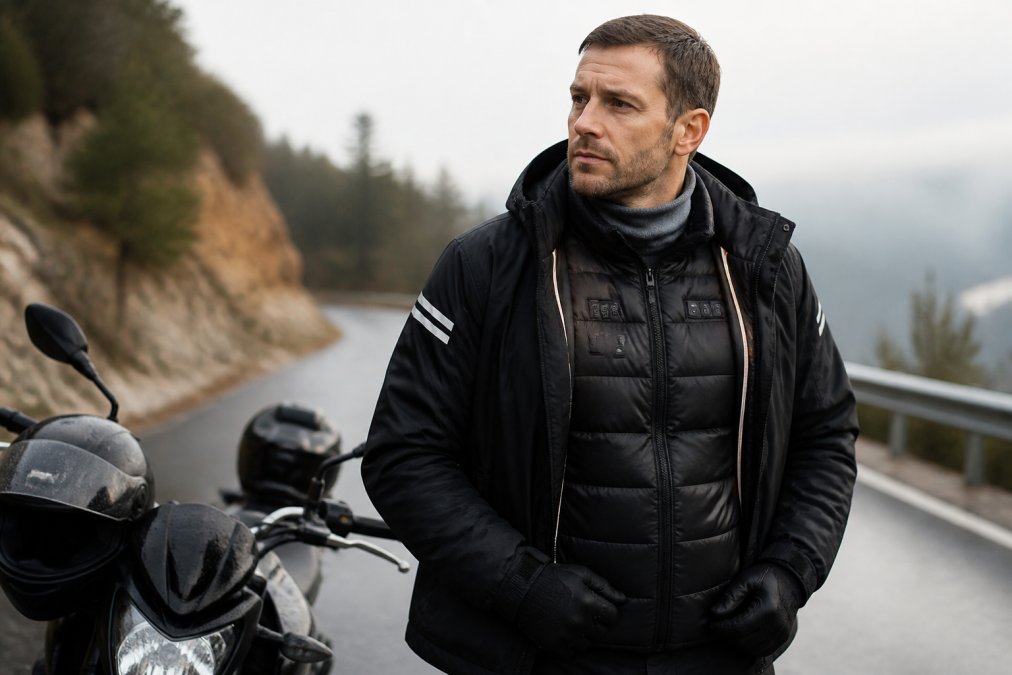
For riders wanting a practical, affordable option, the Budget Roo Heated Jacket (available for both men and women at $79.95) covers 21 heating areas via USB power. It functions as a heated vest or thermal coat, and the USB connection means it can be powered from a battery pack or a bike's USB output. Shop the Budget Roo Heated Jacket here: Budget Roo USB Heated Jacket.

| Feature | What to Look For | Why It Matters |
|---|---|---|
| Thermal insulation | Fleece or synthetic fill | Traps body heat at low speeds |
| Windproof outer | Windproof membrane or shell | Blocks wind chill on open roads |
| Waterproof rating | Sealed seams, waterproof membrane | Keeps moisture out in rain |
| Articulated fit | Pre-curved sleeves, riding cut | Comfort and mobility on the bike |
| Heated option | Battery-powered or USB heating | Consistent warmth regardless of speed |
| Visibility | Reflective panels or piping | Critical for pre-dawn commutes |
Heated Motorcycle Gear Australia: What to Buy and How to Manage Battery Life
Heated motorcycle gear generates warmth that passive insulation cannot match on very cold mornings. For commuters, battery-powered options are more practical than 12V wired systems. You're not on the bike long enough to need continuous power, and you can wear the garment into the office without trailing wires.
According to Safe Work Australia guidance on cold environment hazards, prolonged exposure to cold environments can contribute to hypothermia and impaired decision-making. Heated gear reduces that risk for riders commuting in sub-10°C conditions. motorway breakdown safety.
Battery Management for Short Commutes
Battery-powered heated gear draws a meaningful electrical load. On a 20-minute commute, a jacket running on high heat will consume a significant portion of its battery.
Practical battery management for commuters:
- Charge the battery overnight, every night. Don't rely on office USB ports, they don't deliver enough current to fully charge in a standard workday.
- Start on high heat for the first five minutes, then drop to medium. You'll extend battery life without sacrificing warmth.
- Use a power bank with pass-through charging if your jacket supports it, giving you unlimited heat on longer commutes.
- Check the battery level before every ride.
- In mild conditions, use low or off, preserving battery for the coldest days.
Protecting Your Extremities: Hands, Feet, Neck and Face
Cold hands and feet degrade your control and concentration faster than almost anything else. Hypothermia typically begins at the extremities as the body prioritises core temperature.
Handlebar Muffs vs. Heated Gloves
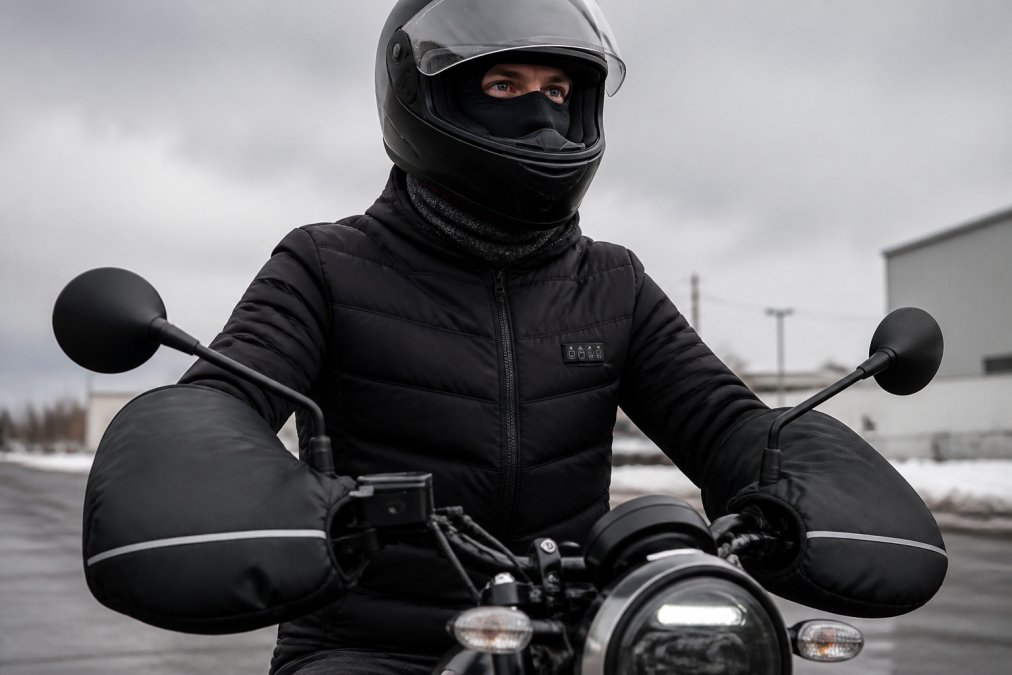
Handlebar muffs are the most underrated piece of cold-weather gear. They enclose your hands, creating a pocket of still air that dramatically reduces wind chill. Even a thin glove provides adequate warmth inside a muff.
For commuters, handlebar muffs require no batteries, no charging, and no wiring. They work immediately, every time. The trade-off is bulk and slight hand movement restriction.
Heated gloves solve the aesthetics problem and provide consistent warmth in very cold conditions. Battery-powered heating elements in the fingers and back of the hand work best. The limitation is battery life: typically two to four hours on a single charge.
For most commuters, handlebar muffs with a mid-weight glove work for temperatures above 10°C, and heated gloves for anything colder.
Neck Gaiters, Balaclavas and Thermal Socks
The neck is a significant heat-loss point. Cold air funnels down the collar gap between helmet and jacket. A neck gaiter or balaclava seals that gap.
A balaclava covers the head, neck, and lower face. Look for thin merino wool or moisture-wicking synthetic that fits under a helmet without pressure. A neck gaiter is less comprehensive but easier to manage in stop-and-go traffic.
For feet, combine thermal socks and waterproof boots. Thermal socks insulate the foot; waterproof boots prevent moisture penetration. Wet feet lose heat rapidly. Look for boots with a waterproof membrane and ankle-high cut.
How to Prevent Visor Fogging on Your Cold-Weather Commute
Visor fogging is a safety issue that most guides treat as an afterthought. A fogged visor in stop-and-go traffic can reduce visibility to near zero in seconds.
Fogging occurs when warm, moist breath meets the cold visor surface and condenses. The fastest solution is an anti-fog insert (Pinlock or equivalent), a secondary lens that creates an insulating air gap preventing condensation. According to Motorcycle Safety Foundation rider resources, visor clarity is critical for hazard detection.
Practical steps to manage visor fogging:
- Fit an anti-fog insert compatible with your helmet model.
- Apply an anti-fog coating to the visor if an insert isn't available.
- Crack the visor slightly at low speeds to allow airflow.
- Use a balaclava covering the nose and mouth, directing breath downward.
- Keep the helmet's chin vent open when moving.
Budget-Friendly DIY Hacks for Warm Motorcycle Commuting
Not every cold-weather solution requires significant outlay.
Newspaper insulation. Folded newspaper between your jacket and mid-layer creates an effective insulation layer. It's bulky and not breathable, but for extreme cold on short commutes, it works.
Plastic bags over socks. A thin plastic bag over your thermal sock before your boot creates a vapour barrier that prevents moisture penetration and reduces wind chill. For a 20-minute commute, it's genuinely effective.
Chemical hand warmers in gloves. Single-use hand warmers generate heat for several hours. Placed in glove palms or boot toes, they add meaningful warmth at minimal cost.
Seal the gaps. Self-adhesive neoprene tape around cuffs and ankle openings seals gaps that let cold air channel to your skin.
Layer hoodies under your jacket. A quality hoodie adds genuine warmth under a motorcycle jacket without excessive bulk. The Budget Roo Going Camping Unisex Kangaroo Pocket Hoodie ($88.95) is made from premium materials and sits well under an outer shell. The kangaroo pocket stores hand warmers or a neck gaiter. For a budget-conscious commuter, a good hoodie as a mid-layer is practical and versatile.

| Hack | Cost | Effectiveness | Best For |
|---|---|---|---|
| Newspaper insulation | Free | Moderate | Extreme cold, short trips |
| Plastic bags over socks | Free | High for moisture | Wet, cold commutes |
| Chemical hand warmers | Low | High for extremities | Hands and feet |
| Neoprene gap sealing | Low | High | Wrist and ankle gaps |
| Hoodie mid-layer | Medium | High overall | Daily use, versatile |
Cold mornings and daily schedules don't mix well without proper gear. The right layering system, a reliable heated jacket, and smart accessories make the difference between dreading the ride and not noticing the cold. Budget Roo Pty Ltd stocks heated jackets, hoodies, and outdoor apparel for practical, everyday use. The Budget Roo USB Heated Jacket at $79.95 is a strong starting point for any commuter serious about staying warm this winter. Shop Now at budgetroo.com.au and get your cold-weather kit sorted before the temperature drops.
Frequently Asked Questions
What gear do I need for cold weather motorcycle commuting?
For cold weather motorcycle commuting you need a moisture-wicking base layer, a thermal insulating mid-layer, and a windproof, waterproof outer jacket. Add handlebar muffs or heated gloves, thermal socks, a neck gaiter or balaclava, and a helmet with an anti-fog insert or Pinlock visor. A USB-powered or battery-heated jacket dramatically improves core temperature retention on sub-10°C mornings without adding bulk that makes the ride uncomfortable.
How do heated motorcycle grips work, and are they worth it for a short commute?
Heated grips use electrical resistance coils built into the grip surface, drawing power from the bike's battery or a USB power bank. They raise grip temperature to a controllable level, reducing hand fatigue and numbness in cold conditions. For short commutes they are very effective because your hands are exposed to wind chill the entire ride. Pair them with handlebar muffs and you cut the electrical load needed, extending battery life or reducing drain on your bike's charging system.
How do I stop my helmet visor fogging up in winter?
Visor fogging happens when warm, moist breath hits a cold visor surface. The most reliable fix is a Pinlock anti-fog insert, a double-lens system that creates a thermal barrier. Leaving a small gap at the bottom of the visor also helps airflow break up condensation. Anti-fog sprays are a cheaper short-term option. For stop-and-go commuting, where fogging is worst, a Pinlock insert is the most consistent solution and fits most modern helmet shells.
Is it safe to ride a motorcycle in winter?
Riding in winter is safe when you prepare correctly. Wear high-visibility or reflective gear because daylight hours are shorter and overcast skies reduce how well other drivers see you. Check tyre pressure before each ride since cold air reduces pressure, affecting grip. Brake earlier than usual on wet or leaf-covered roads. Wearing properly insulated gear matters for safety too: cold hands and a stiff body slow your reaction time, so staying warm directly improves your control of the bike.
This article was written using GrandRanker