

Table of Contents
- What makes a portable hot water system work for camping
- Heating methods: Solar, gas, and electric options
- Best camping shower systems and what to expect
- Portable gas hot water systems: Performance and setup
- Camping shower water consumption and conservation
- Camping shower safety and ventilation essentials
- How to choose the right portable hot water system for your trip
- Frequently Asked Questions
Last Updated: October 10, 2026
What makes a portable hot water system work for camping
A portable hot water system is an outdoor heating device that supplies warm water for showers and washing without a fixed plumbing connection. These systems combine a heat source, water storage, and delivery mechanism into a compact, transportable unit. For camping and caravanning, they solve one of the biggest comfort gaps: the ability to enjoy a warm shower in remote locations.
The appeal is straightforward. Cold-weather camping loses its charm fast when you can't wash properly. A portable hot water system transforms a trip from uncomfortable to genuinely enjoyable. The key is matching the right heating method to your trip type, budget, and setup constraints.
At Budget Roo Pty Ltd, we understand that comfort and reliability matter equally when you're away from home. Our range of outdoor gear includes portable gas water heaters designed for exactly this purpose. Understanding these basics helps you avoid common mistakes before you invest.

Heating methods: Solar, gas, and electric options
Three main heating approaches dominate the portable hot water market, each with distinct trade-offs in performance, reliability, and suitability to Australian camping conditions.
Gas heating remains the most popular choice for serious campers. Propane or LPG systems heat water quickly and work reliably across seasons and altitudes. The Australian Standard for LPG appliances ensures safety compliance for portable gas units. Setup is straightforward: connect a portable gas bottle, ignite the burner, and hot water flows within minutes. The Devanti Portable Gas Water Heater heats up to 480 litres per hour at your preferred temperature, with a built-in processor limiting maximum temperature to 50°C for safety.

Performance in challenging conditions is where gas excels. Winter camping in southern regions or mountain trips favour gas heating because ignition and heat-up times remain predictable regardless of ambient temperature.
Solar systems suit longer trips in sunny regions but require patience and realistic expectations. Water heats passively inside dark bags or tanks exposed to sunlight. Performance varies dramatically by season, latitude, and cloud cover. On a clear summer day in northern regions, you'll have warm water (35-40°C) by mid-afternoon. In winter or overcast conditions, you may get only tepid water (20-25°C). At altitude or in southern regions, solar heating is significantly slower because UV intensity and ambient temperature both drop. Solar works best as a supplementary system for daytime washing or as a primary option only during extended summer trips in consistently sunny locations. Cold-weather camping or trips to Tasmania, Victoria, or southern New South Wales make solar unreliable as a standalone solution.
Electric systems need a reliable 12V or 240V power source, making them impractical for remote camping. They work well at caravan parks with mains power but add complexity, weight, and dependency on vehicle charging or site power. Most serious campers skip electric in favour of gas or solar. Electric heating is slowest in cold conditions because water temperature rise depends entirely on element wattage and available voltage; a weak 12V supply may take 30+ minutes to heat water to usable temperature.
For Australian camping conditions, gas heating delivers consistent results. Solar suits supplementary use or extended summer trips. Electric is best reserved for powered caravan parks.
Best camping shower systems and what to expect
A complete portable hot water system includes the heater unit, a shower head, connecting hoses, and a water supply method.
The Devanti Portable Gas Water Heater features a variable flow shower head designed to automatically ignite or turn off the burner by a simple on/off trigger. It also has a convenient LED display for temperature setting and a built-in processor that sets the maximum water temperature at 50℃ to prevent scalding.
Water flow rate typically ranges from 6 to 8 litres per minute. Higher flow feels better but drains your water supply faster. The Devanti system delivers 8 LPM.
Setup time matters on cold mornings. You'll need a water source (tank, creek, or tap) and a gas bottle. Mounting brackets secure the unit to your caravan or vehicle. Portable models come with handles for easy transport between locations.
Portable gas hot water systems: Performance and setup
Gas heaters deliver reliable performance across Australian conditions.
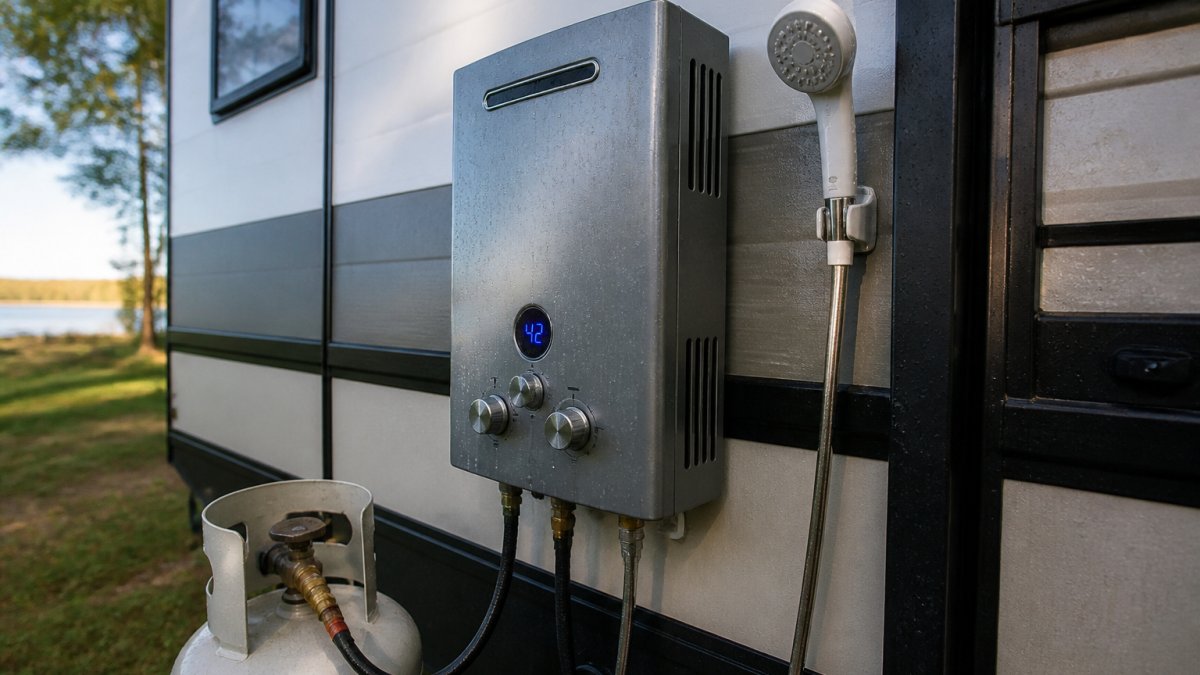
Installation requires minimal effort. Mount the unit to your caravan frame or vehicle using supplied brackets. Connect your portable LPG bottle via a regulator hose. Attach the water inlet to your tank or external source. The shower head hose threads on last. Most setups take under 15 minutes.
Performance expectations depend on water source temperature. Cold inlet water takes longer to heat than warm water. The burner runs continuously while you shower, consuming fuel proportional to flow rate and temperature setting.
Fuel consumption averages 0.3-0.5 kg of LPG per hour of use. A standard 9 kg portable bottle supplies roughly 20-30 hours of shower time, depending on temperature and flow rate. Budget accordingly for longer trips.
Safety features are non-negotiable. The Devanti Portable Gas Water Heater has a built-in processor that sets the maximum water temperature at 50℃ to prevent scalding. Always operate outside or in well-ventilated spaces. Never use indoors.
Camping shower water consumption and conservation
Water management becomes critical on extended trips, especially in dry regions. Understanding both water and fuel costs helps you plan realistic trip budgets.
Water capacity and consumption planning starts with honest assessment of shower frequency and duration.
Devanti Portable Gas Water Heater 8LPM Outdoor Camping Shower White →
Flow rate control is your primary conservation tool.
Total operating cost determines whether a portable hot water system makes financial sense for your camping frequency.
Water sourcing and filtration affect both consumption and system longevity.
Camping shower safety and ventilation essentials
Safety separates comfortable camping from dangerous situations. Portable gas heaters require specific precautions.
Ventilation is the primary concern. Gas burners consume oxygen and produce carbon monoxide as a byproduct. Always operate outside or in open-air environments. Never use a portable gas heater inside a tent, caravan, or enclosed space. Carbon monoxide accumulation causes headaches, dizziness, and potentially fatal poisoning. Safe Work Australia guidelines on gas appliance safety emphasise outdoor-only operation for portable gas equipment.
Temperature safety comes second. Built-in limiters on quality heaters prevent water exceeding 50°C. This protects against accidental scalding, particularly important for children. Even with limiters, test water temperature with your hand before full immersion.
Fuel handling requires basic discipline. Store portable LPG bottles upright in well-ventilated areas. Keep bottles away from direct sunlight and heat sources. Inspect hoses regularly for cracks or leaks. Replace damaged hoses immediately. Never leave a running heater unattended.
Maintenance prevents failures. Check the burner ignition before each trip. Listen for a clean click and flame. If ignition fails, check the battery in the ignition system. Clean the burner nozzle if water flow seems weak. Descale the heat exchanger annually if you use hard water frequently.
How to choose the right portable hot water system for your trip
Solo or couple trips benefit from compact, lightweight systems. The Devanti Portable Gas Water Heater at under 5 kg suits vehicle-based camping where weight matters less than reliability. Gas heating ensures you'll have hot water regardless of weather.
Family camping demands higher capacity and faster heating. Look for systems delivering 8 LPM or higher. Larger water tanks (60+ litres) reduce refill frequency. Consider whether your vehicle can safely carry and mount the additional weight.
Caravan trips favour permanently mounted systems. Fixed installation means no setup time each location. Gas heaters mount securely to external frames. The investment pays off over multiple trips.
Budget constraints point toward gas systems. Upfront costs are lower than solar or electric alternatives. Operating costs are predictable: fuel consumption is straightforward to calculate. The RACV guide to caravan equipment recommends gas heating as the most cost-effective option for Australian conditions.
Climate and season matter significantly. Cold-weather camping requires reliable heating that works in freezing conditions. Gas systems perform consistently year-round. Solar systems underperform in winter or overcast regions. High-altitude camping favours gas because burner performance remains stable.
Trip duration influences capacity planning. Short weekend trips need minimal water and fuel. Extended expeditions require larger reserves and efficient consumption practices.
Choosing a portable hot water system transforms camping from a rough experience into genuine comfort. Gas heating delivers reliability across Australian conditions and predictable operating costs. At Budget Roo Pty Ltd, we stock the Devanti Portable Gas Water Heater in both white and black finishes, both delivering 8 LPM flow rate with built-in temperature control and safety features. Whether you're planning a weekend away or an extended caravan adventure, starting with a proven system ensures you'll actually enjoy warm showers instead of dreading cold water. Shop Now to find the portable hot water system that matches your camping style.
Frequently Asked Questions
How does a portable hot water system work without mains power?
Portable hot water systems operate independently using gas, solar energy, or battery-powered pumps. Gas-powered models like the Devanti heat water on demand by igniting an LPG burner when you trigger the shower head. Solar systems absorb heat during the day and store it in a tank. Electric models run from 12V car power or rechargeable batteries. All three eliminate the need for mains electricity, making them ideal for off-grid camping and remote locations.
How much water does a portable camping shower use per session?
Portable gas hot water systems like the Devanti deliver up to 480 litres per hour when running, but actual consumption depends on how long you shower and the flow-rate setting. To conserve water on extended trips, use a low-flow shower head, take shorter showers, and collect grey water for washing dishes or rinsing gear.
What safety precautions should I take with a portable camping shower?
Always use portable hot water systems outdoors only, never inside tents or enclosed spaces, to prevent carbon monoxide buildup. Ensure proper ventilation around the burner, keep the system away from flammable materials, and check that the maximum water temperature is limited (the Devanti caps at 50°C to prevent scalding). Inspect gas connections and hoses regularly for leaks, secure the LPG bottle firmly, and never leave a running heater unattended. Follow the manufacturer's instructions and keep the system away from children and pets.
Which portable hot water system is best for casual campers?
Casual campers benefit most from portable gas hot water systems because they heat water quickly, require minimal setup, and deliver consistent temperature control. The Devanti Portable Gas Water Heater is a practical choice: it heats up to 480 litres per hour with an LED display for temperature adjustment, includes safety features like automatic ignition, and comes with mounting brackets for easy installation. At $188.95-$271.95, it balances affordability with reliable performance, making it ideal for weekend trips and road adventures without overspending on features you won't need.