

Last Updated: November 1, 2026
Quick Summary
Maintaining an off-grid caravan toilet system starts with identifying whether you own a cassette, composting or dry-flush toilet, because each needs a different routine. Clean your caravan toilet with mild soap and warm water, never bleach or ammonia, and lubricate rubber seals with silicone. Empty waste only at approved dump points, wearing gloves and keeping tanks level.
- Add a scoop of bulking material after each solid use and stir the pile to keep air moving.
- Avoid bleach, ammonia cleaners and abrasive pads because they dry out and crack rubber seals.
- Apply a thin coat of silicone lubricant to seals and O-rings, not petroleum-based products.
- Replace any seal that becomes tacky, stiff or cracked before your next trip.
- For winter storage, empty and rinse all tanks, lubricate seals and leave the lid slightly open.
Table of Contents
- Know Your Caravan Toilet System Before You Maintain It
- Composting Toilet Maintenance: Bulking Material, Moisture and Decomposition
- How to Clean a Caravan Toilet Without Damaging Seals
- How to Empty a Caravan Toilet Safely and Where the Waste Goes
- Ventilation, Odour Control and Bug Prevention
- Caravan Toilet Winter Storage and Maintenance Between Trips
- Troubleshooting Leaks, Blocks and Smells Before They Worsen
- Stock Your Caravan Toilet Maintenance Kit at Budget Roo
- Frequently Asked Questions
Know Your Caravan Toilet System Before You Maintain It
Maintaining an off-grid caravan toilet system starts with knowing exactly which type you own, because a composting toilet, cassette toilet and dry-flush toilet each need different care. Campers often waste time and money applying the wrong routine to the wrong system. Get this first step right and everything else gets easier.
A caravan toilet is a self-contained waste system built for life without mains plumbing, and each design handles waste differently. That single fact drives every cleaning, emptying and storage decision you'll make.
Here's the short version:
- Cassette toilet: waste drops into a removable tank you carry to a dump point.
- Composting toilet: solids break down with bulking material and airflow; liquids go to a separate container.
- Dry-flush toilet: a small water flush moves waste into a holding tank, with no sewer connection.
Composting, Cassette and Dry-Flush: What Each One Needs
Cassette systems need regular emptying and seal care. Composting systems need moisture balance and airflow. Dry-flush units need water discipline and tank checks.
Many problems come from treating all three the same way. A cassette toilet doesn't want bulking material. A composting toilet doesn't want chemical-heavy cleaners that kill the breakdown process. Match the routine to the system and half your issues disappear.
Composting Toilet Maintenance: Bulking Material, Moisture and Decomposition
Composting toilet maintenance is mostly about balance: enough bulking material, the right moisture level, and steady airflow so decomposition keeps working. Add a scoop of cover material after each solid use, and stir the pile occasionally to keep air moving through it.
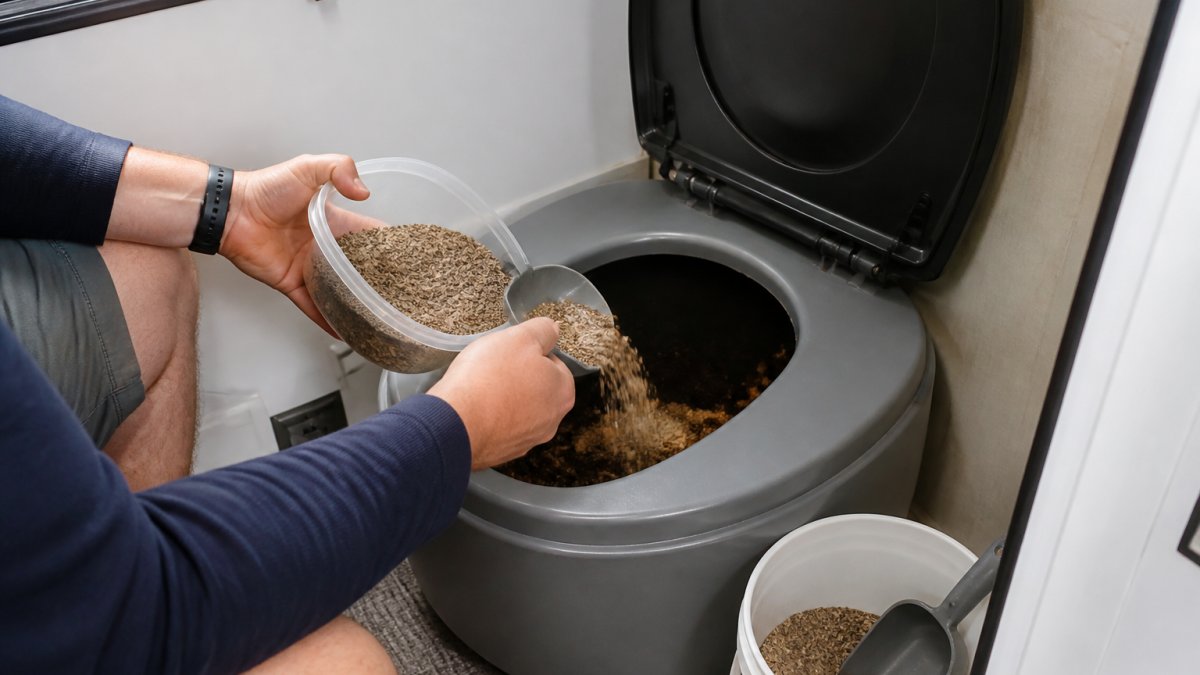
Too wet and it smells. Too dry and nothing breaks down. Aim for a crumbly, damp-sponge texture, not a soggy mess.
Choosing Bulking Material: Coconut Coir, Sawdust, Hemp or Peat Moss
Coconut coir and sawdust are commonly used bulking materials for off-grid caravan setups. Hemp and peat moss work too, though peat holds moisture heavily and can slow airflow if you overdo it.
A common mistake is using too little cover material. That's when odour control falls apart. Keep a scoop within reach and use it every time.
How to Clean a Caravan Toilet Without Damaging Seals
Cleaning a caravan toilet is not just about hygiene, it is about protecting the rubber seals, O-rings and plastic components that keep the system leak-free and odour-tight. Harsh chemicals are the most common cause of premature seal failure, and once a seal hardens or cracks, leaks and smells follow quickly.
Use mild soap, warm water and a soft cloth for routine cleaning. Avoid bleach, ammonia-based cleaners, solvent-heavy degreasers and abrasive scouring pads. These dry out rubber, accelerate cracking and can leave residue that interferes with composting or chemical treatment.
Here is a seal-safe cleaning routine that works across cassette, composting and dry-flush systems:
- Empty and rinse the bowl or composting chamber first.
- Wipe all surfaces with mild soapy water and a soft cloth.
- Clean around the seal lip and O-ring groove without scrubbing hard, use a soft brush or cotton bud for crevices.
- Rinse with clean water and dry thoroughly.
- Apply a thin coat of silicone lubricant to rubber seals and O-rings.
Different systems need slightly different care. Cassette toilets have a sliding valve seal that benefits from regular lubrication and a check for grit or hair. Composting toilets should not be cleaned with chemical disinfectants that kill the microbial breakdown process, mild soap and water is enough for the bowl and seat. Maintaining these sanitation components remains essential for a functional setup, much like ensuring the consistent reliability of off-grid power systems.
Skip bleach and strong disinfectants on seals; they speed up cracking and leaks.
How to Empty a Caravan Toilet Safely and Where the Waste Goes
Emptying an off-grid caravan toilet safely is about more than finding a dump point, it is about protecting yourself, other campers and the environment. The right procedure depends on which system you own, and the consequences of getting it wrong range from a messy clean-up to a health hazard.
Cassette toilets: Remove the cassette tank carefully, keeping it level to avoid splashes. Carry it to a designated dump point, remove the cap, and tip slowly into the disposal hole. Rinse the tank with clean water and a small amount of mild detergent, then reinstall. Never empty a cassette into a regular toilet, storm drain or bushland.
Composting toilets: Solids that have fully broken down can be disposed of according to local rules, some areas allow home composting, others require approved waste facilities. Liquids from the separate container should go to a dump point or approved disposal site, not onto the ground near waterways or campsites. If the pile is not fully decomposed, bag it and dispose of it at an approved facility.
Dry-flush toilets: These typically empty at the same dump points as cassette toilets. Follow the same level-carry and slow-tip procedure, and rinse the tank after emptying.
Safety basics for all systems:
- Wear disposable gloves and wash hands thoroughly afterwards.
- Never empty near waterways, bushland or campsites.
- Seal and bag soiled items for transport if no dump point is nearby.
- Keep the tank level and avoid sudden movements that cause splashes.
- Clean and disinfect the emptying area and your hands afterwards.
Follow Leave No Trace principles for waste disposal when no dump point is nearby, this means packing out waste in sealed containers rather than burying or dumping it.
Ventilation, Odour Control and Bug Prevention
Ventilation is the single biggest lever for odour control in any caravan toilet system. Check that your vent fan runs freely, that airflow isn't blocked, and that hoses are clear. A weak vent lets moisture build, and moisture is what attracts smells and bugs.
Run through this check:
- Vent fan spins without rattling
- Vent hose is clear and unkinked
- Airflow reaches the toilet bowl area
- No gaps around seals where insects enter
- Odour neutraliser topped up
Caravan Toilet Winter Storage and Maintenance Between Trips
Caravan toilet winter storage comes down to three things: empty it fully, clean and dry it, and leave seals protected. A tank left with waste over winter is the fastest route to stubborn smells and hardened residue.
Between trips:
- Empty and rinse all tanks.
- Clean surfaces and lubricate seals.
- Leave the lid slightly open for airflow.
- Store chemicals and consumables in a dry box.
- Check the vent fan before your next trip.
Troubleshooting Leaks, Blocks and Smells Before They Worsen
Most caravan toilet faults show warning signs early: a slow leak, a faint smell, a sluggish flush. Catch them at that stage and you avoid a bigger repair.
| Symptom | Likely Cause | Fix |
|---|---|---|
| Leak at base | Worn seal or O-ring | Replace and lubricate seal |
| Persistent smell | Blocked vent or wet pile | Clear vent, rebalance moisture |
| Weak flush | Low water or partial block | Check water, clear blockage |
| Bugs inside | Gaps around seals | Reseal and screen openings |
| Slow decomposition | Too dry or too wet | Adjust bulking material |
Watch out: ignoring a small seal leak lets moisture reach caravan flooring, and that repair costs far more than a new seal.
Stock Your Caravan Toilet Maintenance Kit at Budget Roo
A good maintenance kit saves you mid-trip headaches. At Budget Roo, we stock practical outdoor and caravan gear for families and casual campers alike.
Build your kit around these essentials:
- Silicone lubricant for seals and O-rings
- Mild soap and soft cloths
- Disposable gloves
- Bulking material for composting systems
- Spare seals
- A portable heat sealer for hygienic bagging
Our range covers camping, cooking, fishing and caravan products. You don't need overkill gear to keep a toilet system running well, just the right basics.
Frequently Asked Questions
How often should you clean an off-grid caravan toilet?
Wipe the seat, bowl and seals daily with a mild soap solution, and do a deeper clean of the cassette or composting chamber after every empty. Check rubber seals and O-rings weekly for grit or dryness. A full sanitising routine every few trips keeps odour down and extends seal life. If you notice smells that persist after cleaning, inspect the vent fan and airflow before assuming the toilet itself is the problem.
What cleaning products are safe for a caravan toilet?
Use mild soap, warm water and a soft cloth for everyday cleaning. Avoid harsh bleach and abrasive scourers on rubber seals and O-rings, because they dry out and crack the rubber. For cassette toilets, use chemicals labelled for caravan waste tanks rather than household cleaners. Composting toilets should stay chemical-free so the decomposition process keeps working. A silicone lubricant on seals after cleaning helps them stay supple.
How do you stop odours in an off-grid caravan toilet?
Odour control comes down to three things: airflow, moisture balance and timely emptying. Run the vent fan whenever the toilet is in use, keep composting material at the right moisture so it breaks down rather than stagnates, and empty cassettes before they are full. Check that the vent hose is not kinked or blocked. A sprinkle of bulking material after each use also helps keep smells contained.
What should you do if a caravan toilet leaks or blocks?
Stop using the toilet immediately and place a bucket or absorbent material under the leak. For cassette systems, check the rubber seals and O-rings first, since grit or a dry seal is the usual cause. For blocks, avoid harsh drain chemicals; use a flexible probe or warm water flush instead. If a composting toilet becomes too wet, add dry bulking material and improve ventilation. Persistent leaks may need a replacement seal kit.
Keeping an off-grid caravan toilet running smoothly is about matching your routine to your system and staying ahead of small faults. Budget Roo makes that easier with affordable, reliable caravan and camping gear, backed by practical product design and a straightforward shopping experience. Get started with Budget Roo and keep your caravan toilet clean, sealed and odour-free trip after trip.
