

Table of Contents
- Start with a Short Trip Close to Home
- Your Complete Family Camping Checklist
- Choosing a Family-Friendly Campsite
- Camping with Kids Hacks That Actually Work
- Easy Camping Meals for Families
- How to Keep Kids Warm Camping
- Safety and Weather Contingency Planning for Family Camping
- Conclusion
- Frequently Asked Questions
Last Updated: October 20, 2026
Start with a Short Trip Close to Home
The best way to learn family camping is to camp close to home first.
Here is how we would structure a first trip:
- Book one night, not three. One night exposes the gaps without exhausting anyone.
- Choose a campsite within an hour of home, ideally with running water and a proper amenities block.
- Leave after lunch so camp setup happens in daylight, not at dusk.
- Plan a simple dinner and an early night. The first trip is a rehearsal, not a holiday.
- Debrief on the drive home. Write down what you forgot and what you never used.
At Budget Roo, we hear from plenty of families who jumped straight into a week-long trip and came home vowing never to camp again. The problem was rarely the gear. It was the pace.
Treat that first night as a gear and routine test: you will learn whether your tent goes up before dark, whether the kids settle in a sleeping bag, and whether your camp cooking setup works.
Your Complete Family Camping Checklist
A family camping checklist is a written list of everything your household needs, grouped by category so nothing gets forgotten in the driveway. Ours covers shelter, sleep, clothing, kitchen, safety and comfort, and we revise it after every trip.
Start with these categories:
- Shelter: tent, pegs, mallet, ground sheet, spare guy ropes
- Sleep: sleeping bags, pillows, mats or stretchers, familiar blankets
- Clothing: weather-appropriate layers, spare socks, wet-weather gear
Print and laminate the list, tick items off as they go into the car, and add anything you wished you had brought when you get home. Within three trips it will be tailored to your family.
Choosing a Family-Friendly Campsite
A family-friendly campsite has running water, working toilets, flat ground and enough space that children can move around without wandering into another group's setup.
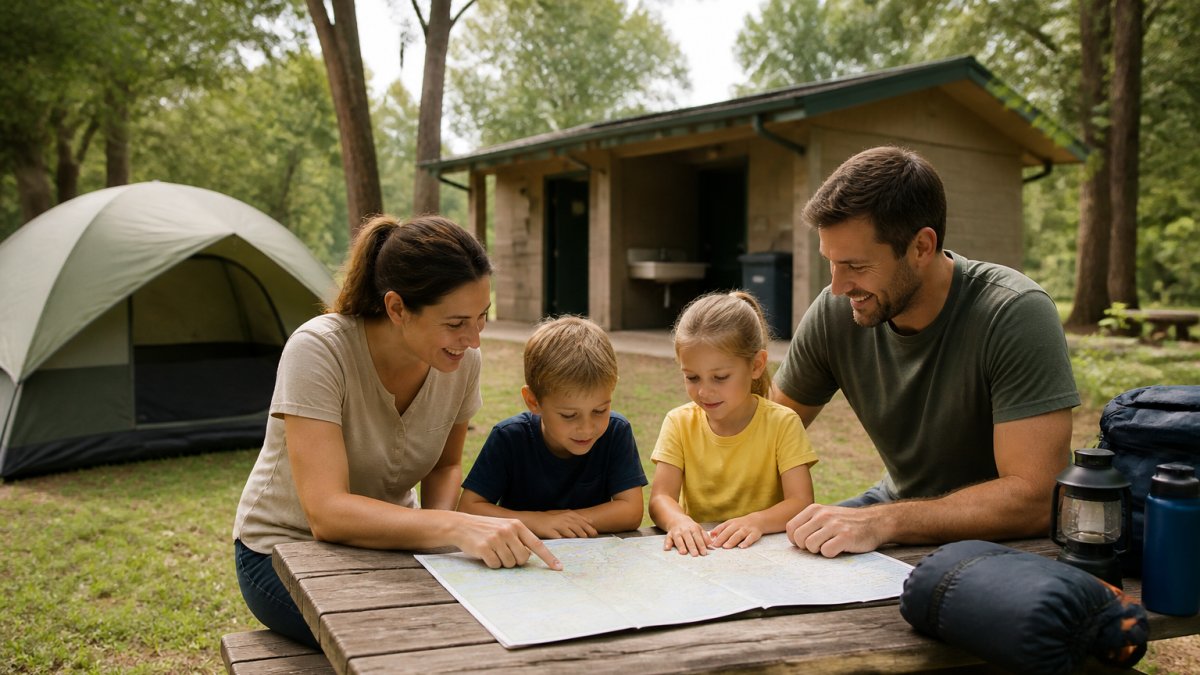
Campground facilities change the experience more than most guides admit.
When you compare options, score them on this:
| Feature | Why it matters | Priority |
|---|---|---|
| Flushing toilets and running water | Fewer disruptions, easier hygiene | Essential |
| Flat, cleared tent sites | Better sleep, simpler setup | Essential |
| Designated fire pits | Campfire safety without guesswork | High |
| Camp kitchen or shelter | Backup for wet weather and cooking | High |
| Play area or open grass | Space for outdoor activities | Nice to have |
Ring ahead and ask two questions: how far are the amenities from the unpowered sites, and is there a quiet section away from the main thoroughfare.
Camping with Kids Hacks That Actually Work
The camping with kids hacks worth keeping reduce friction at the two hardest moments of the day: setup and bedtime. But the hacks that work for a toddler are not the ones that work for a teenager, so match your approach to your child's age and stage.
Babies (0-18 months)
A baby changes the logistics more than any other age, but the principles are simple: keep them warm, clean and close.
- Bring a portable bassinet or travel cot with a firm, flat mattress. A baby should sleep on a surface designed for infant sleep, not a soft adult mat. Set it up before dark so the baby can acclimatise.
- Pack a dedicated nappy-changing kit with a waterproof mat, nappy sacks, wipes, and a spare change of clothes for you as well as the baby. A pop-up change tent is worth it if the amenities block is a walk away.
- Use layers you can add and remove without waking them. A front-opening sleeping bag or a baby sleeping sack over a thermal onesie makes night-time temperature adjustments far easier than a blanket.
Toddlers (18 months-3 years)
Toddlers are mobile, curious, and completely without a sense of danger. The hack here is containment and constant supervision.
- Choose a campsite with a fenced play area or clearly bounded open space. A toddler who can wander into another family's fire pit is a hazard you do not need.
- Bring a portable playpen or a large ground sheet to create a defined safe zone beside your tent while you set up or cook.
- Practise the tent at home. Let them play in it in the backyard so it feels familiar. A toddler who has napped in the tent at home will settle far faster on site.
School-age children (4-12 years)
This is the age where camping becomes genuinely fun for everyone, because children can take on real jobs and real independence.
- Give each child a defined role and checklist. Tent pegs, torches, water bottles, firewood. A job makes them feel invested and keeps them occupied during setup.
- Let them choose one activity and one meal each. Ownership reduces complaints and gives them something to look forward to.
- Set clear boundaries before you arrive. Agree on the line they cannot cross without an adult, where the water is, and what to do if they get lost. Walk the boundaries with them on the first afternoon.
Teenagers (13+)
Teenagers can be the easiest or hardest camping companions, depending on how much agency you give them.
- Involve them in planning from the start. Let them choose the campsite, plan a meal, or research an activity. A teenager who helped plan the trip is far less likely to sulk through it.
- Give them their own space. A separate small tent or swag gives them privacy and independence, and takes the pressure off the family tent.
- Agree on phone and screen rules before you leave. A power bank and clear expectations about when screens are acceptable avoid constant negotiation.
Easy Camping Meals for Families
Easy camping meals for families share three traits: few ingredients, one pot and no negotiation at the table.

A workable two-day plan looks like this:
Weisshorn Instant Up Camping Tent 4-5 Person Pop up Tents Family Hiking Beach →
- Night one: one-pot pasta with a jar sauce and pre-chopped vegetables
- Breakfast: porridge or eggs on the stove, fruit, hot drinks
- Lunch: wraps or sandwiches, no cooking required
Prepare what you can at home. Chopping vegetables and portioning ingredients into labelled bags turns a forty-minute camp cooking session into fifteen.
Our customer John Wilson put it plainly about our LPG gas oven: it cooks evenly, the interface is easy to use, and the price is hard to beat.
How to Keep Kids Warm Camping
Keeping kids warm camping comes down to three things: the right sleeping bag rating, dry layers, and a barrier between the child and the cold ground. Cold children do not sleep, and a child who has not slept makes the next day hard for everyone.
Work through this order:
- Insulate underneath. A mat or stretcher under the sleeping bag matters as much as the bag itself, because most heat is lost into the ground.
- Dress in layers, not one thick item. Thermals, a fleece, then a beanie. Strip a layer if the child is warm rather than waiting for them to sweat.
- Keep spare clothes dry and separate. Damp clothing is the fastest route to a cold night.
- Run a bedtime routine. Same order as home: toilet, teeth, story, lights out. Familiarity settles children faster than any instruction.
- Check on them before you turn in. Hands and feet tell you more than a complaint does.
A supportive pillow helps too. The KILIROO inflatable camping pillow packs down small and gives a child something familiar to rest on, which matters more than most parents expect on the first night.

Safety and Weather Contingency Planning for Family Camping
Safety planning for a family camping trip means three things before you leave: a first-aid kit, a fire plan and a decision rule for bad weather. The sections below cover the scenarios most families actually face, with steps you can act on at 2am.
First-aid preparation
Build a kit stocked for the injuries that actually happen on a camping trip: cuts, grazes, burns, sprains, insect bites and sunburn.
- A stocked first-aid kit, checked before every trip. Replace anything used or expired.
- Antiseptic wipes, sterile dressings, blister plasters, and a crepe bandage for sprains.
- Children's paracetamol or ibuprofen, plus any prescription medication your family needs.
Know how to call for help. The emergency number is 000. Mobile coverage is patchy in many camping areas, so ask the campground office about their emergency procedure and whether there is a landline or two-way radio on site.
Water safety
Children near water need an adult who is watching and not setting up a tent at the same time. That is the non-negotiable rule.
- Agree on a rule before you arrive: no one goes near the water without an adult. Walk the boundary with the children on the first afternoon.
- If you are camping near a river, lake, or beach, check for currents, drop-offs, and submerged hazards before anyone swims. Ask the campground office about local conditions.
- Empty buckets, tubs, and washing-up bowls after use. A toddler can drown in a few centimetres of water (Water Safety | Safety).
Fire safety
Campfire rules should be agreed before the first match is struck.
- Who lights the fire, where the water bucket sits, and how close children may stand.
- Keep a bucket of water and a shovel within reach of the fire at all times.
- Never leave a fire unattended, and make sure it is fully extinguished before you sleep or leave the campsite.
Wildlife encounters
Most wildlife encounters are harmless, but a little preparation prevents the ones that are not.
- Store food in sealed containers and never leave it in the tent. Food attracts animals and insects.
- Keep a torch handy for night-time trips to the amenities block, and shake out shoes and sleeping bags before use.
- Know what to do if you encounter a snake: stand still, back away slowly, and do not attempt to handle it. Most bites happen when people try to move or kill a snake.
If someone gets separated
This is the scenario that frightens parents most, and the one a simple plan handles best.
- Before you leave, agree on a meeting point at the campsite, such as the amenities block or the camp office.
- Give each child a whistle on a lanyard and teach them to blow it if they are lost. A whistle carries further than a voice.
- Write your mobile number on a card and put it in each child's pocket. If they are too young to carry a card, write it on a wristband.
Weather decision-making
Weather decision-making deserves its own rule. Agree before you leave on the conditions that end the trip, and write them down so the decision is not made at 2am in a leaking tent.
A simple version: if the forecast shows sustained heavy rain or damaging wind for the second night, we pack up after breakfast. That is not defeat. It is a plan.
- Check the forecast for the whole trip, not just the first day, and check it again the morning you leave.
- Know the signs of a changing forecast: a sudden drop in temperature, a darkening sky, and a rising wind.
- Have a wet-weather plan that does not involve sitting in a leaking tent. A camp kitchen, a local café, or a nearby town with a museum or pool can salvage a rainy day.
Conclusion
Family camping rewards preparation far more than gear, and the families who camp well started small, packed a checklist and planned for the weather rather than hoping around it. If you are kitting out for a first trip, start with the essentials and add as you learn. Our Weisshorn family tent range gives you straightforward, weather-resistant shelter without the premium price tag, our camp cooking gear keeps meals even and predictable, and our sleeping and comfort accessories help everyone settle.
Frequently Asked Questions
What are some tips for a first-time family camping trip?
Keep the first trip short and close to home, ideally one or two nights within an hour's drive. Test your tent and sleeping gear in the backyard before you go. Pack a family camping checklist so nothing essential is left behind, and plan simple meals you can cook with minimal equipment. Arrive at the campsite with daylight left so you can set up without stress. Involve the kids in packing and setup so they feel part of the trip, and keep a flexible schedule with low expectations for the first outing.
What essential gear do I need for family camping?
At minimum you need a tent sized for your family, sleeping bags or bedding, a sleeping mat or stretcher, a camp stove or cooking gear, a cooler or esky, a first-aid kit, torches, and weather-appropriate clothing. A family camping checklist helps you track it all. For a budget-friendly start, the Weisshorn 4 Person Camping Tent at $102.95 offers water-resistant 190T polyester and a cross-pole frame, while the 6 Person Dome at $259.95 gives more room for larger families. Add an inflatable pillow like the KILIROO at $14.95 for extra comfort.
How do you keep kids warm camping?
Layer clothing in thin, warm layers rather than one bulky item, and pack a beanie and warm socks for bedtime. Use a sleeping bag rated for the conditions and add a liner or blanket underneath for insulation from the ground. A hot water bottle in the sleeping bag 15 minutes before bed helps. Keep kids dry by changing wet clothes immediately, and set up the tent away from windy spots. A bedtime routine with familiar items like a favourite blanket makes the cold feel less strange.
What are some easy camping meal ideas for families?
One-pot meals work best: pasta with pre-made sauce, chilli or stew reheated in a pot, and foil-wrapped vegetables and sausages cooked over coals. For breakfast, porridge, scrambled eggs or cereal with long-life milk are simple. Pre-chop vegetables and portion snacks at home to save time at camp. Use a camp oven or portable stove for even cooking. The Budget Roo Au LPG Gas Oven, praised by customer John Wilson for cooking evenly and its unbeatable price, suits families who want reliable camp meals without fuss.