

Table of Contents
- Best Camping Gear for Families: Quick Comparison
- How We Chose the Best Camping Gear for Families
- The Best Family Tent for Australian Conditions
- A Family Camping Checklist for Beginners
- Affordable Camping Cooking Gear That Feeds a Crowd
- How to Pack for Family Camping Trips Without Overloading
- Comfort, Safety, and Smart Extras for Kids
- Rent vs Buy: What Makes Sense for Your Family
- Frequently Asked Questions
Last Updated: September 9, 2026
Choosing the best camping gear for families can feel overwhelming when balancing comfort, durability, and a budget. The right setup transforms a stressful trip into a memorable adventure, but the wrong choices lead to cold nights and grumpy mornings. Budget Roo Australia is your go-to destination for high-quality outdoor and lifestyle gear, catering to camping, cooking, fishing, and clothing needs. We provide durable, reliable products designed to keep you comfortable and prepared for any adventure, from chilly outdoor excursions to everyday activities. Our curated selection offers exceptional value, ensuring that outdoor enthusiasts and families alike can enjoy premium equipment without compromising on quality or budget. The secret is to focus on a few versatile, high-quality pieces rather than accumulating cheap gadgets that fail after one weekend.
Best Camping Gear for Families: Quick Comparison
Every family needs a different balance of space, setup speed, and price. To help you decide where to invest your money first, here is our quick comparison of the core shelter and cooking options that matter most.
| Item | Best For | Key Feature | Price |
|---|---|---|---|
| Weisshorn 6-Person Tent | Large families wanting room to stand | Double-layer waterproof fabric | $259.95 |
| Weisshorn Instant Up 4-5 Person | Quick arrivals and short stays | Pops up in under a minute | $216.95 |
| Weisshorn 4-Person Tent | Budget weekend getaways | UV and water-resistant rainfly | $102.95 |
| Thermomate Oven & Stove | Full home-style meals on site | 2 burners plus oven | $899.00 |
| Grillz Foldable BBQ | Easy campfire cooking | Portable steel build | $67.95 |
How We Chose the Best Camping Gear for Families
Most round-ups tell you what to buy, but few explain how to judge gear so it survives the unique abuse of a family trip. We evaluate every product against practical, family-specific criteria.

The 'Yank and Tug' Test: We simulate the way children actually interact with gear. Tent zips are yanked at awkward angles, chair armrests are used as climbing frames, and table legs get kicked. We reject any product with exposed mechanisms, flimsy plastic clips, or stitching that frays under moderate tension.
Setup Time Under Distraction: A tent that takes 45 minutes at home can take over an hour with a tired toddler and a partner managing the dog.
The 'Forgotten Item' Scenario: We consider what happens when you inevitably leave the peg bag at home. Tents with steel pegs that fit a standard hammer are preferable to those requiring a specialist tool. We also look for replaceable parts, such as spare pole sections or guyline cord, which extend the life of the gear and save you from a full replacement.
Weight vs. Durability Trade-off: Ultralight gear is a false economy for families. You are carrying gear 50 metres from the car, not hiking 20 kilometres. We prioritise heavier, more robust fabrics and thicker gauge poles because they withstand daily knocks. A 12-kilogram tent that lasts ten years is better value than a 6-kilogram tent that fails after two.
The 'Grow Into It' Factor: Children grow quickly, and gear that fits a 4-year-old may not fit the same child at 8. We look for adjustable features, such as sleeping bags with extendable foot boxes or chairs with higher weight ratings, so your initial investment does not become obsolete in a single growth spurt. This is a key difference between buying for a solo adult and buying for a family.
By applying these criteria, we filter out cheap, single-use items. Our final recommendations offer a balance of durability, usability, and long-term value for the specific chaos of a family camping trip.
The Best Family Tent for Australian Conditions
The Weisshorn 6-Person Cabin Tent offers genuine headroom and weather protection where it counts. Its double-layer 190T polyester construction handles sudden summer storms, while the cross-pole design creates the vertical space that makes a tent feel like a room rather than a burrow. For a family of four, this size gives you room for stretchers or an air mattress without everything touching the walls.
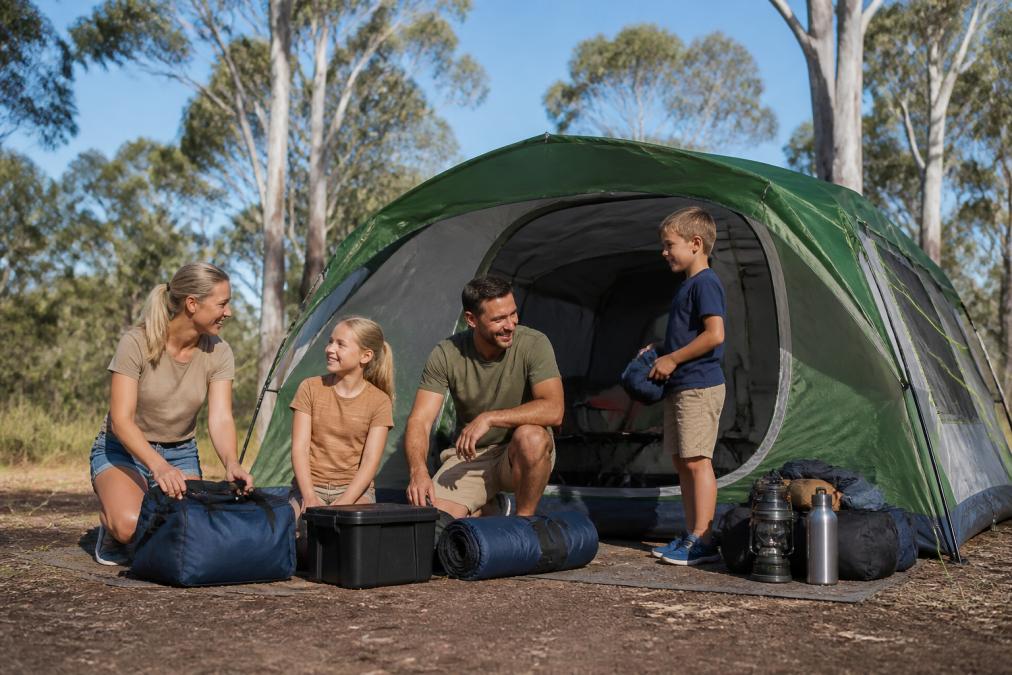
The entrance shade awning provides a dry spot to kick off muddy boots during a mid-afternoon downpour. If speed is your priority, the Weisshorn Instant Up Pop-Up Tent sets up in under a minute with a single person. For smaller budgets, the Weisshorn 4-Person Tent still provides solid weather protection with its sewn-in PE groundsheet and elevated seams.
A Family Camping Checklist for Beginners
A family camping checklist for beginners should start with the shelter and sleep system, then build out to cooking and safety items. For sleeping, you need more than just a sleeping bag; an inflatable pillow and a proper sleeping pad provide the insulation from the cold ground that keeps kids asleep through the night. The KILIROO Inflatable Camping Travel Pillow packs down to nearly nothing but offers the neck support that makes a real difference on a multi-night stay.

Beyond the tent, group your checklist into four zones to avoid forgetting essentials:
- Sleep: Sleeping bags, mats or stretchers, pillows, and a groundsheet.
- Cooking: Camp stove, fuel, cookware, plates, and a wash basin.
- Lighting: Head torches for adults, a lantern for the table, and spare batteries.
- Safety: First aid kit, fire starter, and sun protection.
Affordable Camping Cooking Gear That Feeds a Crowd
Affordable camping cooking gear means choosing equipment that cooks efficiently without breaking the bank. The Grillz Charcoal BBQ Grill at $67.95 is a fantastic budget option with a foldable, portable design and removable ashtray. For home-style cooking, the Thermomate 2-Burner Gas Oven Stove Combo lets you bake bread or roast a chicken while cooking sausages on the top burners.
Pre-chopping vegetables and marinating meat before you leave reduces cooking time and washing up. Stackable, non-stainable wheat straw tableware keeps packing light and ensures the kids cannot break your only plates.
How to Pack for Family Camping Trips Without Overloading
Packing for family camping trips without overloading comes down to using every cubic centimetre of your car boot strategically. Pack the tent and sleeping gear in large, soft duffel bags that wedge into odd spaces. Use the inside of your camp stove and pots to store smaller items like cutlery and spices, and fill gaps between larger items with rolled-up clothing.
Store cooking gear in a dedicated tub so you can pull out one container for the kitchen on arrival. Pack a separate "day bag" with rain jackets, water bottles, and snacks for breaks. The KILIROO Camping Table folds flat against the side of the boot, leaving the main floor space clear for luggage.
Comfort, Safety, and Smart Extras for Kids
Keeping kids comfortable and safe is about managing the sensory overload of the outdoors and preparing for how children react to unfamiliar environments. Most guides stop at 'bring layers', but it's important to address the needs of all children, including those who are neurodivergent or simply overwhelmed.
Sensory-Friendly Sleeping Zones: Wind in the trees, the crinkle of a sleeping bag, or a distant torch can distress a child with sensory processing differences. Create a 'quiet zone' inside the tent by draping a dark, heavyweight blanket over the sleeping area to dampen sound and block light. For tactile-sensitive children, avoid fleece liners and opt for smooth, brushed-cotton sheets inside the sleeping bag. Noise-cancelling headphones work, but a simpler alternative is a white-noise machine app on a phone placed inside a sock.
The 'Calm Down' Kit: Pack a small, dedicated bag with a familiar book, a fidget toy, and a photo of the child's bedroom or pet. When a meltdown starts, this kit provides a predictable anchor. We also recommend a 'first night' ritual: before dark, walk the campsite perimeter with your child, showing them the toilet, water tap, and identifying sounds they might hear later.
Temperature Regulation is a Safety Issue: Children's bodies heat up and cool down faster than adults (the NIH). A child who is too cold will not sleep; one who is too hot becomes irritable and dehydrated. The layering system applies to sleep: use a moisture-wicking merino wool or synthetic base layer, and avoid cotton, which stays wet against the skin. Check the sleeping bag's comfort rating, not the extreme rating, a bag rated to 0°C is for survival, not comfort. In summer, a cotton sheet and light blanket may suffice.
Hydration and the 'Tumbler Trick': Dehydration is a common cause of afternoon crankiness. A 1000ml insulated tumbler per child filled with water and a hydration electrolyte sachet replaces minerals lost through sweat (healthychildren.org). Mark a 'finish by lunch' line on the cup with a permanent marker to turn hydration into a simple visual goal.

Safety Beyond the First Aid Kit: Teach children the 'camp boundary' rule: they must be able to see the tent at all times. For younger children, a high-visibility vest or brightly coloured hat makes them easier to spot. Attach a small whistle to their jacket zip and teach them that three blows means 'I need help', a tool that works even if they cannot shout loud enough.
The 'Extras' That Earn Their Space: A portable gas water heater pays for itself on the first cold morning. A cheaper, equally effective extra is a large, collapsible bucket filled with warm water from the camp stove (after boiling) for a sponge bath or washing muddy feet before bed. This keeps dirt out of sleeping bags and the tent cleaner, preventing mould and maintaining gear.
Rent vs Buy: What Makes Sense for Your Family
Renting makes sense for a one-off trip or when testing whether your family enjoys camping. However, rental costs add up across a season, and you still need to buy smaller essentials like sleeping bags and cookware. Buying makes sense once you plan more than two or three trips a year, as a durable tent pays for itself within a single holiday season.
Buy core items that take the most wear, such as the tent and sleeping mats, and rent bulky items like kayaks or large coolers used infrequently. A mid-range tent like the Weisshorn 4-Person at $102.95 is cheaper than two weekend rentals, and you know its exact history and condition. This spreads your budget while keeping quality high where it matters.
The challenge with camping gear for families is resisting the urge to buy everything at once. Start with a quality shelter and a reliable cooking source, then add comfort items as your family's confidence grows. Budget Roo Australia is your go-to destination for high-quality outdoor and lifestyle gear, catering to camping, cooking, fishing, and clothing needs. We provide durable, reliable products designed to keep you comfortable and prepared for any adventure, from chilly outdoor excursions to everyday activities. Our curated selection offers exceptional value, ensuring that outdoor enthusiasts and families alike can enjoy premium equipment without compromising on quality or budget. Explore our collection today and get started with Budget Roo and gear that will last your family for years of adventures.
Frequently Asked Questions
What are the must-haves for camping with family?
Start with a tent rated one or two people above your family size, like the Weisshorn 6-person tent for a family of four. Add sleeping mats or air mattresses, bedding, a camp stove, cookware, a first aid kit, and a reliable light source. Plan for sun protection and plenty of water. A well-organised checklist helps you avoid overpacking while ensuring you have the essentials for a safe and comfortable first night.
How do I choose a family-sized tent for Australian conditions?
Look for a double-layer 190T polyester rainfly to handle summer storms and UV resistance for harsh sun. For a family of four, a 6-person tent gives you room for beds and gear. Check that the poles are steel or fibreglass for durability. Consider setup time: an instant-up tent suits short trips, while a cabin-style tent offers more headroom and livable space for longer stays.
What is the most forgotten item when camping?
A mallet for tent stakes is one of the most overlooked items. Many campsites have hard, dry ground that makes pushing stakes in by hand nearly impossible. Pack a small mallet or hammer to secure your tent and groundsheet properly. A headlamp or torch with spare batteries is another commonly forgotten essential, especially when you arrive after dark and need to set up your cooking area and sleeping space safely.
How do I keep the cost down when buying camping gear for my family?
Start with the gear you will use most often: a tent, sleeping bags, and a basic cooking setup. Choose multi-purpose items like a camping oven that also works as a stove, saving you from buying separate appliances. Compare prices on family bundles and check for free shipping offers. For occasional trips, consider borrowing bulky items like tables or hiring them locally before committing to a purchase.