

Table of Contents
- What Makes a Great Camping Cookware Set
- Camping Pots and Pans: Material and Performance Comparison
- Lightweight Camping Cookware for Backpacking
- Stainless Steel Camping Cookware: Durability and Heat Distribution
- Backpacking Cookware Set Options and Stove Compatibility
- Our Top Recommendations by Trip Type and Group Size
- Caring for Your Camping Cookware: Cleaning and Long-Term Storage
- Frequently Asked Questions
Last Updated: October 14, 2026
What Makes a Great Camping Cookware Set
A camping cookware set succeeds when it balances weight, durability, and cooking performance without forcing you to choose just one. The best camping cookware set review starts with understanding what separates a workhorse from a paperweight.
Most people assume lighter is always better. That's wrong. An ultralight titanium pot might weigh half what cast iron does, but cast iron's heat distribution makes it the better choice for actual cooking on a campfire. The real question isn't which material wins universally, it's which one matches your trip type and group size.
Here's what actually matters: Can you cook the meals you want? Will it survive repeated use? Can you pack it without throwing out your back? A great camping cookware set answers all three. Budget Roo Pty Ltd stocks options that handle everything from solo backpacking to family car camping, and we've reviewed what works for each scenario.
The materials matter most. Stainless steel holds heat evenly and resists damage. Cast iron does the same but weighs more and requires seasoning. Aluminium is lightweight but conducts heat unevenly unless it's thick. Nonstick coatings speed cleanup but wear off over time in the field. Your choice depends on your priorities, and your trip type.
Camping Pots and Pans: Material and Performance Comparison
Choosing between materials shapes everything about your camping experience. Each material trades off weight, durability, heat distribution, and maintenance burden.
Stainless steel camping cookware delivers even heat distribution and durability that survives years of field use. It doesn't require seasoning, resists rust, and handles acidic foods without degrading. The tradeoff is weight; stainless steel pots are heavier than their aluminium equivalents. For group cooking or car camping, this doesn't matter.
Cast iron is the workhorse. High heat retention means your food cooks evenly even over inconsistent campfire flames. Pre-seasoned cast iron, like the Pre Seasoned Cast Iron Skillet Fry Pan Set available from Budget Roo Pty Ltd at $103.95, comes ready to use straight from the box.
Aluminium pots heat quickly and weigh almost nothing. Thin aluminium, however, develops hot spots; your food burns on the bottom while staying cold at the edges. Thicker aluminium solves this but adds weight, defeating the purpose. Aluminium also reacts with acidic foods like tomatoes, which can impart a metallic taste.
Nonstick coatings reduce cleanup time, which matters on long trips. The problem: nonstick degrades with use, especially over open flame or high heat. After a few camping seasons, the coating flakes. Once it does, the underlying pan becomes a poor heat conductor.
| Material | Weight | Heat Distribution | Durability | Maintenance | Best For |
|---|---|---|---|---|---|
| Stainless Steel | Moderate | Excellent | Excellent | Minimal | Group trips, car camping |
| Cast Iron | Heavy | Excellent | Excellent | Oil after use | Family camping, overlanding |
| Aluminium | Light | Fair to good | Moderate | Minimal | Ultralight backpacking |
| Nonstick | Light | Good | Fair | Careful handling | Short trips only |
Lightweight Camping Cookware for Backpacking
Ultralight backpacking demands a different approach. Every ounce matters when you're carrying your shelter, sleep system, and food for days. A camping cookware set for backpacking prioritises weight and packability over cooking versatility.
Solo backpackers often skip traditional cookware entirely and use a single lightweight pot as both cooking vessel and eating bowl. A 1-litre titanium or thin aluminium pot with a folding handle weighs under 200 grams and handles boiling water for dehydrated meals.
Groups on backcountry trips need slightly more capacity. Two pots (one for cooking, one for boiling water) and a small skillet cover most needs. Nesting cookware sets minimise packed size by stacking pots inside each other. Look for sets designed specifically for backpacking, not downsized versions of car-camping kits.
Material choice shifts for ultralight trips. Cast iron is out, too heavy. Stainless steel is acceptable if the pot is thin-walled. Titanium is ideal but expensive. Aluminium works if you accept hot spots and don't cook acidic foods.
The real weight savings come from eliminating unnecessary items. A three-piece cook set for backpacking should include a pot, a lid (which doubles as a pan), and a handle system. Skip the frying pan, skip the extra bowls, skip the utensil sets.
Stainless Steel Camping Cookware: Durability and Heat Distribution
Stainless steel camping cookware set options dominate group trips and overlanding setups because they solve the durability problem completely. Stainless steel doesn't rust, doesn't require seasoning, and survives years of heavy use without degrading.
Heat distribution in stainless steel depends on thickness. Thin stainless steel pots conduct heat unevenly; your food burns on the bottom. Thick stainless steel distributes heat evenly, but adds weight. The sweet spot is medium-gauge stainless steel with an aluminium or copper core sandwiched between the inner and outer layers.
Stainless steel handles acidic foods without issue. Tomato-based sauces, citrus marinades, and vinegar-based dishes won't degrade the pot or impart metallic flavours. This matters for real cooking on extended trips where you're preparing full meals, not just boiling water.
Cleaning stainless steel is straightforward. Scrub with water and a brush, and you're done. No seasoning required, no special oils needed. For camping trips where you're washing dishes in a stream or campsite water station, this simplicity is a genuine advantage.
The Thermomate 2 Burner Portable Camping Oven Stove Combo from Budget Roo Pty Ltd ($899.00) demonstrates stainless steel's potential at scale. Built entirely from quality stainless steel, this unit combines two brass burners (5,300 BTU each) with a full oven (3,500 BTU) in a compact 15-kilogram package.

Backpacking Cookware Set Options and Stove Compatibility
Not every camping cookware set works with every camp stove. Compatibility matters more than you'd think, and getting it wrong wastes money and ruins meals.
Canister stoves (small butane or isobutane canisters with a burner head) require pots with a narrow base that sits directly on the burner. Wide-bottomed pots won't balance.
Pot size and stove size must match. A large pot on a tiny canister stove won't heat efficiently. A small pot on a powerful liquid-fuel stove can boil over instantly. Most backpacking cookware sets assume canister stoves, which are the most common ultralight option.
Lid compatibility is overlooked. A lid that fits your pot should also fit your stove's heat profile. Some lids trap too much heat and cause boil-overs. Others don't seal well enough to retain warmth. Test the combination before your trip.
THERMOMATE 2 Burner Gas Portable Camping Oven Stove Combo, Grey →
Weight matters for the stove system as a whole, not just the cookware. A heavy pot with an ultralight stove defeats the purpose. A lightweight pot with a heavy stove does the same.
Nesting cookware sets designed for backpacking typically include a stove adapter ring that lets you use smaller pots on larger burner heads. This flexibility is worth paying for if you're mixing pot sizes.
Our Top Recommendations by Trip Type and Group Size
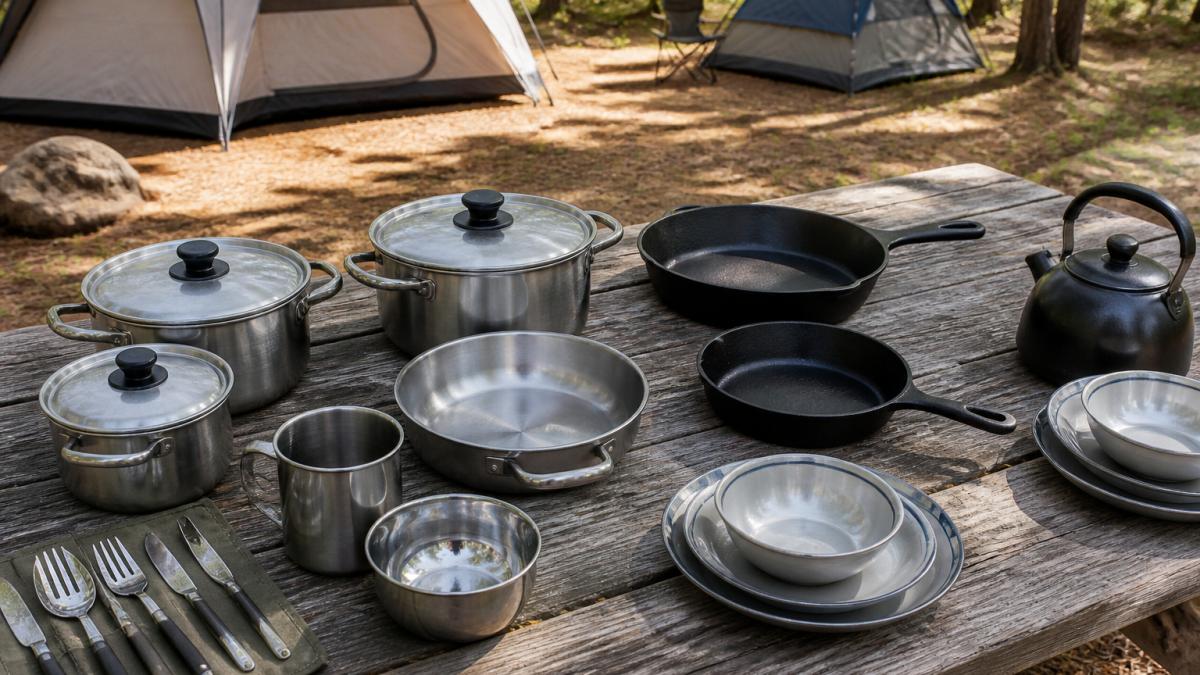
Solo Backpacking (1-3 nights): A single 1-litre pot with a lid is enough. Bring a spoon. Cook dehydrated meals and instant noodles. Total weight should be under 300 grams. This setup costs under $50 and handles 90% of backcountry trips.
Group Backpacking (4+ people, 2+ nights): Two nesting pots (2-litre and 3-litre) plus a skillet. Total weight around 1 kilogram. Allows cooking actual food, rice, pasta, vegetables, instead of just rehydrated meals. Budget $80-150 for a decent set.
Family Car Camping: Cast iron is your friend here. The Pre Seasoned Cast Iron Skillet Fry Pan Set from Budget Roo Pty Ltd ($103.95) includes three skillets that handle everything from breakfast bacon to campfire desserts.
Overlanding (vehicle-based, extended trips): The Thermomate 2 Burner Portable Camping Oven Stove Combo ($899.00) transforms overlanding meals. Two independent burners let you cook two dishes simultaneously. The built-in oven handles baking, roasting, and slow cooking.
Casual Camping (weekends, established campgrounds): A simple stainless steel pot set with nonstick coating works well. The Plate Sets Wheat Straw Ramen Bowl Tableware from Budget Roo Pty Ltd ($40.95) pairs with any cookware and provides stackable, lightweight dinnerware that won't break if dropped.

Caring for Your Camping Cookware: Cleaning and Long-Term Storage
How you maintain your cookware determines how long it lasts. Field care differs from home care, and storage mistakes can ruin gear between seasons.
Cast Iron Field Care: After cooking, scrub the pan with water and a brush while it's still warm. Don't use soap; it strips the seasoning.
Stainless Steel Field Care: Rinse with water and scrub with a brush or sponge. Stainless steel is forgiving; you can use soap without worry.
Nonstick Coating Care: Use soft brushes or sponges, never steel wool or abrasive scrubbers. Hand wash in warm soapy water. Air dry.
Storage at Home: Cast iron should be stored in a cool, dry place.
Seasoning Cast Iron at Home: If your cast iron's seasoning wears thin, restore it. Heat the oven to 200°C.
Repairing Nonstick Coatings: Once nonstick coating flakes, it's done. The underlying pan becomes a poor heat conductor. Rather than repair, replace.
Choosing the right camping cookware set comes down to honest assessment of your trips.
Budget Roo Pty Ltd offers options across the entire spectrum.
Start with your trip type, match it to the right material and size, then invest in quality. A durable camping cookware set pays for itself over years of use.
Frequently Asked Questions
What should I look for in a camping cookware set?
Prioritise weight, packability, and heat distribution. For backpacking, lightweight materials like aluminium matter most. For car camping, durability and cooking performance become more important. Check nesting capabilities to save space, stove compatibility with your heat source, and whether the set includes essentials like lids and handles. Cast iron offers excellent heat retention but weighs more; stainless steel balances durability with moderate weight; aluminium is lightest but requires careful seasoning or non-stick coatings.
Is stainless steel camping cookware better than aluminium for outdoor cooking?
Each has trade-offs. Stainless steel camping cookware delivers superior durability, even heat distribution, and longevity, ideal for families and frequent campers willing to carry extra weight. Aluminium is lighter and heats faster, making it better for ultralight backpacking trips. For car camping where weight isn't a constraint, stainless steel's durability and cooking performance justify the investment. For backcountry trips, aluminium's packability wins.
Can camping cookware be used directly on a campfire?
Yes, cast iron and stainless steel camping cookware handle direct flame and coals well. Aluminium cookware can also be used over fire but requires care to avoid warping. Always use cookware with sturdy handles or grips rated for high heat. Avoid placing non-stick-coated pans directly on flames; the coating can degrade. For open-fire cooking, cast iron is the workhorse choice; its high heat retention and durability make it ideal for boiling, frying, and simmering over flames.
What size camping cookware set do I need for my group?
Solo backpackers need minimal capacity; a single 1-1.5 litre pot suffices. Pairs benefit from a 2-piece set with a 1.5-2 litre pot and smaller pan for side dishes. Families of four to six should choose sets with pots ranging from 2-4 litres to handle meal prep and boiling water efficiently. For group camping with six or more people, consider the Thermomate 2 Burner Portable Camping Oven at $899.00, which lets you cook multiple dishes simultaneously and prepare full meals without relying on a single burner.
How do I clean and maintain camping cookware to extend its life?
Rinse cookware with water and mild soap immediately after use, then dry thoroughly to prevent rust. For cast iron, wipe with oil after each use to maintain the seasoning. Stainless steel requires no special maintenance but benefits from occasional polishing. Store cookware in a dry place away from moisture. Nesting sets save space; stack smaller pans inside larger ones. Avoid storing wet cookware in sealed bags, which traps moisture. Pre-seasoned cast iron skillet sets like the 3-piece option at $103.95 need regular oiling; rub all over with oil several times per year and after each use for lasting performance.